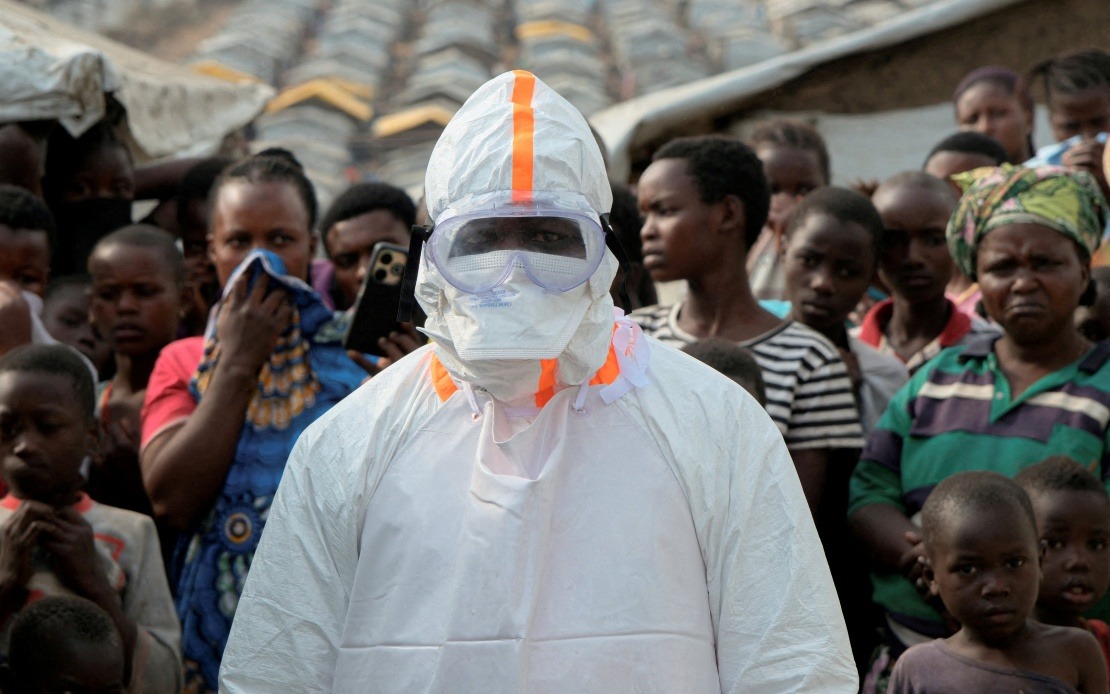
The international community faces an urgent call to dramatically intensify its response to the Ebola outbreak ravaging the Democratic Republic of Congo, with two senior UN officials delivering a stark assessment that current efforts are failing to keep pace with an exponentially accelerating crisis. Speaking from Bunia, the capital of Ituri province where the epidemic is most severe, the officials warned that the window for effective intervention is rapidly closing and that without substantial additional resources and commitment, the situation will continue to deteriorate.
Julien Harneis, who coordinates the UN's Ebola response globally, and Carl Skau, the acting director of the UN World Food Programme, painted a picture of a health emergency spiralling beyond control. In just the previous 24 hours before their statement, 50 people had died from the virus, and case numbers were doubling every three weeks. This trajectory represents an alarming departure from historical patterns, with the epidemic expanding at a pace that dwarfs the institutional capacity to contain it. The gap between disease spread and response capacity is widening daily, creating a situation where even increased efforts risk falling further behind.
The statistics underscore just how catastrophic the current outbreak has become compared to previous Ebola crises. In West Africa's 2014-2016 epidemic, which killed thousands across multiple countries, it took eight months to reach 1,000 deaths. In the Democratic Republic of Congo, that grim milestone was reached in merely two months, illustrating a severity and transmission rate that demands immediate international attention. This fastest-growing Ebola crisis on record presents challenges that conventional response protocols may struggle to address, requiring innovation and coordination at scales rarely attempted in global health emergencies.
The humanitarian context compounds the medical emergency. Eastern Congo has been wracked by armed conflict for decades, displacing millions and destroying healthcare infrastructure. Nearly 10 million people across the region now face crisis or emergency levels of food insecurity. Ituri province, where the outbreak originated, represents one of the hardest-hit zones, with approximately 2 million residents requiring urgent food assistance. This convergence of disease, displacement, and malnutrition creates a perfect storm where vulnerable populations lack both the nutrition and stable circumstances necessary to recover from infection or avoid exposure.
Harneis emphasized that scaling the response requires action on multiple fronts simultaneously. Beyond funding, the international community must mobilise medical personnel, ensure steady supplies of equipment and vaccines, and maintain the logistical networks required to reach isolated populations. He specifically called on countries to maintain open borders, allowing response teams to enter the country without restriction, enabling rapid delivery of humanitarian supplies, and permitting outbreak workers to return home for rest and reassignment. These border considerations might seem bureaucratic, but they represent critical enablers for field operations that can mean the difference between lives saved and communities overwhelmed.
The funding shortfall reveals the gap between global need and global commitment. The UN's humanitarian response plan for the entire Democratic Republic of Congo requires $2.1 billion, yet has secured only 45 per cent of that amount. This means nearly $1.2 billion in critical interventions—spanning health, food security, water, sanitation, and protection—remain unfunded. Even within the Ebola-specific response, the World Food Programme alone requires $76 million over the next six months merely to address logistics and transportation, with that figure not even accounting for food procurement itself. These budget constraints are not abstract numbers; they translate directly into delayed interventions, insufficient medical supplies, and populations going without basic survival assistance.
For Malaysia and Southeast Asia, the crisis carries several implications worth considering. Globalised disease outbreaks originating in Africa can reach the region within days through international air travel, as demonstrated by previous health emergencies. Malaysia's significant diaspora communities maintain family and business connections throughout Africa, and Malaysians regularly work in humanitarian and health sectors in conflict zones. The outbreak demonstrates how quickly infectious disease can overwhelm health systems in countries with existing fragility, a scenario relevant to pandemic preparedness discussions across the Association of Southeast Asian Nations.
The appeal from UN officials also underscores the fundamental interdependence of global health security. No individual country can contain an outbreak that spreads across borders and overwhelms local systems. The Democratic Republic of Congo's response capacity, though admirable in circumstances, cannot succeed without external support when facing a crisis of this magnitude. This reality has shaped international health governance frameworks, yet funding still falls short of what crises demand. For middle-income nations like Malaysia that aspire to stronger roles in global affairs, the Congo crisis illustrates both the imperative for financial contributions to international health and the risks of inadequate global coordination.
The officials' statement from Bunia was strategic in location—broadcasting directly from the outbreak epicentre rather than comfortable New York offices. This choice underscored the severity and immediacy of conditions on the ground. In Ituri, healthcare workers are confronting a virus with high mortality rates in settings where basic equipment like personal protective gear, diagnostic capacity, and isolation facilities remain desperately inadequate. The frontline workers in those hospitals are risking their lives with insufficient protection, driving home why Harneis repeatedly emphasised that response scaling must be immediate rather than gradual.
Moving forward, the crisis faces several obstacles beyond funding. Security concerns in Ituri limit access to affected populations, with armed groups controlling territory and healthcare workers facing threats. Community mistrust of external interventions, sometimes stemming from historical colonial exploitation and contemporary political grievances, complicates outbreak response and vaccination campaigns. These non-medical barriers require patient engagement, cultural sensitivity, and sustained presence—all resource-intensive endeavours that cannot be rushed. The UN officials' calls for action thus encompass not just money and supplies, but institutional commitment to the long, difficult work of earning community trust while battling a microscopic but devastating enemy.

