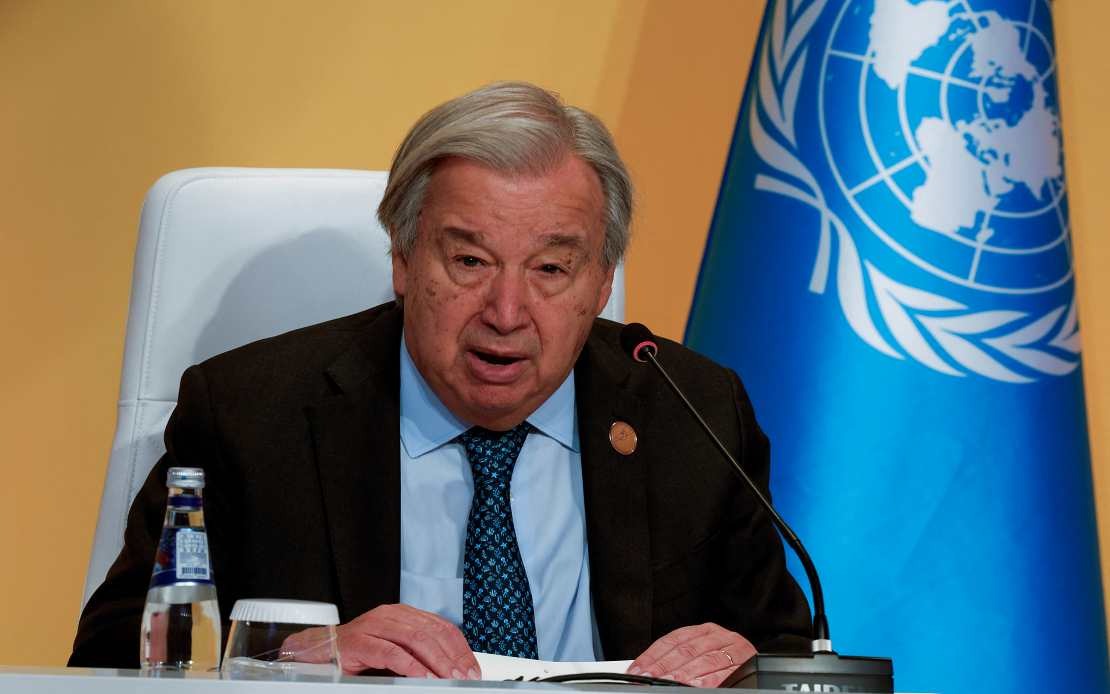
The United Nations leadership has issued an urgent appeal for restraint as military confrontations in the Persian Gulf intensify, with Secretary-General Antonio Guterres warning that the situation threatens international stability and economic wellbeing. Through his spokesperson Stephane Dujarric, Guterres expressed profound alarm on Sunday over the succession of military incidents that have characterised recent weeks, ranging from Iranian attacks on commercial shipping in the Strait of Hormuz to retaliatory American strikes and further Iranian responses targeting facilities in neighbouring nations.
The escalating cycle of military action represents a dangerous departure from diplomatic engagement, signalling a breakdown in communication channels between the major powers involved. Guterres specifically called upon all parties—a formulation that implicitly encompasses both Iran and the United States—to demonstrate maximum restraint and abandon further escalatory measures in favour of immediate de-escalation efforts. The UN's formal intervention highlights international concern that localised confrontations could spiral into broader regional conflict.
For Malaysian and Southeast Asian observers, the deterioration in Gulf security carries particular significance given the region's reliance on stable maritime commerce through these strategic waterways. The Strait of Hormuz serves as one of the world's most critical shipping chokepoints, through which approximately one-third of global seaborne petroleum trade passes annually. Disruptions to navigation through these waters directly impact energy prices and supply chains affecting economies throughout Southeast Asia, making regional stability in the Gulf a matter of genuine interest to Malaysian policymakers and businesses.
The UN statement emphasised that a return to full-scale military hostilities would precipitate catastrophic consequences across multiple dimensions. Beyond the immediate humanitarian toll on Gulf populations, such escalation would destabilise international peace and security frameworks already under strain from multiple regional conflicts. The statement also projected significant economic ramifications, acknowledging that protracted military confrontation would inflict severe damage on the global economy through disrupted trade flows, elevated commodity prices, and investor uncertainty.
Guterres reinforced the UN's foundational commitment to freedom of navigation, explicitly reaffirming the necessity for restoration of unrestricted passage through the Strait of Hormuz. This emphasis reflects international law principles enshrined in the UN Convention on the Law of the Sea, which guarantees rights of transit through international straits. Assurance of maritime freedom represents a cornerstone of global economic functioning, and its disruption through military blockade or intimidation threatens the rules-based international order that smaller nations like Malaysia depend upon for security.
The secretary-general's most significant call involved urging Iran and the United States to resume diplomatic negotiations with genuine urgency. This appeal recognises that military escalation has created a dangerous momentum that only direct high-level dialogue can interrupt. The reference to addressing outstanding issues through diplomacy implicitly acknowledges the complex array of grievances, sanctions disputes, and nuclear programme concerns that have animated US-Iranian tensions for decades. Resolution of these substantive disagreements requires sustained engagement rather than tit-for-tat military responses.
For regional observers, the current situation represents a critical juncture where diplomatic intervention remains possible but growing less likely with each new military incident. The pattern of action and reaction creates expectations within domestic constituencies on both sides that further escalation constitutes an appropriate response. Breaking this cycle demands political will from both Washington and Tehran to prioritise negotiation despite domestic pressures for demonstrating strength.
Southeast Asian nations face a delicate balancing act in responding to Gulf tensions. Many maintain important energy supply relationships with both Iran and regional partners allied with the United States. Trade flows and shipping through the Strait depend on all parties maintaining sufficient stability to permit normal maritime commerce. Countries like Malaysia, which pursue non-aligned foreign policies and maintain diverse international partnerships, have compelling interests in promoting de-escalation through available channels, whether through ASEAN mechanisms, individual diplomatic engagement, or support for UN mediation efforts.
The UN's intervention also underscores the organisation's continuing relevance in addressing international security crises, even when major powers resist its authority. While the Security Council remains hamstrung by vetoes preventing decisive action, the secretary-general's public statements carry moral authority and shape international discourse around escalating conflicts. Guterres's emphasis on catastrophic consequences aims to inject prudential considerations into calculations by all parties about the true costs of continued military confrontation.
Looking forward, the effectiveness of these UN appeals depends on whether diplomatic channels remain open and whether both Iran and the United States perceive mutual interest in negotiated resolution. The window for de-escalation narrows with each incident, making immediate resumption of talks essential. Regional states including Malaysia should consider how to contribute constructively to international efforts promoting restraint, whether through multilateral forums or bilateral channels where influence might prove persuasive in encouraging both sides toward dialogue rather than further military action.

