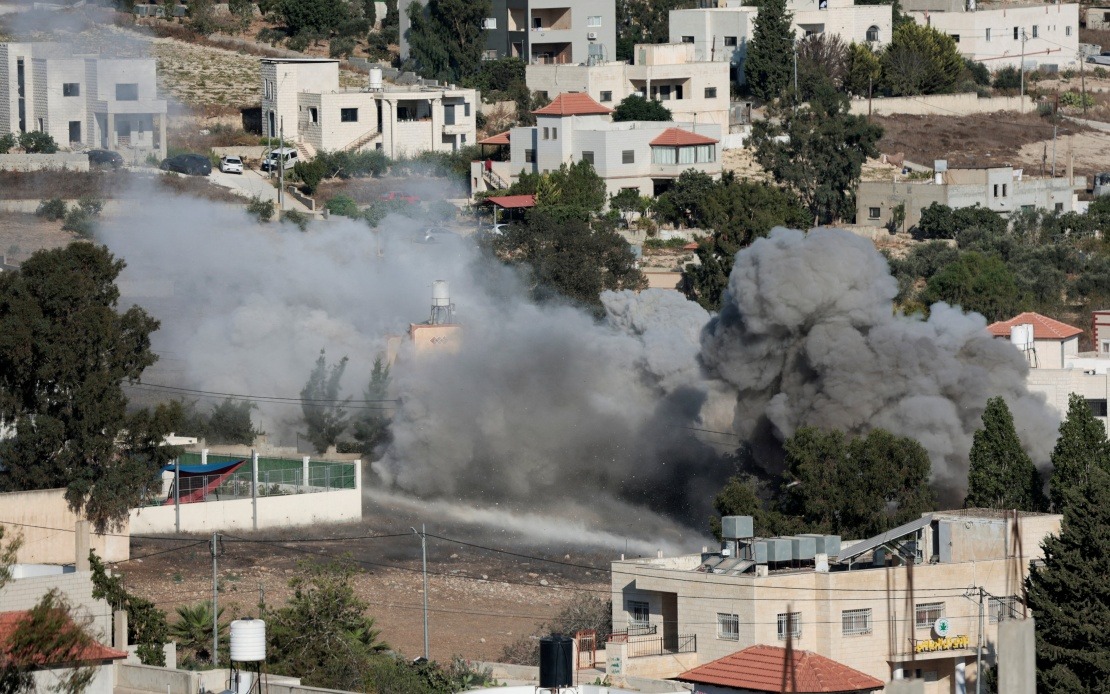
The United Nations Human Rights Office operating in the Occupied Palestinian Territory has raised alarm over what it characterises as an intolerable surge in violent incidents perpetrated by Israeli colonists against Palestinian communities. In a statement released Thursday, the office detailed a pattern of escalating abuses that extends beyond sporadic incidents to what it describes as systematic intimidation designed to displace Palestinians from their ancestral lands. The findings underscore the deepening humanitarian crisis in the West Bank and raise questions about the ability or willingness of Israeli authorities to exercise effective control over settler populations in contested areas.
The documented violations span a spectrum of offences targeting Palestinian civilians and their property. Settlers have been implicated in home invasions, physical assaults, property vandalism, theft, and arson attacks. Particularly troubling to international observers has been the targeting of religious sites, with at least one mosque coming under attack. These acts, according to the UN office, do not occur in isolation but rather form part of a coordinated strategy to render Palestinian communities uninhabitable, thereby facilitating territorial expansion of Israeli settlements in contravention of international law.
A particularly stark case illustrates the extremity of the situation. In July, settlers from an outpost in the Ras al-Ain area near Qusra, located south of Nablus, orchestrated what amounts to a siege against three Palestinian homes. The settlers severed water and electricity supplies to these residences, effectively cutting off essential services to the families living within. Days later, on August 9, the settlers escalated their tactics by erecting physical barriers around the homes, blocking all entry and exit points. This forced confinement trapped approximately 15 people, including at least two children, in their homes without access to basic utilities or the ability to seek assistance outside.
The response—or lack thereof—from Israeli security forces compounds concerns about accountability. When Palestinian residents appealed to Israeli forces present at the site to intervene and restore order, those forces did not take action. The UN office documented that Israeli soldiers appeared to actively prevent medical personnel, humanitarian activists, and journalists from accessing the trapped families, effectively isolating them from potential assistance. This pattern of non-intervention, when combined with the settlers' continued presence, suggests a failure at the institutional level to protect vulnerable Palestinian populations from organised harassment and coercion.
The situation only partially improved when Israeli soldiers removed the settlers' tent on August 12, three days into the confinement. However, the colonists themselves were not removed from the area, and they continued to surround the homes and maintain their siege posture. This partial intervention appears designed to create a veneer of state action while preserving the underlying situation of intimidation that threatens the Palestinians' continued presence in their homes. The UN office expressed concern that without further intervention, the families face imminent risk of forced displacement from land they have inhabited.
The establishment of an Israeli colonial outpost near Qusra in November 2025 appears to have served as the flashpoint for intensified settler aggression in the region. The outpost's creation was swiftly followed by settlers asserting control over adjacent areas and launching sustained campaigns of harassment against neighbouring Palestinian communities. This pattern reflects broader dynamics wherein the establishment of new settlements frequently precedes coordinated campaigns to pressure existing Palestinian residents to abandon their properties, thereby consolidating Israeli territorial claims through intimidation rather than legal process.
The UN Human Rights Office situates these incidents within the framework of international law, invoking the International Court of Justice's unambiguous ruling that all Israeli settlements are unlawful under international humanitarian law. The court has explicitly called upon Israel to cease all settlement construction, evacuate existing colonists, and terminate its occupation of the West Bank. However, the persistence and apparent intensification of settler violence suggests that international legal pronouncements have yet to translate into tangible changes in on-the-ground realities or meaningful constraints on settler activity.
From the perspective of international legal accountability, the UN office emphasises that Israel, as the occupying power, bears responsibility not only for direct actions by its security forces but also for tolerating, facilitating, or tacitly approving settler violence. The commission of crimes by colonists operating without meaningful legal consequences constitutes a breach of Israel's obligation under international law to protect civilian populations under occupation. The office has called for comprehensive investigations into all documented incidents, appropriate prosecutions of perpetrators, and the imposition of penalties commensurate with the severity of violations committed.
For Southeast Asian observers, this case exemplifies the challenges that arise when international legal frameworks lack enforcement mechanisms and when powerful actors face minimal consequences for violations. The situation in the Palestinian territories serves as a cautionary example of how territorial disputes can metastasise into systematic human rights abuses when international pressure remains largely rhetorical. The reluctance of occupying authorities to constrain settler violence raises fundamental questions about the viability of legal frameworks in contexts where one party possesses overwhelming military advantage and political backing.
The humanitarian dimension of the crisis extends beyond the immediate victims to encompass broader psychological and social impacts on Palestinian communities living under constant threat. The knowledge that harassment campaigns may go unpunished and that security forces may decline to intervene creates an environment of pervasive fear that undermines normal social functioning. Families must contemplate whether remaining on ancestral lands is feasible given the physical danger and psychological toll, a calculation that favours those pursuing settler objectives through violence and intimidation.
The UN office has explicitly warned that time is rapidly running out for the three families currently under siege in Qusra. Without urgent intervention by Israeli authorities to remove the settlers and restore normal conditions, these families face displacement not through formal legal process but through the coercive application of force and intimidation. The case thus represents a critical moment where international attention and diplomatic pressure might yet influence outcomes, or where failure to act would effectively endorse the use of organised settler violence as a tool for territorial acquisition.

