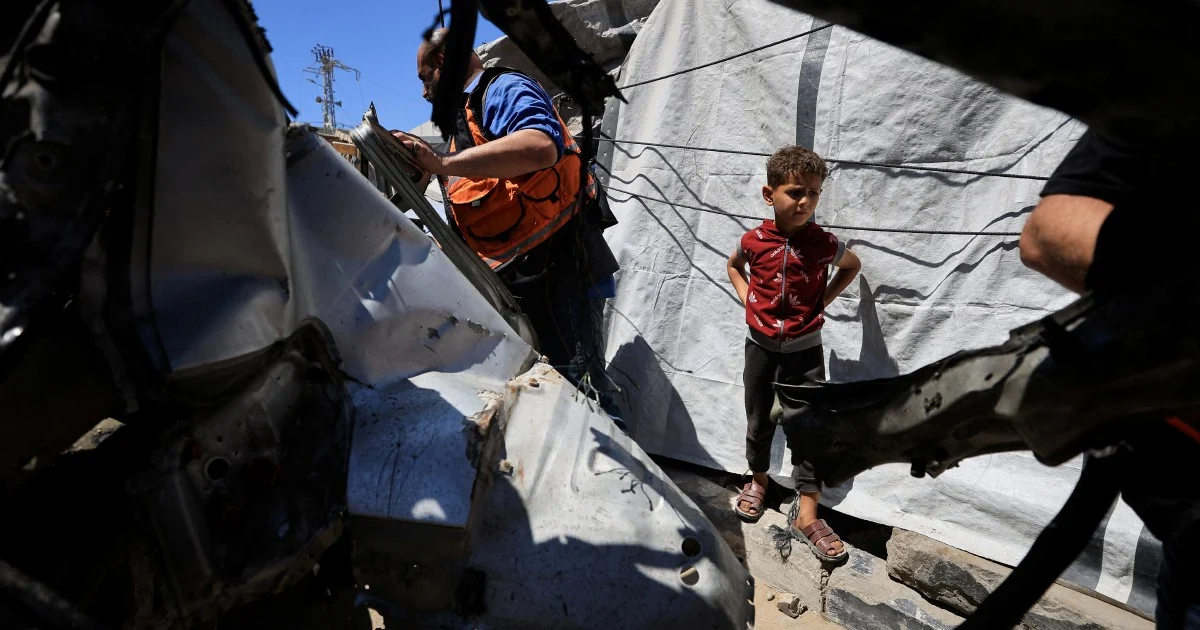
A damning report released by United Nations investigators on Tuesday asserts that Israel is systematically and deliberately targeting Palestinian children in Gaza, framing such actions as a central component of what the inquiry concludes constitutes an ongoing genocide in the territory. The findings, delivered from UN headquarters in Geneva, represent one of the starkest accusations yet levelled against Israel during the prolonged conflict, drawing swift and forceful rebuttals from Israeli officials who have dismissed the probe's methodology and conclusions.
The deliberate targeting of children represents, according to the UN investigators, far more than isolated incidents or regrettable collateral damage in conflict. Rather, the probe characterises such targeting as a deliberate strategy that has become deeply woven into the fabric of military operations in Gaza. This conclusion carries profound legal and moral implications, as it suggests intentionality rather than negligence, a distinction that separates battlefield tragedy from crimes against humanity under international law.
The investigation's characterisation of events in Gaza as genocide hinges on the legal definition established under the 1948 Genocide Convention, which requires proof of intent to destroy a protected group. The UN investigators appear to have concluded that sufficient evidence exists to support this determination, though Israel argues such characterisations misrepresent both the facts on the ground and Israeli military doctrine, which the government maintains emphasises civilian protection.
For Malaysia and other Southeast Asian nations with significant Muslim populations, the findings carry particular resonance. The region has witnessed growing public concern over the humanitarian toll in Gaza, with civil society organisations and some government officials expressing alarm at reported civilian casualties. This UN report amplifies those voices and adds official institutional weight to concerns that have circulated through Malaysian media and social platforms.
Israel's rejection of the report was neither unexpected nor mild. Government officials have consistently challenged UN investigations into Israeli military conduct, arguing that such bodies lack impartiality and fail to account for Israel's security challenges or the presence of militant infrastructure in civilian areas. The government's stance reflects a broader Israeli position that international scrutiny often ignores the context of security threats faced by Israeli citizens and the operational complexities of urban warfare.
The timing of this report intersects with broader diplomatic tensions. Multiple UN bodies have issued critical assessments of Israeli conduct in Gaza over preceding months, creating a pattern of international institutional criticism that Israel views as disproportionate and politicised. Meanwhile, Western governments, particularly the United States, have maintained more cautious positions, calling for investigations while avoiding formal endorsements of genocide accusations.
For policymakers across Southeast Asia, the UN investigation presents a complex situation. Nations in the region maintain varying diplomatic relationships with Israel and Palestinian authorities, with some nations officially recognising Palestine while others maintain closer ties with Israel. The report's release effectively forces renewed consideration of these relationships and the extent to which governments should publicly respond to such allegations.
The investigation's focus on targeting of children specifically taps into powerful imagery and sentiment. Children represent the most vulnerable population in any conflict, and accusations of deliberate targeting provoke particularly strong emotional and moral responses globally. The framing of child targeting as a deliberate strategy rather than an unfortunate consequence of warfare marks a significant escalation in language and accusation.
The methodology underlying the UN investigation will likely become contested terrain in coming weeks. Israeli officials have previously questioned how UN bodies gather evidence, assess witness testimony, and avoid confirmation bias. The government may argue that the investigators began with predetermined conclusions and cherry-picked evidence to support them. International observers, however, note that UN mechanisms for investigating grave human rights allegations have developed increasingly sophisticated protocols over decades.
The report's release adds pressure on countries that have attempted to maintain diplomatic balance. Many nations have expressed concern about civilian casualties while avoiding taking formal positions on questions of genocide. The UN investigators' conclusion forces renewed examination of such middle-ground positions and whether they remain tenable given official institutional findings.
For humanitarian organisations operating in Gaza, the investigation validates concerns they have documented regarding civilian casualties and protection of vulnerable populations. These organisations have faced their own scrutiny regarding the accuracy and objectivity of their reporting, making this UN validation potentially significant for their credibility and fundraising efforts.
The broader implications extend beyond the immediate Gaza situation. International justice mechanisms face persistent questions about their effectiveness and impartiality. Should this investigation ultimately contribute to formal accountability processes, it could reshape how international bodies approach investigations into conflict situations. Conversely, if the findings are widely dismissed as politically motivated, it may further erode confidence in these institutional mechanisms precisely when they are needed most.
Moving forward, attention will focus on what, if any, enforcement mechanisms might follow from these findings. The International Criminal Court and other bodies may face pressure to pursue investigations or prosecutions. Whether such mechanisms prove effective, however, depends on cooperation from numerous states and the maintenance of political will over what is likely to be an extended timeframe.

