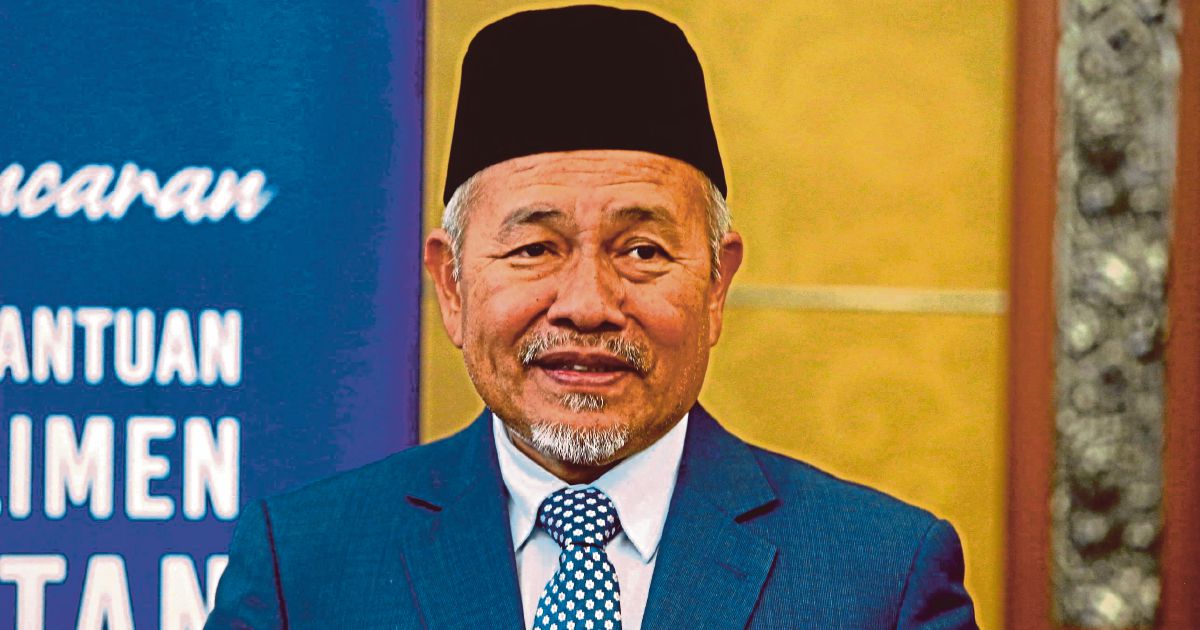
Political dynamics in Negri Sembilan have taken a dramatic turn following Umno's decision to withdraw support from the state government, a development that PAS deputy president Datuk Seri Tuan Ibrahim Tuan Man has openly endorsed as a courageous repositioning that fundamentally reshapes the electoral landscape. Speaking in Seremban, Tuan Ibrahim's remarks signal shifting coalitional alignments within Malaysia's complex federal system and hint at potential reconfiguration of power structures at state level.
The withdrawal of Umno's legislative backing represents more than a routine political manoeuvre. It demonstrates the fragility of state-level governing coalitions and the willingness of major parties to reassess their commitments when circumstances warrant. For Negri Sembilan specifically, the loss of Umno's support creates immediate governance uncertainty and forces all political actors to recalibrate their strategies ahead of what appears to be an imminent state election.
Tuan Ibrahim's characterisation of Umno's decision as a "bold move" warrants deeper examination. By describing the withdrawal positively, the PAS deputy president implicitly endorses a path toward fresh electoral competition rather than backroom dealing or status quo maintenance. This framing suggests that PAS views the development as an opportunity to contest for voter support directly rather than through established power-sharing arrangements, positioning the upcoming election as a genuine test of public preference rather than a predetermined outcome.
The timing of Umno's withdrawal holds significance for understanding contemporary Malaysian politics. It reflects ongoing tensions within the broader Malay-Muslim political consensus that has historically dominated the country's governance. When substantial parties within this bloc begin withdrawing support from established governments, it signals that internal negotiations have reached an impasse or that electoral calculations have shifted in ways that make continued backing politically untenable.
For Negri Sembilan voters, this development carries direct implications. The creation of electoral uncertainty, while potentially destabilising in the short term, ultimately empowers voters to exercise fresh choice rather than passively accepting predetermined arrangements. Tuan Ibrahim's characterisation emphasises this democratic dimension, suggesting that competitive elections serve the public interest better than arrangements maintained through institutional inertia or coalition management divorced from electoral mandates.
The broader Malaysian political context amplifies the significance of Umno's move. In recent years, the country has witnessed increasing volatility at state level, with coalitions fragmenting and reforming as parties pursue their interests. Negri Sembilan has been relatively stable by comparison, making this withdrawal notable as evidence that even traditionally settled political arrangements can shift when party leadership determines such action necessary.
PAS's positive reception of Umno's withdrawal, however, requires contextualisation. The two parties maintain a complex relationship shaped by both shared Malay-Muslim constituency interests and competitive electoral dynamics. PAS's endorsement of what it frames as democratic renewal through electoral competition may reflect confidence in its own organisational strength or strategic calculation that a competitive election serves its political interests. This positioning allows PAS to occupy moral high ground by championing voter choice whilst simultaneously positioning itself favourably for electoral competition.
The practical consequences for Negri Sembilan governance warrant consideration. With Umno withdrawing support, the incumbent state government loses a crucial legislative pillar. This creates immediate questions about whether the administration retains sufficient legislative numbers to govern effectively or whether additional political negotiations will occur to stabilise the situation. Such uncertainty typically generates pressure for early elections rather than prolonged caretaker administrations, lending credence to interpretations that treat Umno's withdrawal as a prelude to electoral contests.
Regional implications extend beyond Negri Sembilan's borders. Other Malaysian states maintain coalition governments similarly dependent on institutional support from multiple parties. The precedent of Umno withdrawing support and PAS treating this as legitimate political competition may encourage similar reassessments elsewhere, potentially destabilising arrangements in other states and strengthening the hand of parties willing to risk electoral competition rather than perpetuate governing coalitions increasingly perceived as lacking democratic legitimacy.
Tuan Ibrahim's remarks also reflect PAS's broader strategic positioning within Malaysian politics. By welcoming Umno's withdrawal and emphasising voter choice, PAS presents itself as confident in electoral competition and committed to democratic principles. This messaging carries particular weight given historical perceptions of the party's governance record and its ongoing efforts to mainstream its political positioning within Malaysian society.
The economic and governance dimensions cannot be overlooked. Political instability, even temporary, can deter investment and complicate policy implementation. However, the resolution of ambiguity through electoral processes typically proves preferable to prolonged uncertainty, suggesting that whilst the transition period may be turbulent, a decisive electoral outcome would provide Negri Sembilan with restored political stability and renewed legitimacy for whichever administration emerges victorious.
Moving forward, the consequences of Umno's withdrawal will largely depend on whether a state election proceeds and the results it produces. PAS's positive characterisation suggests the party views such competition as advantageous, whether because of confidence in its electoral prospects or conviction that the democratic principle of voter choice justifies the temporary uncertainty withdrawal creates. Either interpretation underscores the increasingly complex and competitive nature of Malaysian state-level politics, where traditional coalitions face ever-greater pressure to justify themselves through electoral performance rather than institutional arrangement alone.

