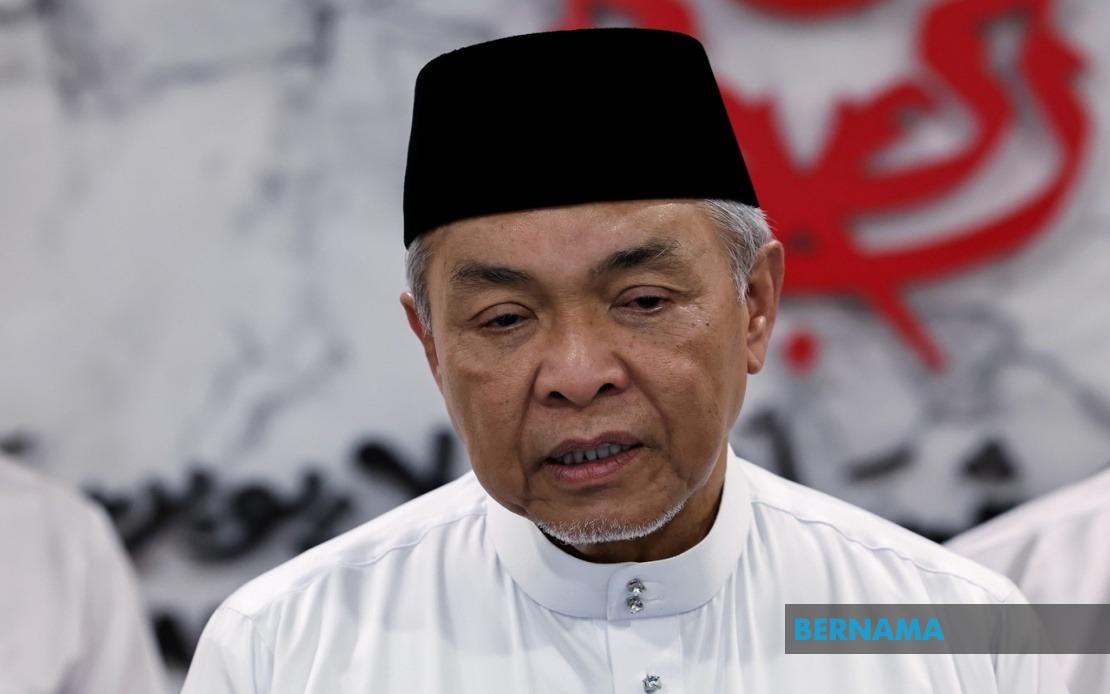
KUALA LUMPUR — UMNO has committed to commencing formal discussions regarding potential political cooperation for the upcoming Melaka state election, contingent on the dissolution of the state assembly. Party president Datuk Seri Dr Ahmad Zahid Hamidi made this declaration on August 30, emphasizing that while exploratory conversations may occur beforehand, binding negotiations will only proceed following the formal dissolution process.
The Deputy Prime Minister designated Melaka Chief Minister Datuk Seri Ab Rauf Yusoh to helm these negotiations, placing significant responsibility on the state leader to shape the party's electoral strategy. This delegation signals UMNO's intention to leverage state-level expertise in determining coalition options and campaign positioning ahead of polling day.
Ahmad Zahid's remarks emerged during a media engagement where he addressed speculation about UMNO's willingness to cooperate with Perikatan Nasional in the Melaka contest. The clarification reflects the delicate political calculations facing the ruling coalition as it navigates potential realignments with rival blocs. By establishing a clear procedural framework, UMNO appears to be managing internal expectations while maintaining strategic flexibility.
The party has already undertaken substantive preparation for the election campaign. Ahmad Zahid revealed that UMNO's Melaka political bureau had presented comprehensive party readiness assessments to leadership. This groundwork, compiled through intelligence gathered by UMNO Melaka's war room operations, suggests systematic data analysis is informing electoral calculations and strategy formulation at the highest party levels.
These findings and preparations were subsequently escalated to UMNO's Supreme Council for thorough examination and debate. The MKT's involvement indicates that Melaka's electoral contest carries significance beyond state boundaries, with implications for national party positioning and coalition dynamics. The council's detailed discussion of field intelligence demonstrates UMNO's commitment to evidence-based decision-making in a politically volatile environment.
For Malaysian political observers, the Melaka election represents a crucial test case for coalition stability and electoral competitiveness. The state has experienced significant political turbulence in recent years, with multiple government configurations reflecting broader nationwide fragmentation. UMNO's measured approach to cooperation negotiations suggests the party recognizes both the opportunities and risks inherent in alignment choices.
The timing of formal talks carries particular relevance in regional politics. Across Southeast Asia, dominant parties like UMNO face recurring pressures to balance ideological consistency with pragmatic coalition-building. By establishing clear procedural boundaries—formal negotiations only after dissolution—UMNO signals institutional discipline while avoiding premature commitment that might complicate internal consensus-building or public perception management.
Malaysian political analysts note that this sequential approach differs markedly from previous elections, where negotiations often occurred simultaneously with or even preceded technical dissolution procedures. The distinction may reflect evolving norms around transparency and procedural legitimacy, or alternatively, a tactical decision to manage information flow and maintain negotiating leverage until institutional requirements are formally satisfied.
The role assigned to Chief Minister Ab Rauf Yusoh merits particular scrutiny. As the lead negotiator, his authority and credibility become central to UMNO's electoral prospects in Melaka. His relationship with both UMNO's national hierarchy and state-level grassroots will fundamentally shape not only the substance of cooperation discussions but also their acceptance within party ranks and their reception among the electorate.
For regional observers monitoring Malaysia's political trajectory, these developments illustrate the complexity of managing multiparty democracy across ethnically diverse federations. UMNO's formal framework for cooperation discussions reflects sophisticated understanding of the procedural, political, and communication dimensions that electoral alliances demand. The party's emphasis on internal consultation through the Supreme Council underscores the necessity of maintaining coherence within hierarchical structures while pursuing external coordination.
The Melaka election will likely function as a barometer for UMNO's capacity to compete effectively under current political conditions. Whether cooperation with Perikatan Nasional materializes, or whether UMNO proceeds independently or with alternative partners, the outcome will carry implications for national coalition stability and the evolving balance of power between competing political blocs. Chief Minister Ab Rauf Yusoh's negotiating performance will prove instrumental in determining this trajectory.

