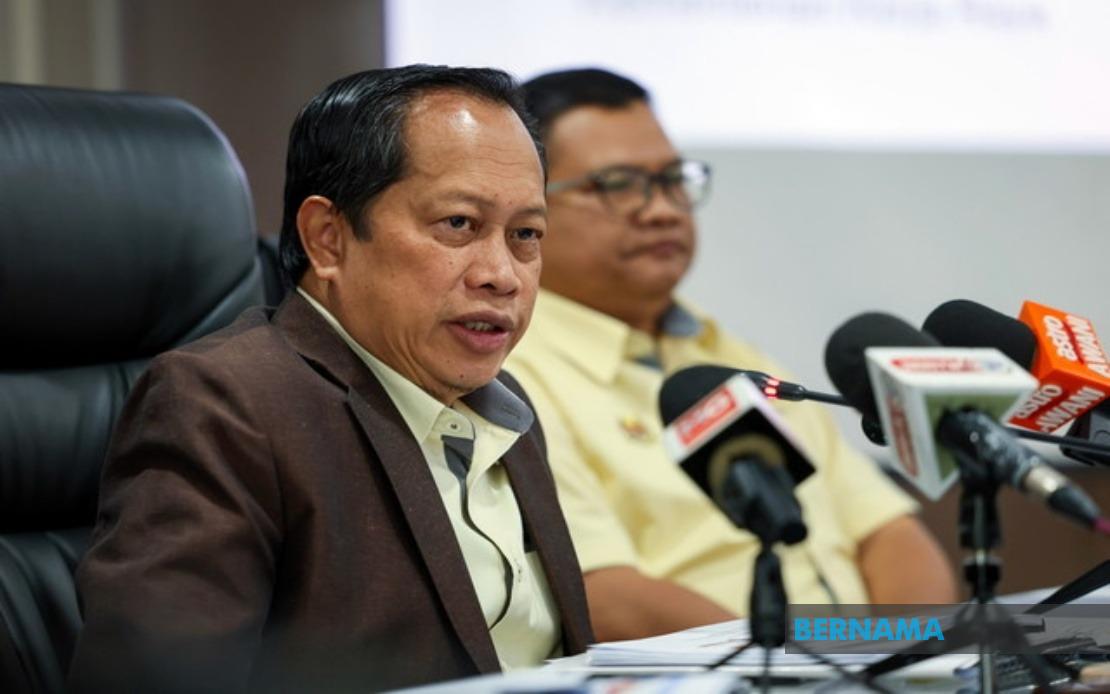
UMNO's top decision-making body will gather later this month to resolve the party's approach toward the looming Melaka state election, with the fundamental question of whether to compete alone or collaborate with competing political blocs set to dominate deliberations. The party's Supreme Council meeting scheduled for August 28 will be presided over by UMNO president Datuk Seri Dr Ahmad Zahid Hamidi and aims to crystallise Barisan Nasional's electoral strategy to maximise prospects of retaining control of the state government, according to Datuk Seri Dr Ahmad Maslan, a senior party figure and Deputy Works Minister.
The uncertainty surrounding UMNO's positioning reflects the fluid and increasingly complex nature of Malaysian coalition politics. Datuk Seri Dr Ahmad Maslan acknowledged that no conclusive determination has yet been reached on which partnership model would best serve Barisan Nasional's interests in Melaka, with the party leadership still weighing multiple options as it prepares for what promises to be a consequential electoral contest. The sustained silence from the party hierarchy underscores the genuine deliberation underway rather than any predetermined outcome, though observers note that such lengthy decision-making periods sometimes signal internal discord that party officials prefer to resolve behind closed doors.
The policy debate encompasses three distinct scenarios. First, Barisan Nasional could proceed independently, relying exclusively on UMNO's grassroots machinery and the component parties within the coalition to deliver sufficient voter support. Alternatively, the coalition might seek an electoral understanding with Pakatan Harapan, the federal government's junior partner, thereby formally extending the Unity Government framework that currently prevails at national level into the state arena. A third pathway would involve engagement with Perikatan Nasional, the principal opposition coalition that has demonstrated increasing electoral competitiveness in recent state contests across Malaysia.
Each option carries distinct implications for Barisan Nasional's standing and Melaka's governance trajectory. An independent contest would represent a departure from current federal power-sharing arrangements and signal UMNO's confidence in its state-level organisational capacity. A Pakatan Harapan alliance would provide additional vote-sharing mechanisms and potentially mitigate the risk of opposition vote consolidation, though it would further institutionalise an arrangement that has proven contentious within UMNO's base. Engagement with Perikatan Nasional, meanwhile, would constitute a remarkable rapprochement between organisations that have publicly sparred for months and would fundamentally reshape the competitive landscape.
Datuk Seri Dr Ahmad Maslan's characterisation of the current situation as unsettled, noting that public commentary and pronouncements by various figures remain speculative rather than authoritative, reflects efforts by party leadership to maintain negotiating flexibility whilst guarding against premature disclosure of strategic intentions. His emphasis that all party members must ultimately defer to the Supreme Council's determination also signals an attempt to enforce party discipline around whatever decision eventually emerges, suggesting that internal discussions may have generated divergent views requiring senior-level arbitration.
The timing carries significance given that the Melaka state government's five-year mandate concludes on December 31, establishing a deadline by which an election must occur and new governance arrangements implemented. This temporal constraint incentivises swift decision-making by UMNO, as prolonged deliberation risks ceding electoral initiative to rival coalitions that may already be finalising their respective strategies. The August 28 meeting therefore represents a critical juncture in the political calendar for the state's stakeholder organisations.
Melaka's current political composition provides essential context for understanding the stakes involved. Barisan Nasional commands a commanding 21 of the 28 state assembly seats following the 15th state election, whilst Pakatan Harapan holds five seats and Perikatan Nasional retains two. However, the executive council at state level incorporates Pakatan Harapan assemblymen within its membership, reflecting the national-level power-sharing arrangements that emerged following the 2022 general election. This hybrid configuration, where government composition extends across formally distinct coalitions, has become characteristic of Malaysian federalism under contemporary circumstances and demonstrates how national political shifts reverberate into state-level structures.
The Melaka scenario exemplifies broader questions about coalition durability and competitive strategy across Malaysia's federal system. Since 2022, numerous states have witnessed experimentation with cross-coalition governance arrangements that would have been inconceivable under the prior two-coalition model that dominated Malaysian politics for decades. These developments reflect not merely temporary expedients but potentially structural recalibrations in how Malaysian political elites conceptualise coalitional flexibility and competitive positioning. For Melaka specifically, the upcoming Supreme Council meeting will determine whether this experimental approach continues or whether the state reverts to more traditional bipolar electoral competition.
Barisan Nasional's decision-making process also occurs against a backdrop of evolving perceptions regarding the coalition's electoral viability. Whilst the coalition retains substantial institutional resources and organisational advantages, particularly in states where UMNO maintains deep community networks, recent electoral cycles have demonstrated that voter preferences cannot be presumed. The party leadership's emphasis on selecting the strategy most suited to Melaka's specific circumstances, rather than imposing a uniform national template, reflects recognition that electoral conditions vary substantially across Malaysia's diverse regions and communities.
The forthcoming deliberations will also necessarily encompass tactical considerations beyond the binary question of coalition membership. Strategy discussions typically address candidate selection, resource allocation across constituencies, messaging priorities reflecting Melaka's particular economic and demographic characteristics, and positioning relative to both established competitors and emerging political forces. Given that Melaka possesses distinct economic features, including a substantial historical tourism sector and particular demographic concentrations, the state's electoral dynamics may not simply replicate patterns observed elsewhere in Malaysia.
For Malaysian political observers, the August 28 meeting represents a test case of decision-making efficacy within UMNO's institutional structures during a period of substantial political flux. How swiftly the Supreme Council reaches consensus, whether it reflects genuine coalition-building or senior leadership dictate, and how transparently the resulting strategy is communicated will all signal the party's current operational health and capacity to project coherent political direction at a moment when Malaysian politics remains unusually fluid and Malaysian voters increasingly demonstrate willingness to depart from established partisan patterns.

