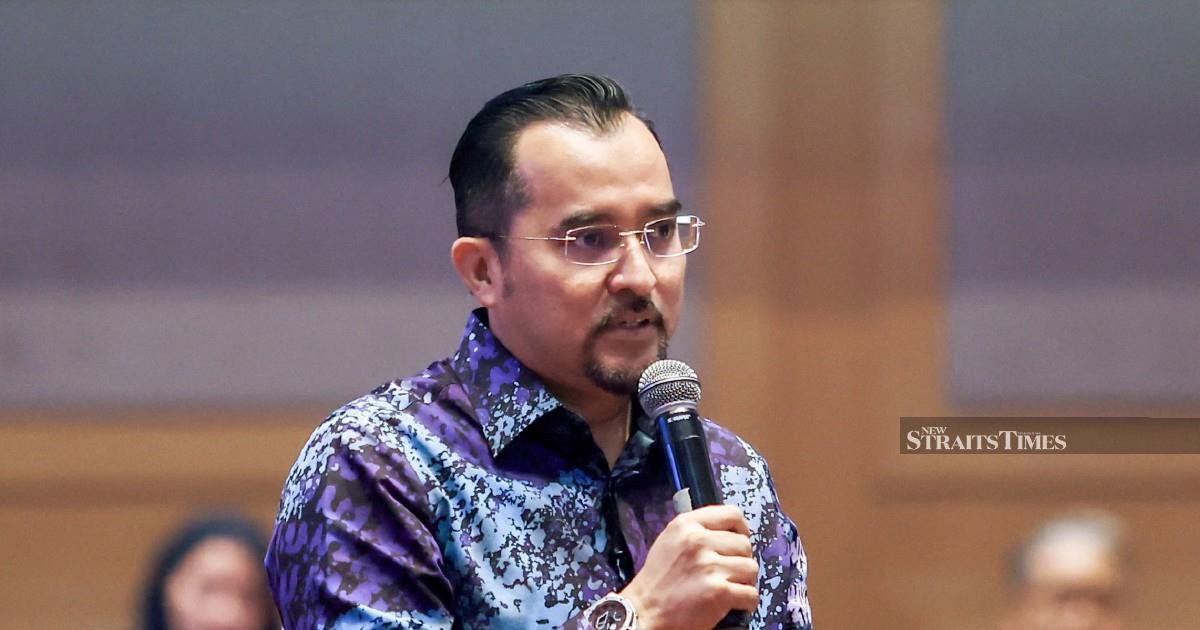
Umno secretary-general Datuk Dr Asyraf Wajdi Dusuki has firmly rejected suggestions that the party engineered an elaborate façade to shield individuals accountable for the cascading financial difficulties at Lembaga Tabung Haji, the mandatory savings institution serving hundreds of thousands of Malaysian pilgrims and investors seeking to accumulate funds for the Hajj.
The denial comes amid mounting public scrutiny of how TH's governance structures allowed significant financial irregularities to compound over successive years, ultimately necessitating intervention by federal authorities and prompting wider conversation about institutional accountability within Malaysia's financial ecosystem. The accusations directed at Umno reflect broader concerns within civil society and opposition quarters regarding whether political interests have superseded institutional integrity in addressing what observers characterise as one of Malaysia's most consequential financial mismanagement episodes.
TH's predicament represents a particularly acute vulnerability for public confidence, given the institution's explicit mandate to safeguard retirement provisions for Muslims preparing for pilgrimage obligations. When governance lapses occur within such trust-based institutions, the reputational fallout extends beyond mere financial considerations; it strikes at the legitimacy of religious-guided public administration and institutional stewardship more broadly. The scale of TH's accumulated difficulties has necessitated parliamentary scrutiny and executive oversight, drawing media attention to the institutional factors that permitted vulnerabilities to metastasise unchecked.
Umno's categorical rejection of allegations regarding coordinated shielding reflects the party's acknowledgment that accusations of complicity in institutional cover-ups constitute severe political liabilities. The party's explicit denial underscores the stakes involved in public perceptions of governance integrity, particularly regarding financial institutions entrusted with citizens' retirement aspirations and religious obligations. Such accusations, whether substantiated or not, can erode voter confidence in party stewardship across multiple governance domains.
The TH scandal has catalysed renewed examination of how Malaysian institutions balance transparency obligations with political considerations. Independent observers have documented patterns suggesting that institutional accountability investigations sometimes encounter regulatory or procedural constraints that complicate comprehensive fact-finding. Whether such constraints reflect deliberate obstruction or systemic limitations remains contested, but public perception of potential political interference inevitably emerges when controversial institutions receive high-level political attention.
For Malaysian voters and regional observers, the TH controversy exemplifies recurring tensions between political party interests and institutional independence. Umno's historical dominance of Malaysian governance means that investigations into institutions where the party wielded influence inevitably become intertwined with party-political calculations. The secretary-general's emphatic denial suggests recognition that appearing to prioritise party protection over institutional accountability would constitute severe political jeopardy during an era of heightened electoral competition and voter demands for governance transparency.
The institutional context matters considerably. TH operates within Malaysia's Islamic financial framework, serving constituencies deeply invested in pilgrimage preparation and religious observance. Financial misconduct within such religiously-grounded institutions carries theological dimensions beyond typical regulatory concerns, potentially alienating voter cohorts prioritising Islamic institutional integrity. Umno's need to forcefully rebut suggestions of coordinated protection reflects acute awareness that Muslim-majority constituencies now scrutinise financial management within Islamic institutions with particular intensity.
Regional implications warrant consideration as well. Southeast Asian voters increasingly evaluate political parties through lenses emphasising institutional competence and financial governance. Perceptions that Malaysian political parties orchestrate cover-ups regarding financial misconduct can influence cross-border investor sentiment and reputational assessments of Malaysia's overall governance maturity. TH's difficulties thus transcend domestic political ramifications, touching upon Malaysia's positioning within regional investment and institutional competence hierarchies.
The controversy also illuminates recurring challenges regarding institutional independence within Asia's dominant-party political systems. When single political parties maintain extended governance tenure, as Umno did historically, institutional oversight mechanisms sometimes become integrated into party-political structures rather than functioning as genuinely independent arbiters. Extricating institutional accountability from party-political calculations requires sustained structural reform and cultural reorientation—processes that typically generate significant political resistance.
Umno's denial implicitly acknowledges that public trust in the party's institutional stewardship remains contested and politically consequential. The party's need to explicitly reject allegations regarding coordinated shielding suggests that segments of the Malaysian electorate harbour genuine suspicions regarding whether political considerations have compromised TH accountability mechanisms. Whether those suspicions reflect substantive evidence or reflect broader electoral polarisation remains debated, but their existence constitutes political reality that party leadership must address.
Moving forward, TH's trajectory and associated investigations will likely remain politically charged. Malaysian voters seeking reassurance regarding institutional integrity will scrutinise how thoroughly accountability mechanisms function, whether independent audit bodies access necessary documentation, and whether investigative processes proceed free from apparent political constraints. Umno's explicit denials constitute political positioning within this broader contest over institutional credibility and governance legitimacy that will continue shaping Malaysian electoral dynamics and voter confidence in institutional structures.

