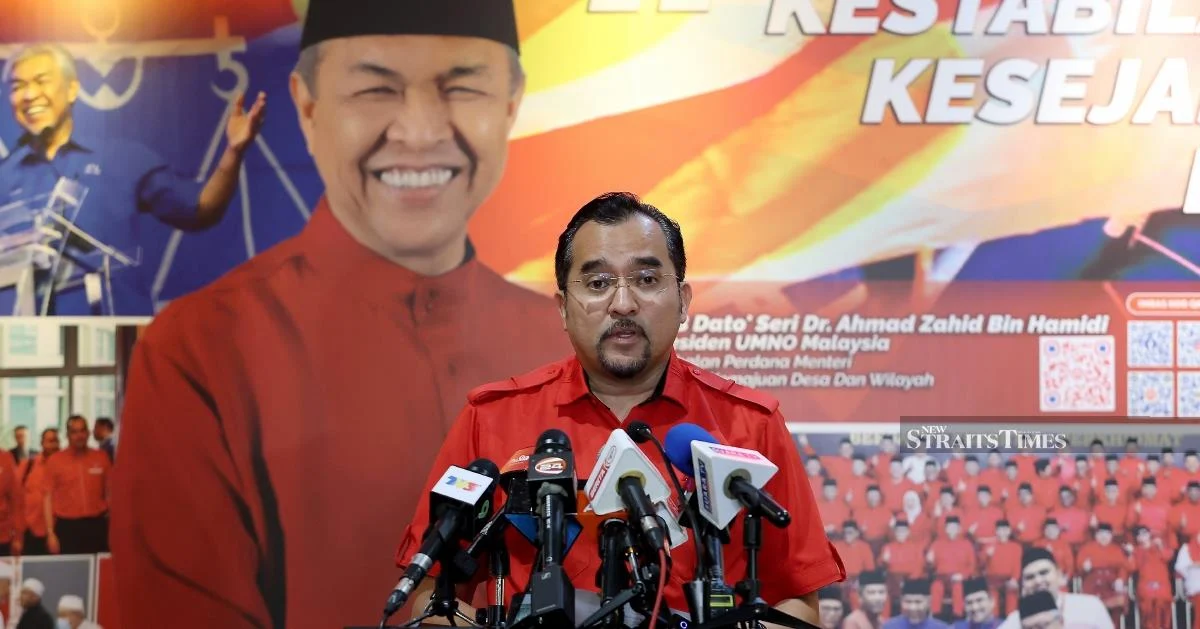
Umno will conduct its campaigns for the impending Johor and Negri Sembilan state elections on the basis of policy substance and tangible benefits for voters, according to party secretary-general Datuk Dr Asyraf Wajdi Dusuki. The explicit commitment to steer clear of personal mudslinging represents an attempt by the coalition to recalibrate its electoral messaging following recent state polls that have seen increasing public criticism of negative campaigning across all political parties.
The pledge reflects growing awareness within Umno's leadership that Malaysian voters, particularly in competitive states like Johor and Negri Sembilan, are increasingly fatigued by character attacks and unfounded allegations that dominate campaign periods. By anchoring its electoral approach to policy platforms and delivery records, Umno aims to differentiate itself from rivals and appeal to pragmatic voters concerned with economic management, service provision, and social welfare initiatives rather than personal controversies.
Johor and Negri Sembilan represent strategically significant battlegrounds within Malaysia's political landscape. Johor, as the nation's second-largest state by population and a traditional Umno stronghold, carries symbolic importance for the party's national standing. Any erosion of support in the southern state would send ripples through Umno's broader coalition prospects. Negri Sembilan, meanwhile, presents a more competitive electoral arena where multiple parties contest vigorously, making targeted messaging about concrete policy outcomes particularly valuable for winning undecided voters.
The emphasis on policy-driven campaigns aligns with broader reforms being pursued within the Barisan Nasional coalition following electoral setbacks in recent years. Party leadership has increasingly recognized that governance capacity and administrative competence resonate more powerfully with contemporary Malaysian voters than partisan rhetoric or attacks on opposition figures. This strategic recalibration suggests Umno intends to campaign on its track record in infrastructure development, economic stabilization, and social programme implementation across the states where it holds office.
Datak Dr Asyraf Wajdi Dusuki's statement also carries implications for the broader tenor of these state elections. If Umno successfully maintains its commitment to substantive campaigning, it may establish a precedent that pressures opposition parties to reciprocate with similarly elevated discourse. Conversely, should opposition parties resort to aggressive personal attacks while Umno maintains a policy focus, the contrast could enhance public perception of Umno's campaign maturity, potentially influencing voter sentiment across multiple demographic groups.
The timing of this commitment is noteworthy given Malaysia's current political environment. Multiple state elections scheduled in coming months have heightened competitive pressures across established coalitions and emergent political groupings. The commitment to clean campaigning may represent Umno's attempt to occupy a distinctive position in what threatens to become a crowded and contentious electoral period. By positioning itself as the party willing to debate ideas rather than individuals, Umno signals confidence in its policy offerings and governing record.
For Malaysian voters, particularly those in Johor and Negri Sembilan, this approach offers potential respite from the character assassination and baseless allegations that have characterized recent election cycles. Policy-focused contests allow voters to make choices based on substantive differences in economic philosophy, social priorities, and administrative approaches rather than personal scandals or hearsay. This benefits the electorate by enabling more informed decision-making grounded in verifiable facts about parties' actual proposals and achievements.
The practical implementation of this commitment will require discipline from Umno's grassroots organizations and campaign machinery. State-level leaders and party operatives must consistently reinforce messaging centred on policy substance while resisting the temptation to engage in tit-for-tat attacks when opponents resort to negative tactics. This disciplined approach demands stronger central coordination and clearer messaging frameworks than ad-hoc campaigning typically allows, placing additional responsibility on party leadership to maintain consistent strategic direction.
Umno's positioning also reflects awareness of demographic shifts within its traditional base. Younger voters and urban constituencies increasingly demand evidence-based policy discussions rather than personality-driven politics. By framing its campaigns around concrete proposals, Umno appeals to these demographic groups while maintaining cohesion among traditional supporters who value both governance competence and moral tone. This dual-audience strategy represents sophisticated electoral calculation aimed at maximizing appeal across diverse voter segments.
The implications extend beyond immediate electoral contests in these two states. Should Umno successfully execute clean campaigns that generate positive public responses, the party may establish a replicable model for future elections at both state and federal levels. This could contribute to gradual elevation of Malaysian electoral discourse more broadly, creating competitive pressure for other parties to match Umno's stated standards. Conversely, any perception that Umno abandons its commitment when facing electoral pressure could damage party credibility and undermine its broader reform narrative.
Looking forward, observers will monitor whether Umno's campaign organization adheres to these principles consistently throughout the Johor and Negri Sembilan contests. The true test of this commitment arrives when campaigns intensify and electoral margins tighten, creating greater temptation to deploy negative tactics. How Umno's leadership responds at these critical junctures will determine whether this statement represents genuine strategic reorientation or merely rhetorical positioning designed for public consumption.