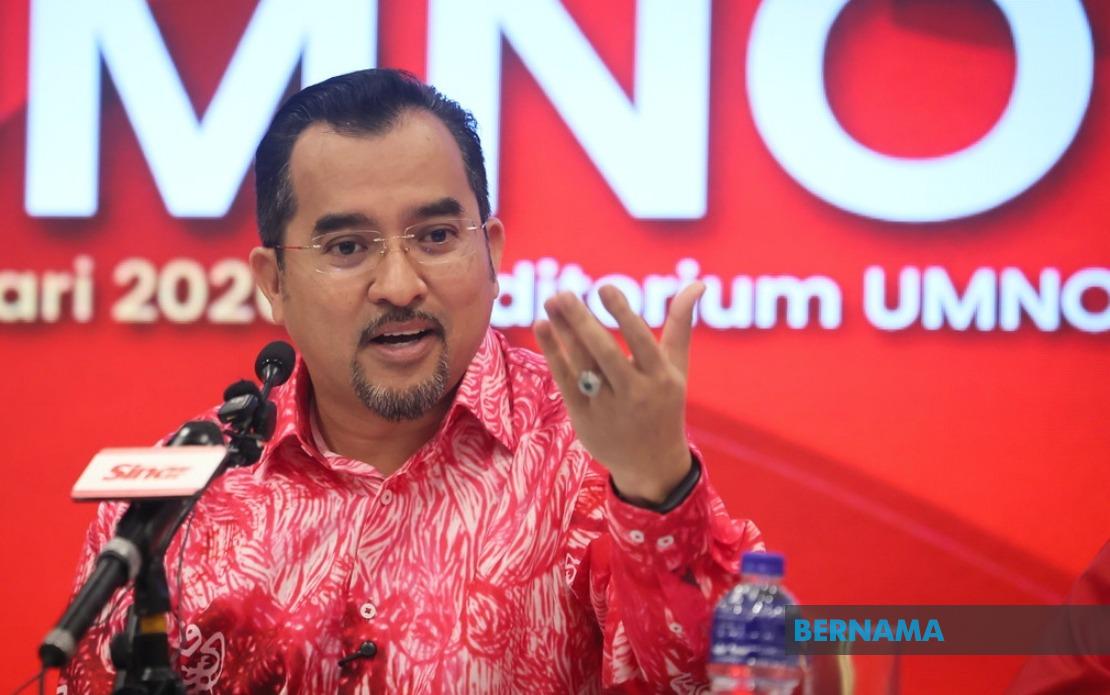
UMNO's secretary-general Datuk Dr Asyraf Wajdi Dusuki has explained that Datuk Dr Mohd Puad Zarkashi's abrupt exit from the party stems from disappointment over his son not being selected as a candidate for the Rengit state seat. Asyraf Wajdi disclosed the reasoning in a Facebook statement, offering the party's perspective on what has become an embarrassing departure for UMNO just days before the Johor state election campaign officially begins.
The timing of Puad's resignation carries particular significance for UMNO's electoral fortunes. With nomination day scheduled for June 27 and polling set for July 11, the party faces the prospect of managing internal dissent while simultaneously mobilising grassroots support across Johor's constituencies. The Rengit seat, located in the southern part of the state, represents a strategically important area where party unity and candidate selection could meaningfully influence overall performance.
According to Asyraf Wajdi's account, Puad had previously sent lengthy written communications to party leadership explicitly threatening to leave UMNO and launch public attacks against the party should his son not receive consideration for the Rengit nomination. This characterisation portrays Puad's departure as the inevitable consequence of conditional support rather than a principled political decision, a framing intended to undermine the credibility of any subsequent criticism he might level against UMNO.
The party's secretary-general took care to acknowledge the younger Puad's potential, describing him as young and possessing considerable capacity for future development as a political leader. However, Asyraf Wajdi stressed that candidate selection involves multiple complex variables extending far beyond individual promise or family connections. This assertion appears designed to establish that UMNO's decision-making processes remain objective and meritocratic, despite perceptions of nepotism that sometimes plague Malaysian political parties.
Asyraf Wajdi further disclosed that Puad had employed similar pressure tactics during the tenure of former Prime Minister Datuk Seri Najib Tun Razak, threatening to resign his UMNO membership unless he received renomination as Member of Parliament for Batu Pahat. This revelation serves to establish a pattern of behaviour, suggesting that Puad's current departure reflects a longstanding practice of leveraging party loyalty for personal advancement rather than representing genuine ideological disagreement or principled objection to UMNO's direction.
Central to the party's defence is the assertion that UMNO functions as a meritocratic organisation rather than a family-based political structure. Asyraf Wajdi emphasised that UMNO explicitly does not operate on hereditary principles whereby relatives of prominent members automatically advance to leadership or candidacy opportunities. This positioning implicitly responds to broader Malaysian discourse surrounding political dynasties and nepotism, attempting to differentiate UMNO's approach from criticisms that plague other parties and prominent political families across the country.
The secretary-general's statement carries an undertone of institutional defensiveness, arguing that party struggle supersedes personal satisfaction or individual family interests. By framing Puad's departure within the context of personal disappointment rather than legitimate party critique, UMNO leadership attempts to contain reputational damage and discourage other members from viewing the exit as evidence of flawed internal decision-making processes. The implicit message suggests that acquiescing to threats would undermine UMNO's organisational integrity.
Puad himself announced his resignation through social media, characterising the decision as entirely voluntary and citing desire for greater freedom to express personal viewpoints. This divergence in narrative—with Puad presenting his exit as liberating while UMNO frames it as capitulation to unfulfilled demands—illustrates the fundamental disagreement over underlying motivations. The public nature of their conflicting accounts risks prolonging the controversy and potentially attracting media attention away from UMNO's campaign messaging during a critical pre-election period.
Asyraf Wajdi's final assertions emphasise UMNO's commitment to traditional party ideals centred on race, religion, and nation, positioning the party as institutionally strong and resistant to individual pressure. By denying that any single member's departure represents meaningful challenge to party direction, leadership seeks to project stability and confidence to the broader membership and electorate. This rhetorical strategy aims to prevent the Puad incident from metastasising into broader questions about party discipline or candidate selection transparency.
For Malaysian observers, the episode illuminates persistent tensions within UMNO regarding the relationship between senior members' family aspirations and party meritocratic ideals. The incident occurs against a backdrop of ongoing scrutiny regarding succession planning and generational transition within Malaysian political parties. Whether Asyraf Wajdi's characterisation fully captures Puad's motivations remains contested, but the public dispute itself signals potential fissures within party unity at a moment when UMNO requires cohesion to maximise support in Johor's polls.
The Puad situation also raises questions about how UMNO manages disappointed senior members and whether transparent criteria exist for candidate selection in state contests. As Malaysia's dominant political institution for decades, UMNO's handling of internal conflicts carries implications for perceptions of democratic governance within the party system. The manner in which this dispute resolves could influence how other members view the fairness and openness of future nomination processes.

