UMNO has granted its state-level leadership the authority to pursue discussions with any political party seeking cooperation ahead of the next general election, a significant development that signals the party's openness to flexible coalition arrangements across Malaysia's diverse political landscape. The decision, announced following a late-night Supreme Council session in Kuala Lumpur on August 28, reflects a strategic pivot toward decentralized negotiation power, allowing regional party leaders greater latitude in crafting electoral alliances suited to their local contexts.
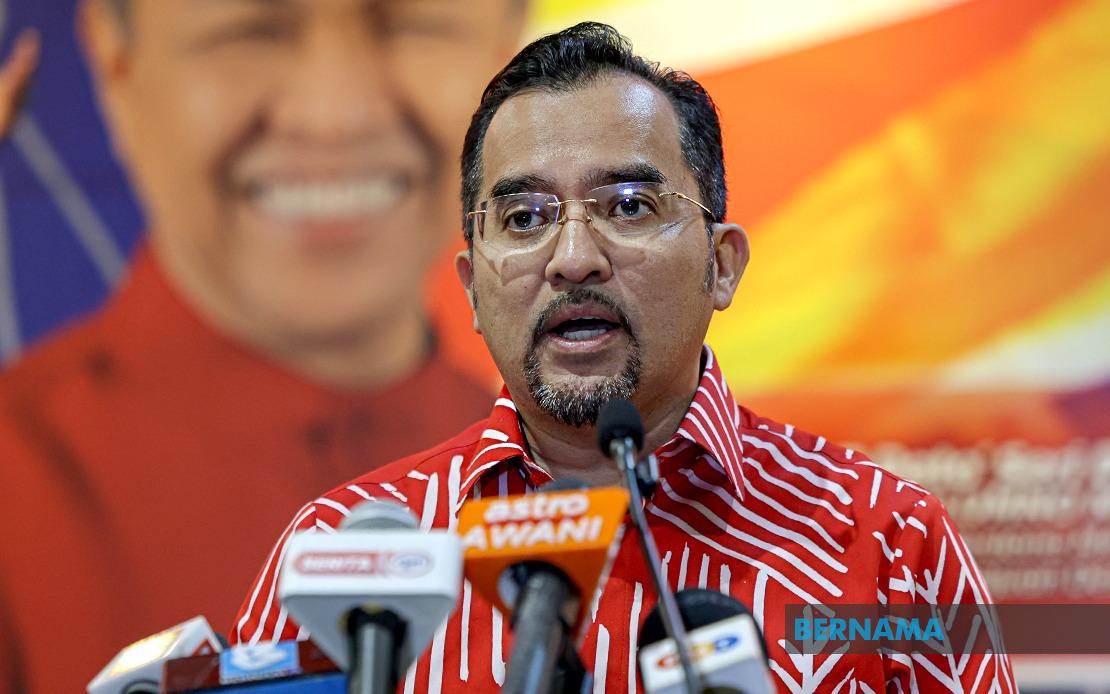
The authorisation emerged from deliberations chaired by UMNO president Datuk Seri Dr Ahmad Zahid Hamidi, with deputy president Datuk Seri Mohamad Hasan and senior council members in attendance at the party's headquarters in Menara Dato' Onn. UMNO secretary-general Datuk Dr Asyraf Wajdi Dusuki outlined the framework for these prospective arrangements during a subsequent media briefing, emphasizing that all cooperation negotiations must rest on authentic commitment and reciprocal confidence rather than coercion or political pressure.
This move carries substantial implications for Malaysia's electoral architecture. By distributing negotiation authority to state divisions, UMNO acknowledges that political dynamics vary significantly across peninsular and East Malaysian territories. A state-level approach permits customized partnership frameworks, enabling UMNO branches in Selangor, Johor, Sabah, and Sarawak to forge alliances tailored to regional demographics, competitive landscapes, and historical political relationships. For instance, arrangements in predominantly Malay-Muslim rural constituencies may differ markedly from urban, multi-ethnic zones where different coalition logics apply.
The party's insistence that negotiations proceed from positions of mutual respect rather than intimidation signals awareness of fractured relationships within Malaysia's broader coalition ecosystem. Recent political volatility—including defections, power struggles, and accusations of political arm-twisting—has corroded trust between parties. By explicitly rejecting coercive tactics, UMNO appears to be addressing these tensions and positioning itself as a principled coalition partner, a framing designed to make UMNO an attractive ally for potential partners wary of being subordinated or manipulated.
Concurrently, UMNO extended a formal invitation to PAS leadership to attend the 2026 UMNO General Assembly, scheduled for September 9 to 12. This gesture underscores the strategic importance of the PAS-UMNO relationship in Malay-Muslim politics. Though both parties have historically competed for similar electoral constituencies, recent years have witnessed periodic cooperation on specific legislative matters and tacit understanding on certain regional politics. Inviting PAS to UMNO's major gathering signals respect for the Islamic party's political standing and may facilitate informal discussions on potential electoral coordination.
The Supreme Council meeting also approved three complementary programmes scheduled for September 8, immediately preceding the general assembly. These events—the 2026 Malay Education Convention, the Malaysian Islamic Scholars Convention, and Laman Wanita Kreatif—suggest UMNO is crafting a thematic package emphasizing education, Islamic leadership, and women's empowerment. Such programming serves dual purposes: it reinforces UMNO's positioning within Malay-Muslim civil society and provides neutral spaces where political discussions with allied parties can occur alongside substantive policy deliberation.
The timing of these announcements warrants attention. Malaysia's electoral cycle typically builds momentum 18 to 24 months before polling day, and early September marks a critical juncture for coalition formulation. By authorizing state-level negotiations now, UMNO creates space for exploratory talks without committing to specific partnerships at the national level. This gradualist approach allows the party to gauge which arrangements generate momentum and which falter, informing eventual formal coalition structures closer to election season.
UMNO also reaffirmed its commitment to rule-of-law principles, emphasizing that individuals should not be presumed culpable until formally charged, tried, and convicted. This statement carries weight given Malaysia's recent political turbulence, during which multiple party leaders and affiliates have faced legal proceedings. By stressing adherence to judicial processes, UMNO attempts to establish ethical positioning while navigating the reality that certain party members face ongoing legal scrutiny. The statement implies that UMNO will neither shield members from justice nor prejudge their guilt—a balancing act that reflects broader tensions between party loyalty and institutional accountability within Malaysian politics.
For Southeast Asian observers, UMNO's approach reflects broader dynamics within the region's democratic systems. Coalition politics in Malaysia, Thailand, and Indonesia demonstrate persistent tension between personalistic, regionally-based political networks and ideologically-coherent national alliances. UMNO's decision to decentralize coalition negotiations mirrors similar patterns in other regional democracies where national political structures struggle to accommodate diverse subnational interests. This flexibility may enhance electoral adaptability but risks fragmenting party discipline if state divisions pursue incompatible partnerships or advance contradictory policy positions.
The invitation to PAS and the emphasis on principled cooperation also reflect UMNO's concern regarding its competitive position. As Malaysia's demographic composition evolves and younger voters demonstrate different political preferences, UMNO recognizes that electoral viability depends on constructing coalitions that exceed simple communal arithmetic. Strategic partnership with PAS, notwithstanding historical rivalries, may consolidate Malay-Muslim votes while creating space for UMNO to pursue urban, non-Malay constituencies through alternative alliance partners in specific states.
The Super Council's decisions project into the 2025-2026 political calendar, a period when Malaysia's state elections and eventual federal election will reshape parliamentary composition. How UMNO's state divisions exercise their newly granted negotiation mandate will significantly influence whether the party emerges stronger through flexible localized cooperation or fractures through uncoordinated, contradictory state-level arrangements. The coming months will test whether UMNO's emphasis on sincerity and trust can translate decentralized authority into cohesive electoral performance.

