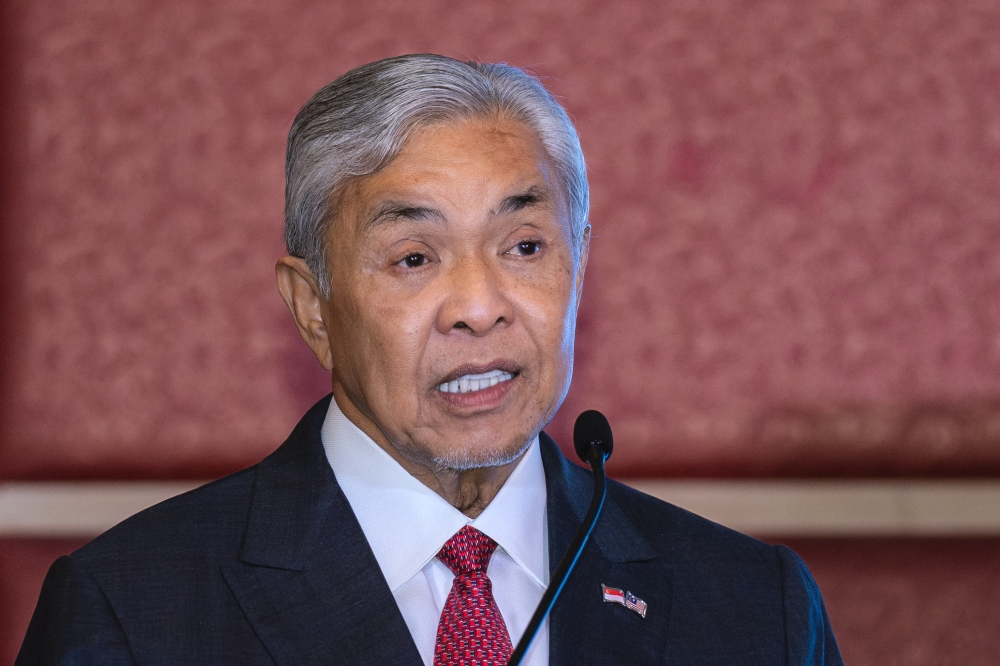
Umno president Datuk Seri Dr Ahmad Zahid Hamidi has sought to quell speculation about binding electoral arrangements between his party and Islamist ally PAS in Negeri Sembilan, emphasising that no formal accord exists between the two coalitions. His remarks come amid ongoing discussions about how the Barisan Nasional and Perikatan Nasional blocs will coordinate their political strategies heading into upcoming contests, a question that has loomed over Malaysia's fractious political landscape since the blocs began their tentative collaboration.
Zahid's clarification appears designed to preserve Umno's negotiating position in the state, where the party has historically wielded significant influence over legislative representation. By firmly denying the existence of any locked-in agreement, the Umno chief kept open the possibility of adjusting seat allocations or electoral strategies based on evolving ground conditions, party performance metrics, or shifts in public sentiment. This ambiguity reflects the broader pragmatism that defines contemporary Malaysian coalition politics, where formal unity often masks considerable jockeying for advantage at the state and federal levels.
The Umno president's warning that "goalposts can change anytime" carries particular significance given the volatility of Malaysia's political ecosystem. Such language signals to internal party stakeholders that leadership retains flexibility to recalibrate alliances, candidate selections, or campaign priorities without being constrained by prior commitments. For PAS, the statement suggests that any informal understandings remain subject to renegotiation, a posture that could prove advantageous if either party perceives shifting electoral momentum or opportunities to capture additional seats.
Negeri Sembilan occupies a strategic position in Malaysian politics, serving as a crucial proving ground for coalition viability and a bellwether for electoral trends in the Klang Valley and surrounding regions. The state's mixed urban-rural composition and history of competitive contests make it particularly valuable for both Barisan and Perikatan. Control over candidate selection and seat distribution in such territories often determines broader coalition stability, making Zahid's insistence on preserving Umno's room for manoeuvre entirely consistent with party interests.
The timing of Zahid's intervention suggests that behind-the-scenes discussions between Umno and PAS over seat allocation had perhaps generated public attention or internal party concerns. By emphasising the absence of formal constraints, Umno's leadership sought to reassure its grassroots that the party retained agency in crucial decisions affecting member advancement and organisational interests. For rank-and-file Umno figures with ambitions in Negeri Sembilan, such reassurance carries considerable weight, as it implies that selection for winnable seats need not yield to PAS claims based on any prior understanding.
The relationship between Umno and PAS has historically swung between cooperation and competition, reflecting their competing claims to represent Malay-Muslim interests. Formal pacts between the two have occasionally materialised at state level, as with their 2020 cooperation in certain contests, but such arrangements often prove contentious and subject to renegotiation. Neither party fully trusts the other, and both remain acutely aware that electoral gains for one potentially translate to losses for the other, particularly in constituencies with substantial Malay-Muslim voter bases where both organisations maintain deep organisational roots.
For observers tracking Malaysian coalition dynamics, Zahid's statement underscores the provisional nature of Barisan-Perikatan coordination. Unlike the more institutionalised alliances seen in some democracies, Malaysian blocs retain considerable fluidity, with state-level arrangements often differing markedly from federal positioning. This flexibility permits rapid adjustment when circumstances warrant but also creates uncertainty for party members, potential candidates, and voters attempting to understand likely governance scenarios following elections.
The implications of this stance extend beyond Negeri Sembilan to broader questions about coalition architecture heading into the next general election. If Umno refuses to lock in specific arrangements even at the state level, it signals an unwillingness to cede significant autonomy to coalition partners, a posture likely to resonate with other Barisan component parties similarly concerned about preserving organisational independence. Conversely, PAS may interpret such flexibility as an invitation to assert its own claims more forcefully, particularly if the party perceives opportunities to expand its Negeri Sembilan footprint.
The Malaysian electorate, increasingly sophisticated in its political consumption, tends to view coalition flexibility with ambivalence. While some voters appreciate the strategic thinking behind preserving options, others worry that such tactics indicate a lack of clear commitment to voters and a prioritisation of factional interests over coherent governance platforms. This tension between strategic flexibility and electoral credibility will likely characterise major coalition positioning across the coming electoral cycle.
Ultimately, Zahid's comments reveal the enduring challenge facing Malaysian political coalitions: the need to maintain sufficient unity for electoral competitiveness while simultaneously preserving sufficient autonomy to satisfy party members and preserve organisational interests. His insistence on the absence of formal constraints, coupled with acknowledgement that "goalposts can change," encapsulates this balancing act. For Negeri Sembilan politics specifically, it suggests that seat allocations and candidate selections will remain fluid subjects of negotiation between Umno and PAS, determined less by prior pacts than by calculations of electoral advantage and coalition stability as those contests draw closer.

