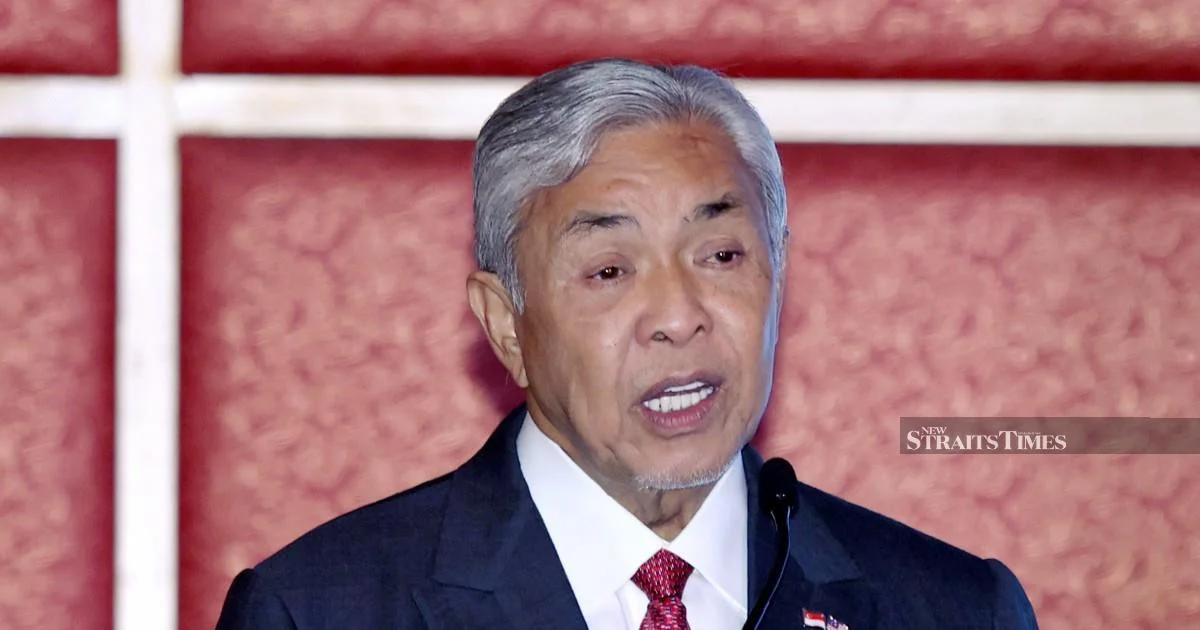
Umno president Datuk Seri Dr Ahmad Zahid Hamidi has publicly refuted suggestions that his party has negotiated a formal arrangement with Pas concerning seat distribution for the forthcoming Negri Sembilan election. The denial comes as speculation intensifies about potential electoral cooperation between the two Islamist-leaning parties ahead of what could be a competitive state-level contest.
Zahid's statement represents an attempt to quash mounting rumours within political circles that Umno and Pas had been engaged in behind-the-scenes negotiations over how to divide constituencies in the traditionally competitive Negri Sembilan state assembly. Such arrangements, if reached between parties, typically serve to prevent direct competition in target seats and consolidate votes against perceived common rivals. The clarity sought by Umno's leadership suggests the party is keen to avoid perceptions of a binding electoral pact that might complicate its broader coalition positioning or generate internal friction.
The Negri Sembilan state election represents a significant battleground in Malaysia's electoral landscape. The state remains pivotal to understanding the balance of power between Umno-led coalitions and other political groupings. Competition in this state traditionally reflects the broader factional dynamics at play across the Klang Valley and central Peninsular Malaysia. Any formal seat-sharing arrangement would have signalled a major shift in electoral strategy and could have influenced how other parties respond tactically to their own electoral prospects.
Umno's recent political trajectory has seen it navigate complex relationships across multiple coalition frameworks. The party's leadership has sought to maintain flexibility in its partnerships, balancing its traditional Barisan Nasional allies with periodic overtures to other political forces. Zahid's clarification on the Pas matter suggests Umno may prefer to approach the Negri Sembilan election with greater autonomy rather than lock itself into predetermined seat allocations that could constrain its performance or limit its appeal to swing voters.
Pas, as the primary opposition force in several Malaysian states and with substantial presence in federal-level politics, similarly maintains its own electoral priorities and coalition partnerships. The party's partnership approach has evolved over time, reflecting its strategic considerations and the shifting political landscape. The Negri Sembilan electoral context provides Pas with opportunities to expand or consolidate its influence in the state, though the exact nature of any discussions with Umno remains clouded by the current denial.
The timing of Zahid's statement may also reflect awareness of internal party dynamics and public perception. Umno members and supporters maintain various perspectives on coalition arrangements and electoral cooperation with other parties. Clear public positioning helps Umno leadership manage internal expectations and demonstrate that major decisions are being made according to party strategy rather than external pressure or commitments. This messaging becomes particularly important as the election timeline approaches and candidate nominations become imminent.
From a broader Southeast Asian perspective, Malaysia's state elections continue to serve as important barometers of political sentiment and coalition sustainability. The Negri Sembilan contest will likely receive heightened scrutiny from observers tracking Malaysia's ongoing political evolution, including how different parties navigate federalism, coalition building, and electoral competition. International observers and regional analysts frequently use such elections to gauge the health of Malaysia's political institutions and the effectiveness of various political actors.
For Malaysian voters in Negri Sembilan, the absence of a formal seat-sharing arrangement between Umno and Pas could translate into more open competition within the state. This might increase opportunities for independent candidates or smaller parties to contest seats that would otherwise be conceded by major parties as part of an arrangement. Conversely, it could intensify intra-party competition if Umno and Pas both field candidates in overlapping constituencies, potentially fragmenting votes and affecting overall campaign dynamics.
The denial also reflects broader questions about how Malaysian political coalitions function in practice. While formal alliances and memorandums of understanding make headlines, much electoral coordination occurs through informal understandings, non-aggression pacts, or seat discussions that never result in binding agreements. Zahid's statement that no formal agreement exists does not necessarily preclude understanding or coordination at lower levels, though such nuances rarely surface in public statements.
Moving forward, attention will focus on whether Umno and Pas clarify their electoral positioning further as the campaign period approaches. Candidate announcements, campaign messaging, and on-the-ground party activities will provide more concrete indicators of the actual relationship between the two parties in Negri Sembilan. Political observers in Malaysia and the broader region will monitor these developments closely to understand how the state's electoral contest unfolds and what implications it carries for national politics.

