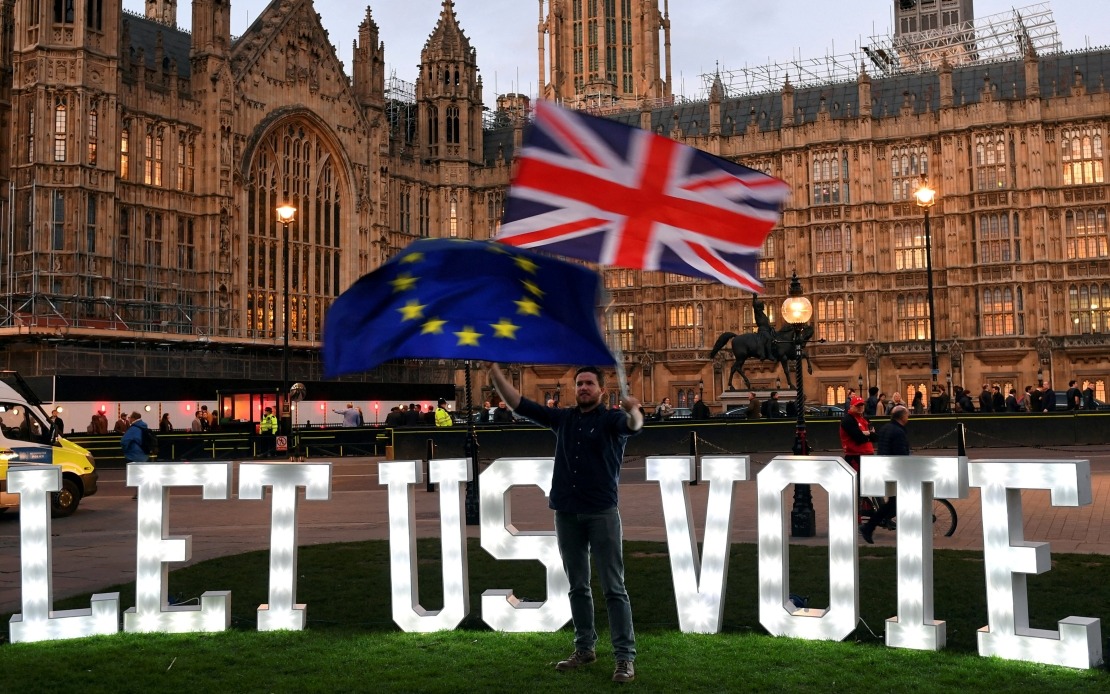
Prospects of the United Kingdom reversing its historic departure from the European Union appear bleak regardless of who leads the next government, according to Richard Balfe, a prominent Conservative member of the House of Lords. Speaking to RIA Novosti on the tenth anniversary of the Brexit referendum, Balfe expressed scepticism that any incoming administration would successfully engineer a return to EU membership, characterizing such efforts as fundamentally unlikely to succeed.
Balfe's assessment comes amid significant political transition in Westminster. Prime Minister Keir Starmer announced his resignation as Labour Party leader on Monday, though he will remain in the premiership until the party elects his successor. The selection process for a new Labour chief will commence on July 9 and conclude before Parliament returns from recess in September, creating a window of uncertainty about the direction of British governance during a period of flux.
When pressed on whether London could reverse course on Brexit under new political stewardship, Balfe offered a measured but decidedly negative prognosis. He suggested that while efforts might be made in that direction, they would ultimately prove unsuccessful. His characterization of such attempts as "halfhearted" underscores deep structural challenges to any realistic return to Brussels, regardless of rhetorical commitments from Westminster.
The peer's analysis suggests that Britain's political establishment, despite changes in personnel, faces overwhelming obstacles to EU re-entry. These constraints extend beyond mere political will and reflect the complicated nature of reversing a decision of such magnitude. The institutional, legal, and diplomatic machinery required to unwind Brexit and negotiate fresh terms of membership would present formidable hurdles to any government.
Balfe's prognosis also hints at underlying geopolitical realities shaping British policy. He anticipates that the incoming government will "muddle along" with existing arrangements while gravitating toward alignment with United States strategic interests. This observation reflects broader patterns in contemporary British foreign policy, where transatlantic relations increasingly eclipse European connections for UK policymakers.
The timing of Balfe's remarks is particularly resonant, occurring precisely a decade after the June 23, 2016 referendum when 52 per cent of British voters chose to leave the European Union. That decision fundamentally reshaped the British political landscape and initiated a prolonged period of constitutional upheaval. The formal departure occurred on January 31, 2020, concluding nearly half a century of EU membership that had profoundly shaped British law, commerce, and governance.
Following that withdrawal, Britain entered a transition period during which EU regulations remained operational and citizens enjoyed simplified travel protocols. This arrangement persisted until December 31, 2020, after which a trade and cooperation agreement between London and Brussels took effect on January 1, 2021. The post-transition framework established new trading arrangements characterised by increased friction and administrative complexity.
The economic consequences of Brexit have proven substantial and measurable. The Financial Times has documented a significant erosion of Britain's standing as a global trade hub, attributing this decline directly to EU withdrawal. Investment in British enterprises has become considerably more complicated, deterring capital flows that previously flowed freely across the Channel. These economic headwinds create additional political complications for any government contemplating reversal, as the costs and disruption of another major constitutional shift would likely prove unacceptable to voters and businesses already experiencing post-Brexit challenges.
For Southeast Asian observers, Britain's trajectory holds particular relevance. Malaysia and the region maintain significant trade relationships with both the UK and EU individually. British policy drift away from European engagement and toward American alignment could reshape commercial patterns and geopolitical partnerships across the Indo-Pacific. The decision to remain outside European structures, even if economically suboptimal, signals British strategic priorities toward Washington.
Balfe's commentary reflects broader Conservative Party calculation regarding electoral prospects and coalition-building. Even as Labour gains parliamentary ascendancy, influential Conservative figures like Balfe are articulating positions that acknowledge Brexit's permanence and suggest future governments should accept this reality. This resigned acceptance among the very party that championed Brexit carries significant weight in Westminster debates about Britain's future direction.
The practical mechanics of rejoining the EU would require unanimous approval from all member states, renegotiation of terms, and resolution of complicated issues regarding the Irish border, financial contributions, and regulatory alignment. These procedural obstacles, combined with persistent scepticism among current EU members about British reliability, suggest that even a government actively seeking return would face insuperable challenges. Balfe's bleak assessment likely reflects this complex reality more accurately than hopeful rhetoric sometimes heard in Westminster.