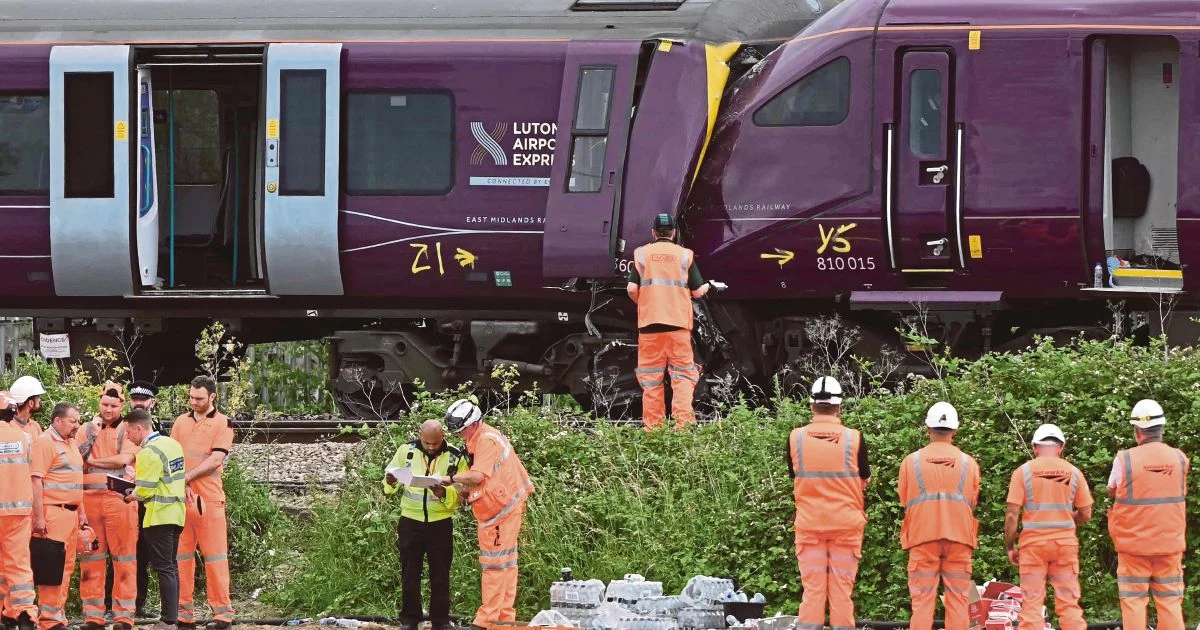
A train driver has been killed and 28 people hospitalised following a collision that struck a route north of London, prompting immediate safety inquiries into the cause of the accident. Nine of the injured are in critical condition, raising concerns about the severity of the impact and the effectiveness of emergency response measures. The incident occurred on Saturday as investigators from the UK's accident investigation branch began examining the scene and gathering evidence from both trains involved in the collision.
The accident took place on a major railway corridor serving the greater London metropolitan area and connecting routes further north. The collision has drawn significant attention to rail safety standards in Britain, particularly regarding the spacing between trains, signal systems, and driver protocols. Details about the precise point of impact and the configuration of the trains remain under investigation, though early reports suggest both vehicles were in operation at the time of the collision.
Emergency services responded swiftly to the incident, deploying multiple ambulances, fire crews, and rescue personnel to the scene. The rapid mobilisation of medical teams helped stabilise the injured and facilitate their transportation to nearby hospitals. Local hospitals in the area activated major incident protocols, with staff prepared to handle a large influx of trauma cases. The coordination between emergency responders and rail operators demonstrates the existing frameworks for handling transportation emergencies, though such incidents invariably prompt questions about prevention.
Investigators are now examining several critical factors that may have contributed to the collision. These typically include signal reliability, whether drivers received adequate warning systems, visibility conditions at the time, track maintenance records, and adherence to operational procedures. The presence of nine critically injured passengers suggests the collision involved considerable force, indicating either high speeds at impact or the weight and momentum of the trains involved. Understanding these variables will be essential to the formal determination of cause.
The British rail network carries hundreds of millions of passengers annually, and major incidents like this collision, while statistically rare, carry significant implications for public confidence in transportation safety. Each serious accident prompts review of existing safety protocols and consideration of technological improvements such as automated train protection systems and enhanced collision avoidance measures. For Malaysian readers familiar with local rail operations, such incidents abroad often inform discussions about transport safety standards in Southeast Asia.
The identity and background of the deceased driver are expected to be confirmed by authorities once formal procedures are completed. The loss of life among transport workers underscores the hazards faced by those responsible for operating mass transit systems. Driver fatigue, visibility, and mechanical failures have all been factors in previous rail incidents worldwide, and each investigation provides valuable data for the broader transportation industry.
Railway operators in the United Kingdom have suspended service on the affected section while investigators complete initial evidence gathering. This disruption will impact commuters and businesses relying on the route, though safety considerations necessarily take precedence during active investigations. Reconstruction of the collision's exact sequence—including train speeds, braking performance, and signal status—requires detailed forensic analysis that cannot be rushed.
The incident will likely prompt reviews of safety practices across British Rail's network and may influence recommendations to other operators internationally. Transport authorities in Malaysia and other Southeast Asian countries often monitor major incidents abroad, evaluating whether similar vulnerabilities exist in their own systems. Rail safety standards continue to evolve globally, with newer technologies and operational procedures gradually reducing accident rates across developed networks.
For passengers and families affected by the collision, the investigation represents an opportunity to understand what occurred and whether preventive measures might have averted the tragedy. Rail transport remains statistically safer than road travel, yet high-profile incidents inevitably generate scrutiny about whether existing safeguards are sufficient. The coming weeks will see detailed technical analysis as investigators produce preliminary findings, with a full report typically following months of examination.
The investigation also carries implications for rail operators' insurance, liability determinations, and potential regulatory changes. Lessons learned from this collision will be disseminated across international rail safety networks, contributing to the collective knowledge base that helps prevent similar incidents. As investigators work through the evidence, the focus remains on establishing precisely what failed in the moments before impact, information that will ultimately serve to strengthen transport safety protocols throughout Britain and beyond.

