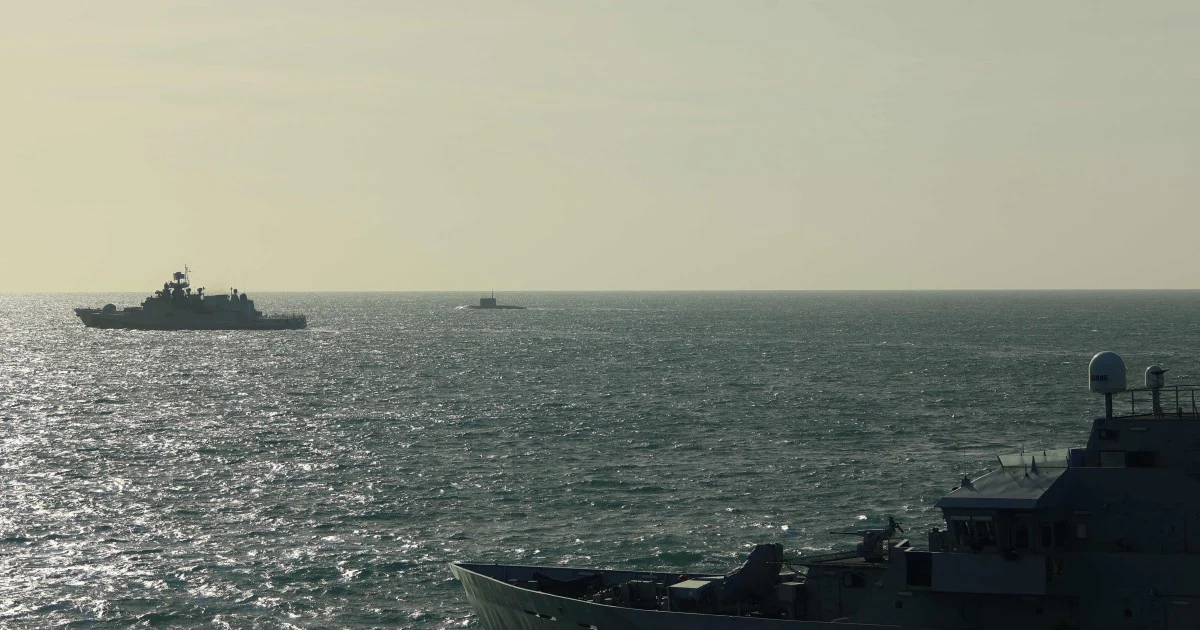
British Prime Minister Keir Starmer has responded to an incident involving a Russian warship firing warning shots in the English Channel, characterizing the action as reckless rather than part of a calculated intimidation campaign. The confrontation, which occurred when the vessel discharged rounds near a passing yacht, represents another flashpoint in an increasingly fraught maritime relationship between the United Kingdom and Russia, reflecting broader geopolitical tensions that have intensified since Russia's invasion of Ukraine in 2022.
Starmer's carefully chosen language distinguishes between deliberate provocation and what he portrays as operational miscalculation or dangerous protocol by Russian naval forces. By labelling the incident reckless, the Prime Minister emphasizes that the action endangered lives and violated international maritime norms, while simultaneously suggesting it may not have been part of a wider strategic campaign to intimidate Western vessels or assert dominance over contested waters. This nuanced framing allows the UK government to respond seriously to the incident without escalating rhetoric that could trigger further confrontation.
The English Channel has emerged as a critical zone where Russian and Western military assets increasingly interact, creating unpredictable situations with genuine safety implications. Russia maintains naval deployments in European waters both as a demonstration of capability and to signal its refusal to accept Western dominance of strategic corridors. For the UK, which borders this vital waterway and depends on Channel shipping for significant trade, such incidents carry both immediate security concerns and symbolic weight regarding territorial integrity and freedom of navigation.
The yacht incident reflects a pattern of behaviour whereby Russian naval vessels have conducted manoeuvres that Western observers characterize as aggressive or unprofessional. These encounters typically involve close approaches to commercial or military vessels, sudden course changes, and occasionally weapons discharge that Russian authorities justify as routine training exercises or warnings to vessels in restricted areas. The distinction between legitimate naval operations and reckless endangerment remains contested, with Moscow and London maintaining fundamentally different interpretations of appropriate maritime conduct.
For Malaysian and Southeast Asian observers, such incidents carry strategic significance beyond the immediate UK-Russia dynamic. They illustrate how maritime disputes and freedom of navigation concerns create friction in regions where major powers contest influence and control. The precedents set in European waters—regarding how nations respond to aggressive naval manoeuvres, what actions trigger diplomatic protests versus military responses, and how incidents are framed politically—may influence behaviour in Asia-Pacific hotspots including the South China Sea, where freedom of navigation and maritime safety remain contentious issues.
Starmer's characterization also reflects broader British strategic calculations regarding Russia. The UK government must balance firm condemnation of dangerous actions with avoiding language that forecloses future dialogue or escalates tensions beyond current levels. By depicting the incident as reckless rather than sinister, Starmer preserves space for Russia to adjust behaviour without losing face, while nonetheless communicating that the UK takes maritime safety seriously and will not tolerate violations of international norms.
The warship's presence in the English Channel itself signals Russian determination to maintain naval access to waters traditionally dominated by NATO and Western naval forces. Moscow views such operations as reasserting Russia's role as a global maritime power and countering what it characterizes as Western encroachment on Russian interests. The incident thus represents not an isolated accident but rather part of sustained Russian naval operations designed to project power and challenge Western assumptions about exclusive control of European waters.
Britain's response mechanisms to such incidents involve coordination with NATO allies and European partners who increasingly recognize Russian naval activity as part of a broader pattern of assertive behaviour. The UK cannot address Russian maritime actions unilaterally; instead, these incidents feed into collective assessments of Russian intent and inform NATO's strategic posture. Starmer's measured language reflects consultation with allied governments and recognition that individual incidents must be contextualized within longer-term strategic trends.
The incident also touches on broader questions about maritime law and the rights of naval vessels to conduct operations in international waters. Russia claims rights to navigate freely and conduct exercises in international waterways, invoking principles of freedom of the seas. The UK and its allies counter that certain operational practices—particularly those involving weapons discharge near civilian vessels—violate both international maritime safety conventions and broader norms governing responsible state behaviour.
From a practical standpoint, such incidents create dangers for commercial shipping and fishing vessels whose operations are conducted without military support or sophisticated awareness of military activities underway. The yacht caught in the Russian warship's firing zone was vulnerable and unable to defend itself, underscoring how great power tensions at sea risk harming civilians and creating humanitarian consequences. This concern has become increasingly acute as military operations intensify in waters where commercial traffic remains essential to regional economies.
Looking forward, the UK faces ongoing challenges managing Russian naval activity in European waters without allowing such incidents to dominate diplomatic relations or consume political bandwidth. Starmer's framing suggests London intends to remain resolute regarding maritime security while avoiding rhetoric that transforms individual incidents into major crises. However, if Russian naval operations continue or intensify, British patience may prove finite, potentially forcing more assertive responses that could transform the character of UK-Russia maritime interactions from tense but manageable friction into more serious confrontation.