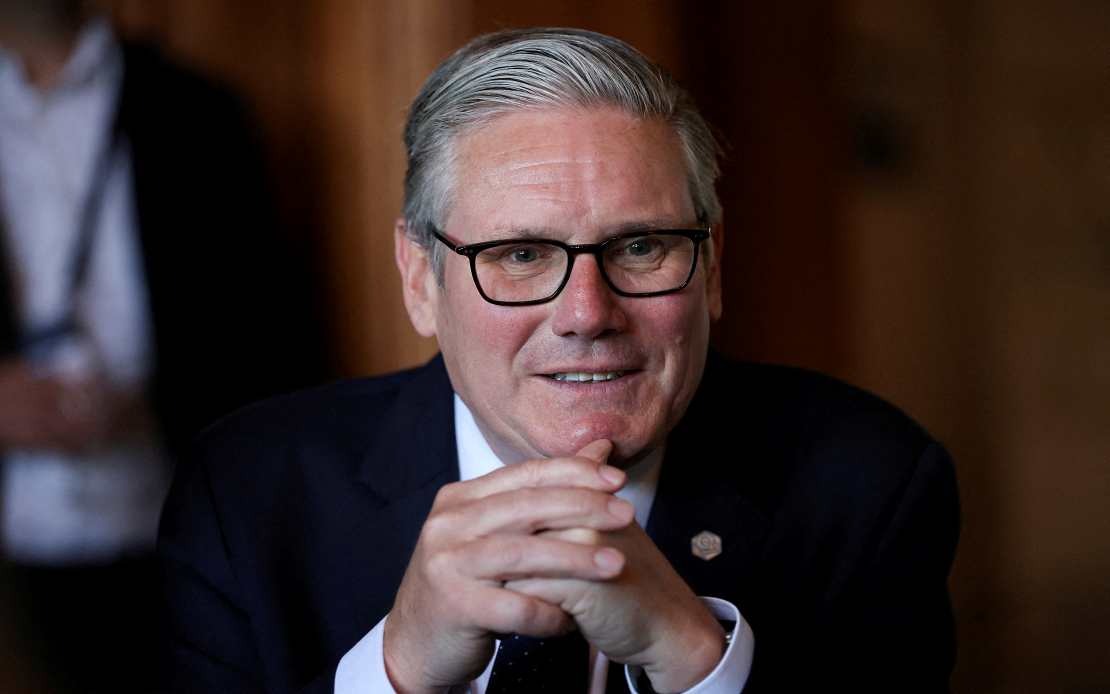
Andy Burnham, the former Manchester Mayor widely expected to become the United Kingdom's next Prime Minister, has publicly threatened Israel with new economic sanctions in response to what he characterises as ongoing violations of ceasefire agreements and accelerated settlement expansion. His threat comes as he announced his bid for the Labour Party leadership on Thursday, with July 20 identified as a potential date for his assumption of the premiership should no rival candidates emerge to challenge his candidacy.
Burnham's stance represents a notably sharper rhetorical position than that currently maintained by Prime Minister Keir Starmer, suggesting that a change in government could coincide with a recalibration of Britain's diplomatic approach toward the Israeli-Palestinian conflict. The Labour politician articulated his position through a video statement distributed on social media, emphasising what he views as a deteriorating humanitarian situation and escalating violations of international law. His comments underscore growing pressure within British political circles to adopt a more assertive posture concerning Israeli military operations and settlement policies.
The incoming Labour leader accused Israel of maintaining military operations within Gaza that contradict the terms of existing ceasefire arrangements, resulting in continued civilian casualties among Palestinians. Burnham specifically highlighted what he termed a "surge" in settler violence occurring across the West Bank and East Jerusalem, coupled with the progressive displacement of Palestinian communities through the expansion of settlements that he characterised as illegal under international law. These developments, he argued, necessitate a stronger international response than currently exists.
Burnham's criticism extends to Prime Minister Benjamin Netanyahu personally, whom he accused of actively undermining the viability of a two-state solution—the internationally recognised framework for achieving sustainable peace between Israelis and Palestinians. The Labour politician further called for accountability mechanisms targeting individuals responsible for what he described as war crimes perpetrated during the broader Gaza conflict, indicating that any future Labour government under his leadership would prioritise justice mechanisms alongside diplomatic measures.
The policy position articulated by Burnham builds upon sanctions architecture already implemented by the current United Kingdom government. Britain has previously imposed targeted economic measures against Israeli National Security Minister Itamar Ben-Gvir and Finance Minister Bezalel Smotrich, alongside designating certain radical settler groups and associated organisations for sanctions. Burnham's threat of "further sanctions" suggests an intent to expand this existing framework, potentially targeting additional Israeli officials or entities deemed complicit in settlement activities or ceasefire violations.
Burnham explicitly framed his approach as requiring coordinated international engagement, pledging to work alongside other nations to achieve several interconnected objectives: halting the humanitarian suffering resulting from the conflict, ensuring Israeli government compliance with international legal obligations, and preserving the possibility of a negotiated two-state solution. This multilateral framing reflects the reality that unilateral British sanctions carry limited enforcement power and suggests Burnham envisions working through established international forums to build consensus for stronger collective action.
The timing of Burnham's leadership announcement and his articulation of a hardline position on Israel-Palestine matters carries significant implications for Malaysian and Southeast Asian observers. The region's large Muslim population and longstanding diplomatic traditions emphasising Palestinian rights have created consistent pressure on regional governments to maintain vocal support for Palestinian causes. A British government adopting a more forceful stance could provide diplomatic cover for regional actors seeking to intensify their own criticisms of Israeli policies, while potentially influencing voting patterns in international forums such as the United Nations where consensus-building is essential.
Burnham's emergence as the probable next British Prime Minister—dependent upon his securing the Labour Party leadership without facing significant internal opposition—represents a generational shift in British politics. At 53 years old, he would represent a departure from Starmer's centrist positioning, at least on the question of Israeli-Palestinian affairs. His career in Manchester local politics, coupled with his elevation to national prominence, reflects the growing influence of regional voices within Labour's power structures and a potential re-engagement with traditional leftist concerns regarding global justice and anti-imperialism.
The prospective sanctions threat carries practical implications for Israeli policy considerations, though its ultimate impact remains contingent upon whether Burnham successfully assumes the premiership and whether his government proves willing to implement threatened measures. Israeli officials have historically weathered economic pressure from individual nations, particularly when such pressure remains limited in scope. However, coordinated multilateral sanctions regimes can create meaningful constraints on economic activity and influence behaviour at the state level. The threat itself may already be affecting diplomatic calculations in Jerusalem and among Israeli settlement movements.
For Malaysia specifically, Britain's potential pivot toward a more confrontational approach on Israel-Palestine offers an opportunity for greater alignment on this critical issue within Commonwealth forums and United Nations discussions. Malaysia's consistent advocacy for Palestinian statehood and against settlement expansion could find stronger international purchase if major Western powers adopt similar positions. However, the durability of such policy shifts often depends on internal political dynamics and electoral cycles, meaning Malaysian policymakers should treat Burnham's current statements as indicative of probable direction rather than guaranteed future policy.
The prospect of a Labour government taking office with a more assertive position on Israeli accountability for ceasefire violations and settlement activities could reshape international pressure mechanisms. Current international law frameworks exist but require political will from powerful nations to enforce consistently. Should Burnham become Prime Minister and follow through on his sanctions threats, it could catalyse broader international action and establish precedents for holding military powers accountable through economic mechanisms rather than military intervention.
Burnham's policy position also reflects deeper ideological shifts within global leftist movements regarding how to address entrenched conflicts and historical grievances. The emphasis on accountability for war crimes, compliance with international law, and protection of civilian populations represents an internationalist framework that contrasts with purely national interest calculations. Whether this position proves sustainable once Burnham enters office—where diplomatic relationships, trade considerations, and intelligence partnerships may create countervailing pressures—remains an open question that observers across Asia will monitor closely.

