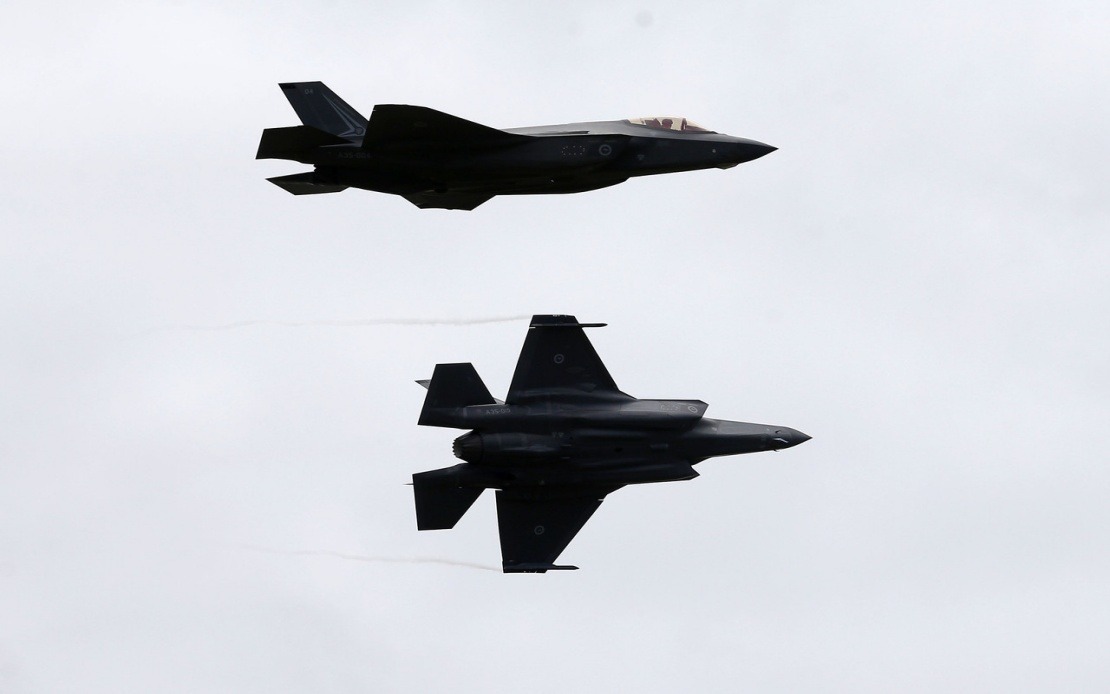
Three major democracies have taken a decisive step forward in military aviation technology by signing a £4.6 billion (US$6.1 billion) contract to accelerate development of an advanced stealth fighter jet, according to announcements from the British government on July 4. The agreement between the United Kingdom, Italy, and Japan represents a crucial turning point for the Global Combat Air Programme (GCAP), an ambitious multinational initiative designed to produce a sixth-generation combat aircraft intended for service entry in 2035.
The British Ministry of Defence characterised the contract signing as a landmark moment for the collaborative defence project, which seeks to create what officials describe as the most technologically advanced fighter aircraft ever flown by the Royal Air Force. The new warplane will be engineered to operate seamlessly alongside existing platforms including the Eurofighter Typhoon and the Lockheed Martin F-35 Lightning II, while also integrating autonomous systems into its operational framework. This approach reflects a modern understanding of air combat, which increasingly emphasises network-centric warfare and human-machine teaming rather than relying solely on individual aircraft capabilities.
The contract has been awarded to Edgewing, a specially established joint venture created in 2025 specifically to manage the GCAP initiative. This consortium brings together three major aerospace and defence contractors: Britain's BAE Systems, Italy's Leonardo SpA, and Japan Aircraft Industrial Enhancement Co. Ltd. (JAIEC). The tripartite partnership allows each nation to leverage its distinctive technological strengths, with the arrangement providing industrial benefits across all three countries and demonstrating how complex defence projects can be structured to share both costs and opportunities.
The current funding phase will concentrate on detailed aircraft design and development, with particular emphasis on establishing the fighter's core performance requirements and conducting comprehensive testing protocols. This stage is critical for translating the programme's ambitious vision into feasible engineering specifications. The focus on rigorous testing at an early design stage underscores lessons learned from previous fighter aircraft development programmes, where inadequate early validation sometimes led to costly modifications later in the production cycle.
From a regional perspective, this agreement has implications for the Indo-Pacific balance of affairs and defence spending patterns. Japan's involvement signals Tokyo's commitment to technological independence in military aviation and reflects broader security concerns regarding regional stability. Italy's participation demonstrates European interest in Asian-Pacific security matters and represents a strategic shift toward greater technological cooperation across continents. The project also illustrates how Western democracies are coordinating defence procurement to develop cutting-edge capabilities while managing expenditure through burden-sharing.
The sixth-generation fighter concept incorporates what defence planners term "complex digital engineering" alongside artificial intelligence systems that will process vast quantities of battlefield information in real time. These technological frontiers represent a significant leap from fifth-generation aircraft like the F-35, which already incorporate advanced sensor fusion and network capabilities. The emphasis on AI suggests that future combat operations will depend heavily on computational capacity and data interpretation, with human pilots potentially taking on more strategic decision-making roles while systems manage routine tactical functions.
For Southeast Asian nations, this development carries several noteworthy implications. The emergence of a credible sixth-generation fighter alternative to existing platforms may influence future procurement decisions across the region. Several countries here have been contemplating their long-term fighter fleet modernisation strategies, and the availability of different technological approaches could provide alternatives to currently dominant acquisition patterns. Furthermore, the strengthening of Japan's defence industrial capabilities through GCAP participation underscores Tokyo's growing role as a regional security anchor.
The timeline toward 2035 service entry provides a window for technology maturation and allows participating nations to recalibrate requirements based on evolving threat assessments. This extended development schedule, compared with some previous programmes, reflects a deliberate choice to prioritise capability over rapid deployment. Given the long service life expected of fighter aircraft, decisions made during design phases typically commit nations to particular technological pathways for decades, making the current emphasis on comprehensive testing and requirements validation particularly important.
The three-nation partnership model also addresses industrial concerns within each country. Defence contractors in Britain, Italy, and Japan will benefit from sustained work assignments throughout the development and anticipated manufacturing phases. This aspect of the agreement helps secure domestic political support, as defence spending often carries significant employment consequences in regions where aerospace manufacturing clusters exist. The industrial participation framework ensures that each nation develops and maintains expertise in advanced fighter aircraft production, reducing future dependence on external suppliers for critical defence capabilities.
The GCAP initiative stands in contrast to some other multinational fighter programmes, which have occasionally experienced cost overruns and schedule delays. The structured approach adopted here, with clear milestones and separate funding tranches, reflects an attempt to manage complexity while maintaining flexibility to accommodate technological advances. The involvement of three nations with established defence industrial bases and proven technological competence suggests that execution risks may be more manageable than in some comparable international defence programmes.
Looking ahead, the success of the GCAP project will significantly influence the trajectory of military aviation technology development globally. A successful outcome would establish a credible alternative to American and emerging Chinese fighter aircraft, potentially reshaping global defence procurement patterns. Conversely, programme disruptions or escalating costs could reinforce existing preferences for proven platforms. For regional observers, particularly in Southeast Asia where military modernisation ranks high on strategic agendas, the GCAP's progress will warrant close monitoring as decisions about future air force capabilities are formulated across the coming years.

