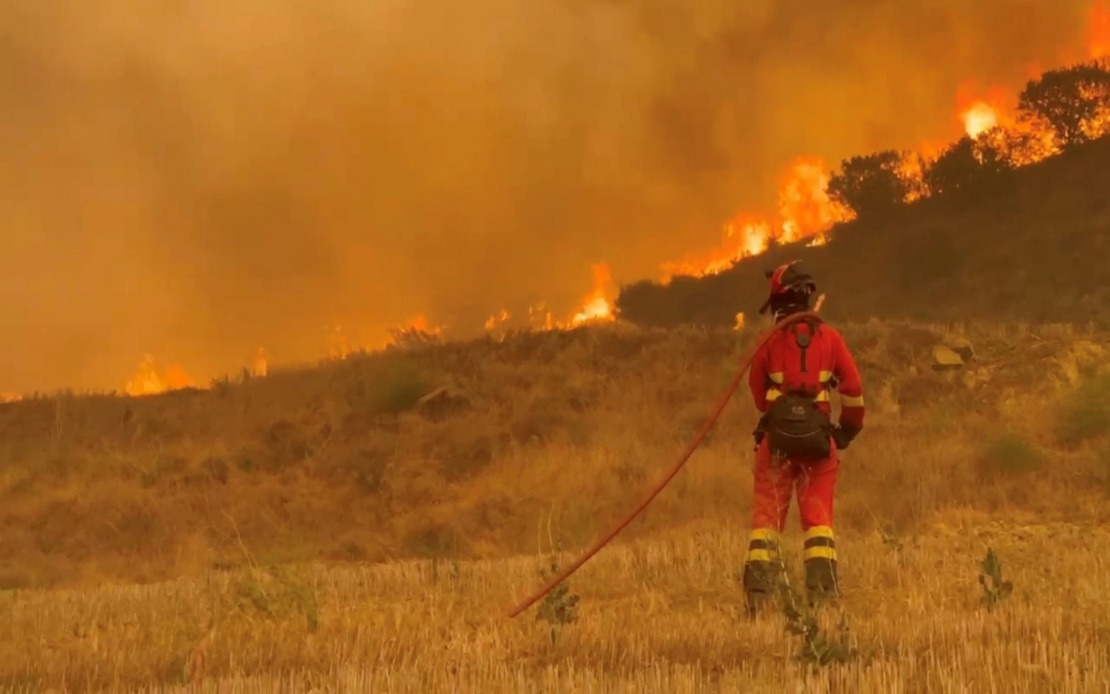
Britain's government is convening an emergency Cobra meeting on Wednesday to coordinate its response to an intensifying weather emergency that has strained emergency services, agricultural operations and the national health system. Andy Burnham is expected to lead the session, which reflects the gravity with which officials view the convergence of extreme temperatures, uncontrolled fires and water shortages gripping the nation.
The timing of this high-level intervention underscores how stretched public services have become under the strain of prolonged heat. Firefighters, who have been battling major blazes including a significant wildfire currently ravaging the New Forest in Hampshire, are operating at the limits of their resources. Simultaneously, farming communities face an unprecedented crisis as drought conditions worsen, and the National Health Service grapples with managing heat-related illnesses and excess mortality among vulnerable populations. The government's decision to activate Cobra—typically reserved for national security emergencies—signals recognition that this weather event has crossed into crisis territory.
The meteorological outlook adds urgency to these deliberations. Britain's Met Office, the nation's official weather service, issued a rare amber extreme heat warning for Thursday, a designation rarely deployed and indicating genuinely dangerous conditions. More significantly, the Met Office announced that current trajectory suggests the UK is poised to record its warmest summer on record when measured by average temperature. Such a milestone would represent a dramatic escalation in the frequency and intensity of summer heat events that have become increasingly common across Northern Europe in recent years.
The drought situation has deteriorated markedly in recent weeks. Wales declared drought status on July 30 as water reserves depleted amid sustained high temperatures and insufficient rainfall. England followed suit last month, with drought conditions declared across half the country following both record-low precipitation and prolonged heat waves. The cascading nature of these declarations illustrates how quickly environmental conditions can degrade once tipping points are breached, with each declaration typically triggering restrictions on water usage that affect agriculture, industry and households.
The human toll has already proven substantial. During the May and June heat waves, Britain recorded 2,877 excess deaths according to the UK Health Security Agency, representing a near-doubling of the 1,504 excess deaths recorded during the summer of 2025. This alarming mortality spike reflects how heat waves disproportionately affect elderly populations, those with pre-existing health conditions, and individuals in inadequate housing or without access to cooling facilities. The sheer scale of excess mortality underscores why health services are stretched and why government intervention has become imperative.
Green Party leader Zack Polanski used the announcement of the emergency meeting to articulate his party's policy response, framing climate adaptation and mitigation as inseparable from addressing immediate crises. His call for taxing fossil fuel corporations to fund firefighting helicopters reflects a perspective that links immediate emergency response to long-term structural change in energy systems. The proposal for community cooling centers addresses a practical vulnerability: ensuring that public spaces provide refuge during dangerous heat, particularly for populations unable to afford air conditioning at home. Maximum working temperature regulations would protect workers from heat stress, while restrictions on new North Sea oil and gas extraction reflect arguments that expanding fossil fuel infrastructure locks in future climate damage.
This emergency convenes against a backdrop of accelerating climate change impacts across the Northern Hemisphere. European nations from Spain to Greece have experienced unprecedented heat waves and wildfires over recent summers, creating a pattern of cascading crises that strain emergency response capacity and public health systems. For Malaysia and other Southeast Asian nations, Britain's experience carries cautionary relevance—while tropical climates already experience extreme heat, the UK's current emergency demonstrates how societies unprepared for rapid climate transitions face compounding failures across multiple systems simultaneously.
The British response mechanism, while reflecting seriousness about the immediate crisis, also raises questions about systemic preparedness. Activating emergency protocols addresses acute symptoms but requires parallel investment in long-term adaptation infrastructure: expanded cooling centers, enhanced water storage and distribution systems, revised building codes for heat resilience, and workforce protections. The gap between emergency meetings and sustainable adaptation planning often determines whether societies simply manage crises repeatedly or begin preventing them through structural change.
For policymakers across Southeast Asia, the UK scenario offers valuable lessons about the interconnectedness of climate impacts. Heat waves do not arrive in isolation; they trigger cascading failures in water systems, agricultural productivity, energy demand, and public health simultaneously. Malaysia's own climate projections anticipate intensifying heat and changing precipitation patterns, making the examination of how wealthy nations manage these transitions particularly instructive. The UK's reliance on emergency protocols rather than preventive infrastructure suggests that building resilience ahead of crisis proves far more efficient than perpetually responding to emergencies after they materialize.

