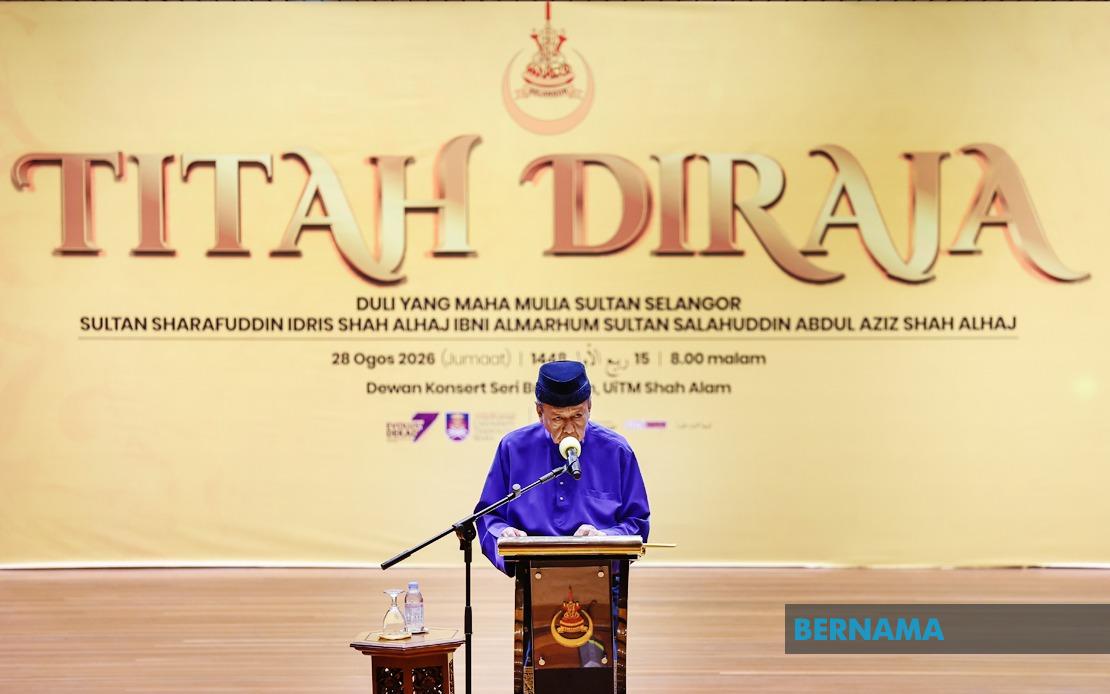
The Sultan of Selangor, Sultan Sharafuddin Idris Shah, has reiterated that Universiti Teknologi MARA (UiTM) must continue functioning as a transformative institution for Malay and Bumiputera youth from economically disadvantaged backgrounds and rural communities. Speaking at the UiTM 2026 Royal Address held at Dewan Konsert Seri Budiman in Shah Alam, His Royal Highness cautioned that as the university expands its reach and academic standing, it should not abandon the foundational purpose for which it was established nearly six decades ago.
The monarch emphasised that the institution's original mandate to serve as an equaliser for social advancement must remain undiminished. He stressed that children from farming families, fishing communities, transport workers, factory employees, and impoverished rural households deserve continued assurance that UiTM's doors remain open to those with aptitude and dedication. This commitment represents the philosophical bedrock of UiTM's historical mission, one that His Royal Highness insisted should never be compromised as the university evolves.
UiTM's trajectory since its inception in 1965 demonstrates remarkable institutional growth. The university began modestly with approximately 219 students and 11 academic staff members, a foundation that expanded dramatically within its opening decade to accommodate nearly 7,000 students and roughly 1,000 educators across some 60 academic programmes spread across multiple state-based campuses. This rapid expansion transformed what was initially a narrow educational pathway into a comprehensive tertiary institution serving diverse constituencies across the nation.
Today, UiTM ranks among Malaysia's largest higher education providers, graduating over 40,000 students annually. The cumulative alumni base has surpassed one million individuals, creating an extensive professional network spanning virtually every economic sector and industry. The university's graduates now populate accounting firms, engineering companies, medical establishments, legal practices, architectural firms, research institutions, government agencies, private corporations, creative industries, and media organisations. This diversity of employment outcomes reflects the breadth of UiTM's educational offerings and the institution's success in preparing graduates for varied professional paths.
Recognising this vast alumni constituency as an untapped resource for institutional sustainability, Sultan Sharafuddin proposed an innovative financing mechanism. The proposal calls for establishing a structured voluntary contribution system wherein each alumnus commits to donating a minimum of RM10 monthly or RM100 annually to UiTM. His Royal Highness characterised this amount as modest and readily affordable for most graduates, framing such contributions as expressions of gratitude for the educational opportunities they received during their tertiary studies.
The financial implications of this proposal are substantial. If successfully implemented across the entire alumni network, the contribution scheme could potentially generate approximately RM100 million in annual funding dedicated specifically to UiTM's institutional development and expansion. More significantly, such revenue could be directly channelled towards providing financial assistance to current and prospective students facing economic barriers to university attendance. This revenue stream would strengthen the institution's capacity to honour its social equity commitments without placing undue strain on government budget allocations.
The Sultan's proposal seeks to operationalise the sentiment expressed in UiTM's widely recognised student and alumni motto "UiTM Dihatiku," which translates as "UiTM in My Heart." Rather than remaining merely a rhetorical expression, His Royal Highness suggested this slogan should translate into tangible, sustained action demonstrating genuine institutional loyalty. The contribution scheme represents a practical mechanism through which the broader UiTM community can collectively demonstrate their emotional and financial commitment to ensuring the university's continued success and accessibility.
Beyond the institutional metrics and statistical achievements that typically measure university performance, Sultan Sharafuddin emphasised the transformative human dimension of UiTM's mission. The true measure of success extends beyond enrolment numbers, graduation rates, or alumni employment statistics to encompass the profound life changes experienced by individuals from marginalised socioeconomic backgrounds. He highlighted how UiTM graduates have ascended to leadership positions in major organisations, established thriving businesses that generate employment for others, and contributed meaningfully to broader national development objectives.
The Sultan's remarks carry particular resonance within Malaysia's contemporary higher education policy discourse, where persistent questions surround the tension between institutional excellence and equitable access. UiTM's original constitutional mandate and bumiputera-focused mission have occasionally drawn scrutiny from those questioning whether prioritising particular demographic groups serves meritocratic principles. Sultan Sharafuddin's intervention reframes this debate by emphasising that targeted accessibility for disadvantaged communities represents not a limitation on institutional quality but rather the fulfilment of a crucial national commitment to broad-based social mobility.
The timing of this address, occurring as Malaysia grapples with persistent income inequality and unequal educational opportunity distribution across geographic regions, underscores the continued relevance of UiTM's foundational principles. Rural-urban disparities in educational resource availability and quality remain significant factors affecting tertiary education access for youth from less developed areas. By reaffirming UiTM's commitment to serving this demographic, Sultan Sharafuddin reinforces the institution's role in counterbalancing such structural inequalities.
Higher Education Minister Datuk Seri Dr Zambry Abd Kadir's presence at the event, alongside Tengku Permaisuri Norashikin, signals government acknowledgement of the Sultan's perspective and institutional priorities. The attendance of these senior figures indicates receptiveness to the proposed alumni contribution mechanism and broader alignment on maintaining UiTM's equity-focused mission. Such backing may facilitate implementation of the donation system and integration of the scheme into UiTM's formal development strategy.
The proposed alumni contribution system, if successfully operationalised, could establish a precedent for other public universities seeking to diversify funding sources while simultaneously strengthening alumni engagement and institutional loyalty. The scheme's emphasis on modest individual contributions rather than major philanthropic donations democratises participation in university fundraising, enabling graduates across all income levels to contribute meaningfully to UiTM's sustainability. This inclusive approach aligns with UiTM's fundamental philosophy of service to broader constituency groups.
Looking forward, the Sultan's intervention provides clear direction regarding UiTM's evolving identity and priorities. As Malaysia's tertiary education system confronts challenges including funding constraints, rising student debt burdens, and questions about educational accessibility for disadvantaged communities, Sultan Sharafuddin's emphasis on institutional mission fidelity suggests that UiTM should maintain rather than dilute its commitment to serving as an accessible pathway for underprivileged Bumiputera learners. The proposed alumni contribution scheme represents a practical mechanism through which this commitment can be operationalised while engaging the institution's extensive graduate network in collective responsibility for UiTM's future.

