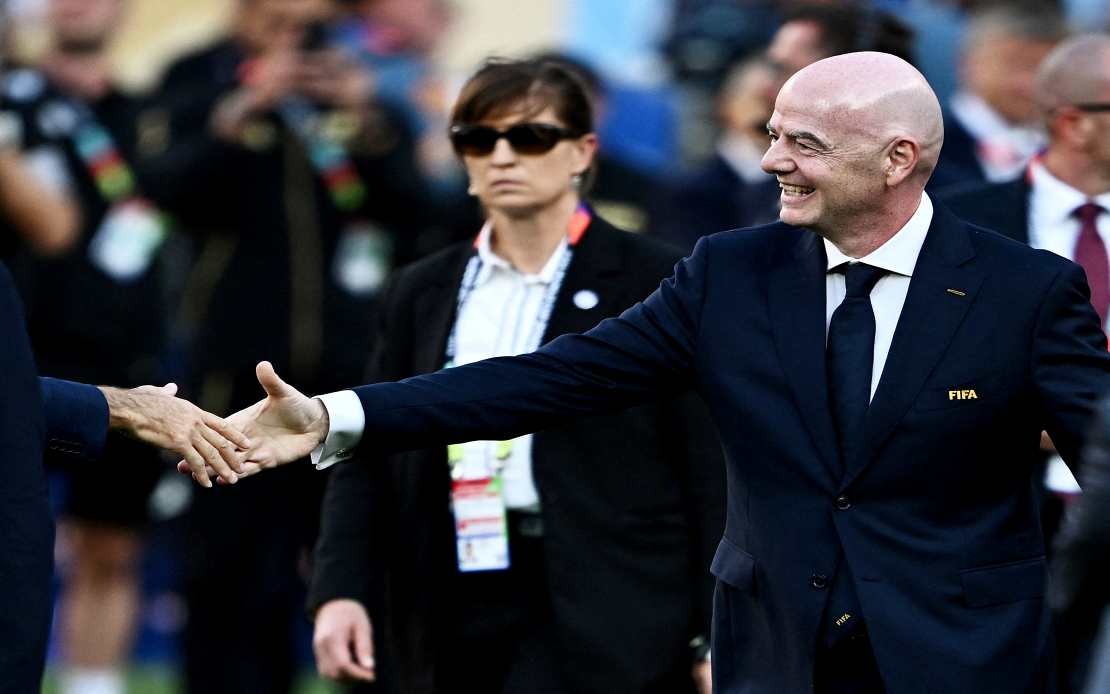
The Union of European Football Associations has escalated its dispute with FIFA to the legal arena, formally notifying President Gianni Infantino in writing that it is actively considering lawsuits and other legal proceedings over a controversial proposal to privatise portions of world football's governing body's commercial operations. The move comes after FIFA hastily abandoned the scheme following intense backlash from European football federations, which had threatened an outright boycott of FIFA competitions.
The dispute centres on FIFA's announcement earlier this month that it intended to raise US$4.2 billion by offloading approximately 20 per cent of shares in a newly created entity designed to manage the organisation's media and commercial rights, including lucrative broadcasting agreements for the FIFA World Cup. Media speculation suggested that Joshua Kushner's investment foundation was positioned to acquire a substantial stake in the new vehicle, a detail that amplified controversy given Kushner's connections to former US President Donald Trump through his brother Jared Kushner, who served as Trump's son-in-law and senior adviser.
UEFA's response was swift and devastating. Within days of FIFA's announcement, the European confederation announced that all 55 member associations would boycott FIFA competitions until the proposal was entirely withdrawn. This represented an extraordinary show of collective force in international sport, as European nations collectively generate enormous broadcasting revenues and participation in major tournaments. The threat proved sufficient to force FIFA's hand. By Saturday, Infantino announced the federation's decision to abandon the commercial rights sale initiative entirely, citing the mounting controversy as justification for the reversal.
Yet UEFA's legal warning letter, delivered shortly after the apparent withdrawal, suggests that the continental body views the situation as extending far beyond a simple reversal of policy. The formal notice, as reported by The Telegraph, states that UEFA is "actively considering legal action, arbitration, and/or regulatory complaints" arising from both the original proposal and "all related matters." This carefully worded language appears designed to keep open multiple avenues for UEFA to pursue accountability, whether through civil courts, arbitration panels, or FIFA's own internal disciplinary mechanisms.
Crucially, UEFA has demanded that FIFA and Infantino take "immediate steps to identify, locate, and preserve all documents and electronically stored information" connected to the proposal and surrounding deliberations. Such preservation orders are standard practice in commercial litigation and serve to prevent the destruction or concealment of evidence that might later be needed to support legal claims. The breadth of UEFA's request—encompassing documents in FIFA's or Infantino's "possession, custody, or control"—suggests the confederation intends to conduct thorough discovery of how the proposal was developed, approved, and eventually abandoned.
The financial implications may have motivated UEFA's aggressive posture. Reports indicated that the commercial rights sale would have substantially increased Infantino's own compensation, potentially raising his annual salary from 3 million euros to 30 million euros—a tenfold increase that critics argued demonstrated a clear conflict of interest on the FIFA president's part. For UEFA, such a dramatic expansion of executive remuneration while diminishing institutional control over commercial assets represented an unacceptable power grab that threatened the collective interests of European federations.
UEFA's actions reflect a broader tension within international football governance. The European confederations have long wielded disproportionate influence within FIFA due to their economic power and the commercial dominance of European domestic leagues and competitions. Any proposal that appeared to strengthen FIFA's executive authority at the expense of confederal autonomy—or that threatened European unions' ability to negotiate commercial terms—was likely to trigger coordinated resistance. The commercial rights sale represented precisely this kind of institutional threat, as it would have shifted control over broadcast and sponsorship arrangements away from the traditional confederal structure towards a private entity potentially answerable primarily to FIFA's leadership.
The rapid collapse of the proposal following UEFA's boycott threat demonstrates the limits of FIFA's unilateral authority, at least when confronted with unified opposition from its most economically powerful member confederations. Yet the fact that UEFA felt compelled to issue formal legal notice suggests the confederation views the episode as part of a pattern of concerning governance practices under Infantino's leadership, rather than a one-time misjudgement. By preserving the option to pursue legal remedies, UEFA signals that accountability remains on the table regardless of whether the immediate proposal has been shelved.
For football stakeholders across Asia and the rest of the global game, this transatlantic dispute carries implications for FIFA's governance trajectory and the balance of power between the federation's executive leadership and its regional confederations. The outcome of UEFA's legal proceedings could establish precedents affecting how future commercial proposals are developed, approved, and implemented. Should UEFA successfully establish that FIFA leadership violated fiduciary duties or engaged in conflicts of interest, the decision could embolden other confederations to challenge FIFA's commercial decisions and assert greater collective control over the organisation's strategic direction.

