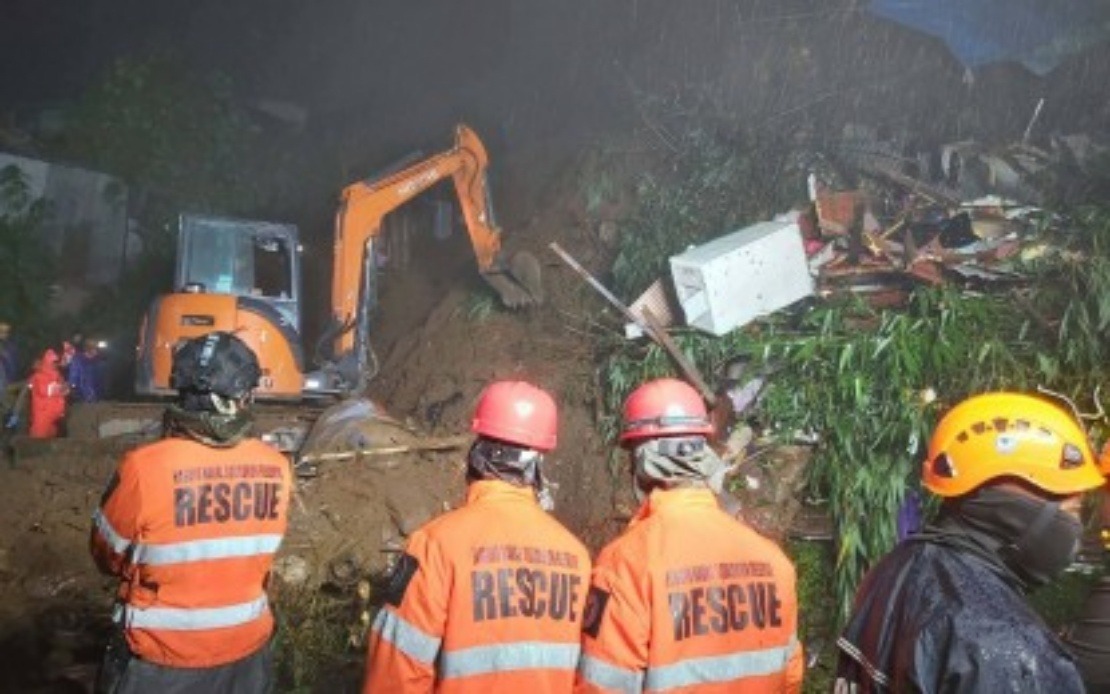
The Philippines is grappling with the devastating aftermath of consecutive tropical weather systems that have killed at least 19 people and disrupted the lives of approximately 2.2 million residents across the archipelago. The Office of Civil Defence confirmed these casualty figures on Tuesday following the passage of Tropical Depressions Luis and Maymay alongside an active southwest monsoon that swept through the country in August, unleashing torrential rains and triggering widespread flooding and landslides.
The death toll has been concentrated in the nation's northern and central regions, with the Cordillera mountain region bearing the brunt of fatalities. Benguet province, a highland area prone to rainfall-induced disasters, recorded 12 of the confirmed deaths, while neighbouring Rizal province accounted for four fatalities. Batangas province in the southern reaches of Luzon reported three deaths. These provincial concentrations underscore how tropical systems disproportionately affect mountainous and low-lying communities where drainage infrastructure remains inadequate and terrain amplifies water runoff during intense precipitation events.
Beyond the confirmed deaths, the disaster has left additional marks of human tragedy in its wake. Authorities documented 15 injured persons requiring medical attention, with the majority of cases concentrated in Benguet, which recorded 12 of these injuries. Single injuries were reported in Ilocos Sur, Rizal, and Cavite provinces. Four individuals remain unaccounted for as search and rescue operations continue, with three missing in Benguet and one in Batangas, raising concerns among families still awaiting news of their relatives' whereabouts.
The scale of displacement reflects the indiscriminate nature of these weather disturbances. Nearly 650,000 families encompassing approximately 2.27 million individuals have been affected across ten regions and administrative areas of the country. This geographic spread demonstrates how a single weather system can create a cascading humanitarian challenge affecting urban centres, agricultural heartlands, and remote communities simultaneously. The affected regions span from the Ilocos Region in the northwest through Cagayan Valley, Central Luzon, and the Bicol Region in the east, across to the Zamboanga Peninsula in Mindanao, illustrating the nationwide reach of these tropical systems.
The displacement crisis has necessitated a massive emergency shelter response. Nearly 920 evacuation centres have been established across affected areas, currently housing approximately 95,000 individuals comprising roughly 26,000 families who have fled their homes. These centres, often set up in schools, community centres, and government buildings, represent the frontline of the humanitarian response, providing temporary refuge for families who have lost access to safe shelter. The burden on these facilities, combined with challenges in delivering food, medical supplies, and sanitation services, underscores the strain placed on local government resources during such emergencies.
Structural damage extends across both residential and commercial properties. Surveyors have documented 639 houses sustaining varying degrees of damage, while 45 residences were completely destroyed, rendering families homeless and requiring long-term reconstruction support. These figures represent not merely statistics but represent the loss of family homes, stored possessions, and community gathering spaces that took years to build. The destruction is particularly acute in informal settlements and rural communities where construction standards are less stringent and disaster resilience infrastructure remains limited.
The economic toll extends far beyond residential damage, encompassing critical infrastructure and agricultural assets that undergird the regional economy. Initial assessments place infrastructure damage at PHP1.46 million, affecting roads, bridges, water supply systems, and electrical networks that communities depend upon for basic services and economic activity. Far more severe, however, is the documented agricultural damage valued at PHP135.33 million, representing losses to crops, livestock, fishponds, and farming equipment. For farmers already operating on thin profit margins in an era of climate volatility and commodity price fluctuations, such losses can devastate livelihoods and create cascading economic hardship.
These cascading disasters carry particular significance for Southeast Asian policymakers and development professionals observing from Malaysia and the region. The Philippines' experience illustrates how climate-related hazards are intensifying in frequency and severity, a pattern increasingly evident across the broader region. As tropical systems become more unpredictable and intense, nations must invest not only in post-disaster response but in upstream climate adaptation measures, including improved early warning systems, resilient infrastructure design, and community-based disaster preparedness programmes.
The convergence of multiple weather systems simultaneously—separate tropical depressions combined with an active monsoon—created compounding effects that overwhelmed some local response capacities. This multiplier effect, where sequential or overlapping weather events strike before communities can fully recover, represents an emerging challenge in disaster management that extends beyond traditional response frameworks designed for singular events. The phenomenon suggests that climate adaptation strategies must increasingly account for compound and cascading hazards rather than treating weather events as isolated incidents.
For Malaysian observers and policy practitioners, the Philippine experience reinforces the imperative of regional cooperation on climate resilience and disaster management. Both nations face similar geographic vulnerabilities to tropical systems, monsoon variations, and the intensifying impacts of climate change. The lessons from Luis and Maymay—particularly regarding evacuation coordination, supply chain logistics in disaster response, and the protection of vulnerable populations—offer instructive case studies for enhancing Malaysian preparedness in the coming storm seasons. The scale of displacement and long-term economic damage also underscores why climate adaptation and disaster risk reduction merit sustained investment and political priority, not merely crisis-driven attention when disasters strike.

