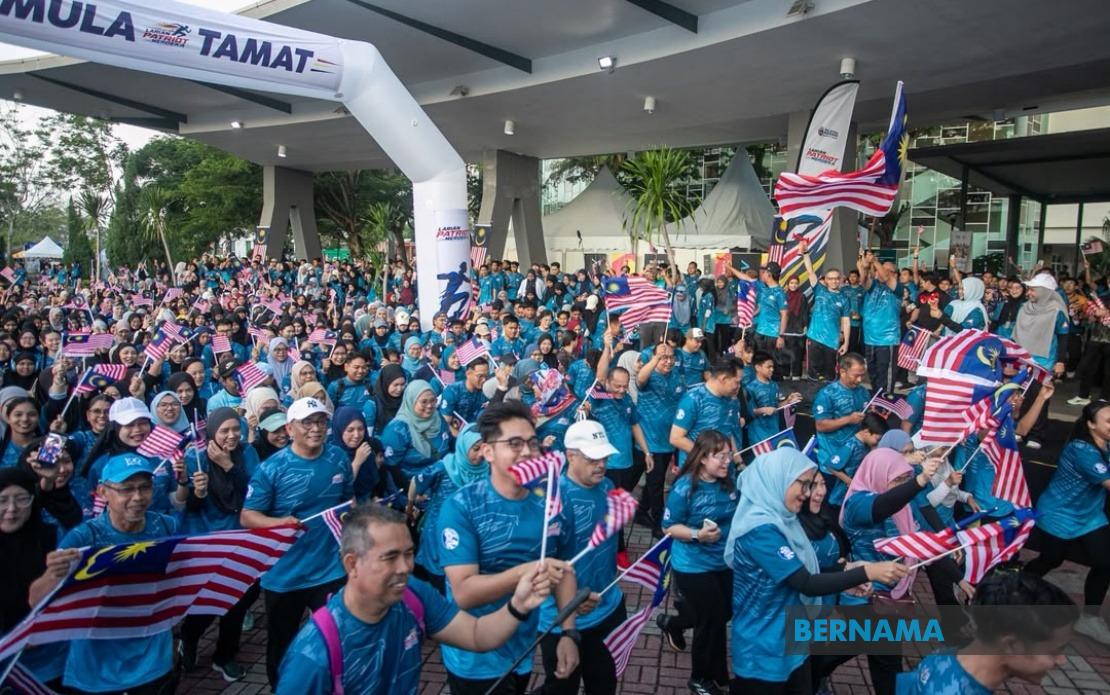
The Sultan Azlan Shah Ministry of Health Training Institute (ILKKM SAS) in Ipoh became a sea of national pride on July 19 when approximately 2,000 participants arrived early to take part in the Patriot Merdeka Run, a grassroots celebration timed with the official kick-off of Malaysia's 2026 National Month festivities. The gathering demonstrated broad community engagement, with families of all ages converging on the venue before dawn to participate in what organisers framed as both a health initiative and an exercise in civic consciousness.
The event opened with an energetic mass aerobics session that set the tone for the morning's activities, creating an inclusive atmosphere that emphasised collective participation over competitive achievement. Following the warm-up, attendees assembled to wave the Jalur Gemilang in unison, transforming the simple gesture into a symbolic affirmation of national belonging and mutual commitment to Malaysian values. This opening sequence proved instrumental in establishing the event's dual purpose: to promote physical wellness while reinforcing emotional connections to the nation's identity.
Datuk Abdul Halim Hamzah, secretary-general of the Communications Ministry, formally initiated the 2.5-kilometre fun run at 7:30 am, sending participants along a carefully mapped route where the national flag was prominently positioned throughout. The distance was deliberately modest, ensuring accessibility for younger children and elderly family members without compromising the exercise's symbolic weight. This inclusive design choice reflected broader governmental messaging about patriotism as a universal value that transcends age, fitness level, and socioeconomic status.
The scenes along the route captured the event's underlying spirit: parents guiding small children through the streets, participants sporting clothing in the red, white, and blue hues of the Jalur Gemilang, and waves of encouragement exchanged between runners and supporters. Such moments, while individually modest, collectively underscored the organisers' ambition to weave patriotic sentiment into the fabric of ordinary community life rather than reserving it for formal state ceremonies. The informal, celebratory atmosphere suggested that official nationalism need not feel austere or imposed.
Beyond the immediate experience of running together, the Patriot Merdeka Run served a social cohesion function that extends beyond the event itself. By bringing together Malaysians from diverse professional and demographic categories—the original account emphasises "all walks of life"—the programme created temporary spaces of shared experience that potentially strengthen broader social bonds. These intersections matter especially in an increasingly urbanised and digitally mediated society where such organic community gatherings have become less frequent.
Organisers positioned the run as part of a deliberate strategy to cultivate patriotism through active community engagement rather than passive consumption of national messaging. The distinction is significant: participants were not merely audiences receiving patriotic content, but actors collectively creating patriotic expression. This participatory framing aligns with contemporary thinking about nation-building, which emphasises citizen agency and voluntary commitment over top-down imposition of national identity.
The Patriot Merdeka Run functions as the opening salvo in Malaysia's extended 2026 National Day and Malaysia Day (HKHM 2026) celebration schedule. By launching these festivities through a community fun run rather than a formal political gathering, officials signalled an intention to ground the nation's commemoration of independence in everyday public participation. Such choices carry symbolic weight, suggesting that national pride belongs to ordinary citizens engaging together, not exclusively to political elites.
Prime Minister Datuk Seri Anwar Ibrahim was scheduled to officiate the broader launch of 2026 celebrations at 10 am on the same day, lending further governmental legitimacy to the patriotic themes the morning's run had already begun to articulate. This sequencing—grassroots activity followed by high-level political endorsement—illustrates how contemporary nation-states attempt to construct narratives of unity by depicting political leadership as affirming rather than directing public sentiment.
For the regional context, the Ipoh gathering reflects Malaysia's ongoing attention to national cohesion during a period when Southeast Asian societies navigate significant demographic, economic, and political change. As neighbouring countries grapple with questions of national identity and social fragmentation, Malaysia's emphasis on inclusive, community-based patriotic activities offers one model for how governments attempt to foster unity across diverse populations. The success of such initiatives ultimately depends not on their symbolic content but on whether participants experience them as genuinely representative of their own sense of belonging to the national project.

