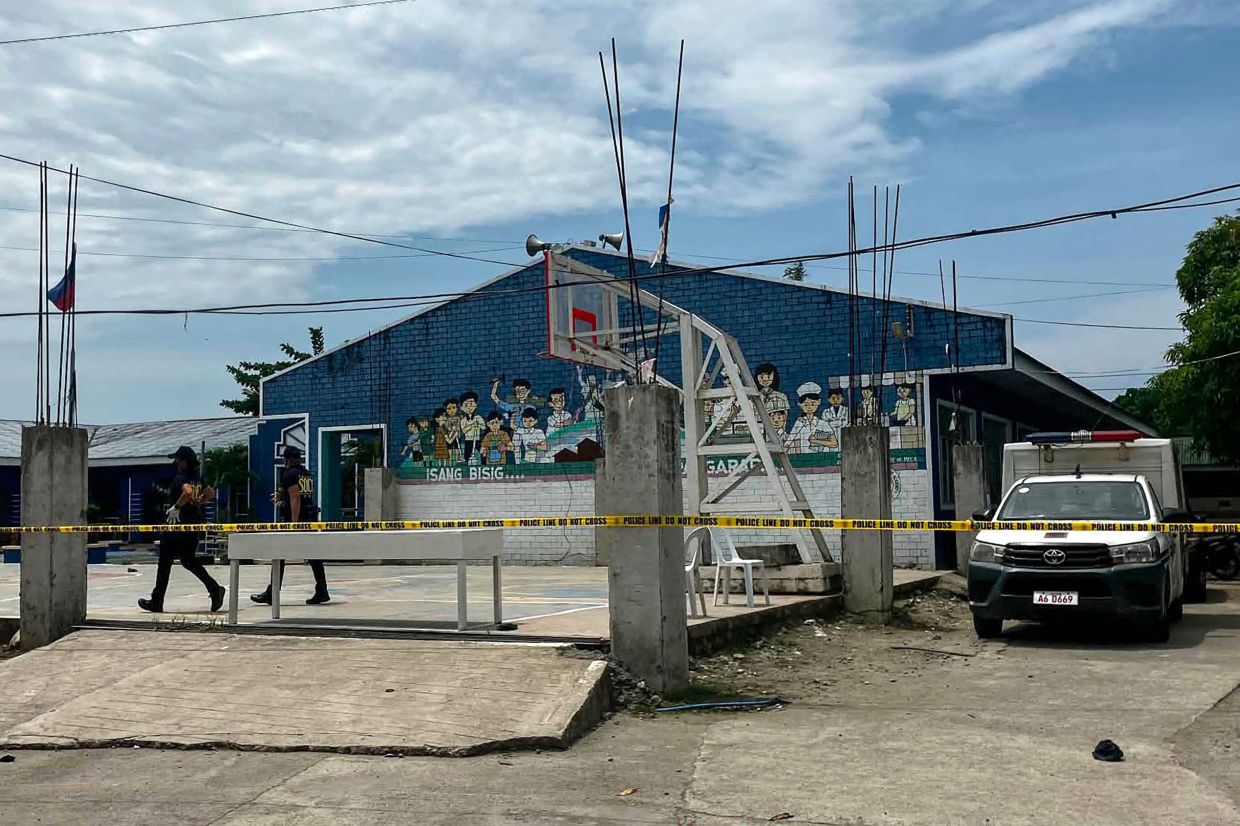
A shooting rampage at a central Philippine high school has left the nation grappling with questions about school safety and youth violence. Two students, aged 14 and 15, opened fire at San Jose National High School in Tacloban city during mid-morning classes on Monday, killing three classmates and wounding seven others in what authorities describe as a shocking breach of security at an institution serving more than 1,500 pupils. Both suspects were swiftly apprehended, with regional police chief Brig. Gen. Jason Capoy confirming their arrest and revealing that preliminary interviews suggested the teenage shooters had been experiencing bullying at the school.
The incident unfolded with chilling precision as the two close friends, both first-time offenders with clean criminal records, stormed onto campus carrying a 9 mm pistol and a calibre 38 revolver. Their ability to smuggle firearms into the sprawling government school highlights a critical vulnerability in the institution's perimeter security. According to Capoy, only a single security guard was stationed to monitor multiple entrances and exits, a staffing arrangement that proved wholly inadequate in preventing the attack. The weapons themselves raise separate concerns about firearm custody: one gun was obtained from an aunt who works as a police officer, an individual now under investigation for the apparent security breach.
The shooting's trajectory reveals the calculated nature of the assault. After firing on students in an initial location, the attackers pursued fleeing classmates into a second room, suggesting they actively hunted for victims as panic spread through the corridors. At least 40 shell casings were recovered from the scene, testament to the intensity of the barrage. Distressing footage emerged showing students huddled under desks, their screams and sobs audible above the gunshots, while others desperately called their mothers. Additional videos captured the scene of mass evacuation as terrified teenagers streamed from the campus, many clinging to each other for comfort as they fled to safety.
The casualty toll fell disproportionately on female students, who comprised most of both the dead and injured. One suspect was captured at the school immediately after the rampage, while his accomplice managed to escape and seek refuge in a nearby residence. Vigilant residents alerted police, enabling officers to locate and apprehend the second teenager before he could evade capture entirely. This two-pronged detention prevented any potential hostage situation or further escalation of violence.
The incident has triggered high-level government response. President Ferdinand Marcos Jr. directed a comprehensive investigation while instructing law enforcement agencies to elevate security protocols across schools, workplaces, and public gathering spaces nationwide. Communications Undersecretary Claire Castro conveyed the president's distress, acknowledging the profound grief and fear gripping parents and the broader community following the tragedy. Such presidential intervention signals recognition of the incident's gravity and broader implications for civilian safety in educational institutions across the archipelago.
The question of criminal accountability presents a complex legal dimension. Philippine law stipulates that minors below age 15 cannot face criminal prosecution unless authorities establish they possessed full awareness of their actions and their consequences. The 14-year-old suspect would be exempted under the 2006 statutory framework, meaning both teenagers will likely be transferred to government welfare officers rather than prosecuted in criminal courts. This outcome, while aligned with juvenile justice principles emphasising rehabilitation, may disappoint those seeking accountability proportionate to the severity of the crimes committed.
The bullying narrative offers a troubling lens through which to view the tragedy. While Capoy refrained from elaborating on the alleged mistreatment, the connection between school bullying and violent retaliation has become a recognisable pattern in some international contexts. Philippine educators and policymakers now face pressure to examine whether current anti-bullying measures and mental health support systems are adequate, particularly in large government schools where anonymity and overcrowding can compound isolation for vulnerable students.
Philippine crime statistics have long reflected endemic challenges around unlicensed firearms. The nation grapples with proliferation of unauthorised guns obtained through smuggling networks and black market channels, yet school shootings remain comparatively infrequent despite this broader firearm accessibility problem. The incident therefore stands out as an anomaly rather than a recurring phenomenon. A notable precedent occurred in 2022 when a gunman attacked an upscale Manila metropolitan university ahead of a graduation ceremony, killing a former municipal mayor with whom he harboured a decades-long grievance, along with two others. That shooter was apprehended.
For Malaysian and Southeast Asian observers, the Tacloban shooting underscores vulnerabilities that extend beyond the Philippines. School security protocols, firearm custody among law enforcement families, and youth mental health support systems merit examination across the region. The incident serves as a cautionary reminder that even institutions charged with educating young people remain susceptible to internal threats when comprehensive preventive measures are insufficiently resourced or implemented.

