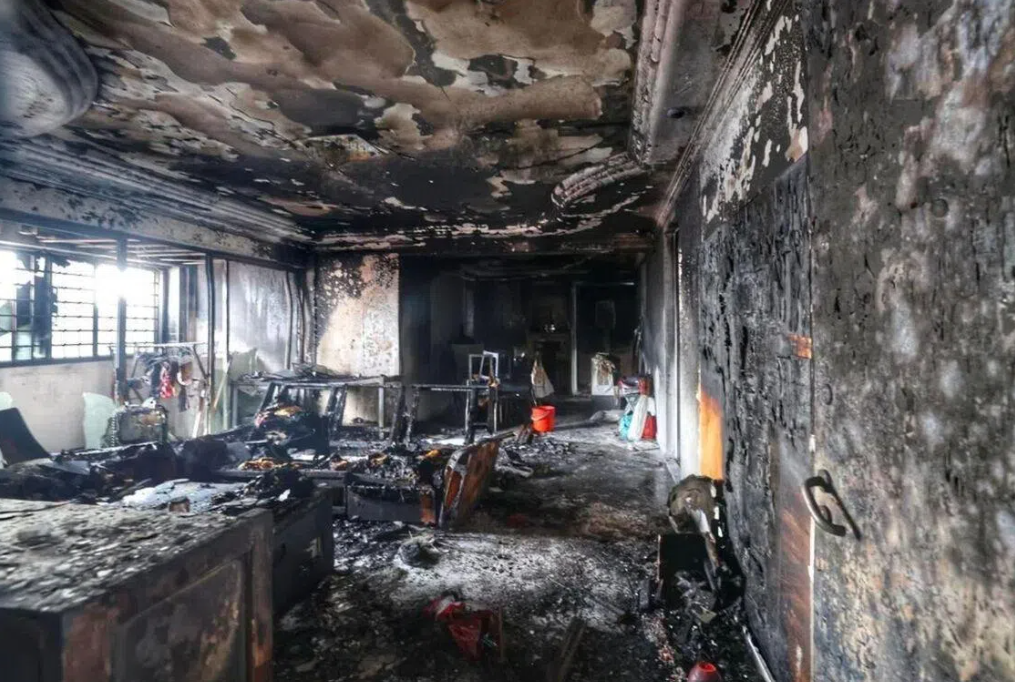
A residential fire in Singapore's Jurong West district brought two people to hospital and prompted the hasty evacuation of dozens of neighbours in the pre-dawn hours of June 17. The Singapore Civil Defence Force responded to an alarm at Block 842 Jurong West Street 81 shortly after 3.35am, discovering flames in the living room of a unit on the 13th floor. Firefighters entering the smoke-filled apartment brought the blaze under control using water jets, though not before the heat and flames had left their mark on the dwelling.
The incident unfolded while the affected family of four slept, unaware of the danger unfolding in their living space. Their escape came about only through the alertness of an 18-year-old neighbour residing directly above them. The student, who had been awake playing games late into the night, caught the first telltale signs of trouble when smoke began filtering through his window. Rather than ignore the warning signs, he took immediate action, descending to the unit below to investigate the source of the odour.
What confronted him at the lower unit's door alarmed him sufficiently to spring into crisis mode. The door itself radiated heat so intense that he could feel it through the solid material, signalling a serious fire within. The teenager began pounding on the entrance and knocking on neighbours' doors to alert residents to the danger, shouting warnings for them to evacuate the building without delay. He then rushed back to his own flat to alert his family, and his mother immediately contacted the authorities to report the emergency.
The rescues that followed revealed the extent of the trauma the trapped residents had endured. When a young woman from the affected unit appeared at the teenager's door seeking towels to treat her father's injuries, the gravity of the situation became starkly apparent. Her appearance bore the unmistakable marks of fire exposure—singed hair and soot-blackened skin covering her face. Through the teenager's account, a man with severe burns across his back and arms was also seen fleeing the unit, his skin showing the characteristic bright red colouration of recent thermal injury.
All four residents of the burning flat were transported to Singapore General Hospital for treatment of their injuries and exposure to smoke. The rapid mobilisation of SCDF personnel and the quick thinking of neighbours prevented what could have been a far more catastrophic outcome. Beyond the directly affected family, authorities enacted precautionary evacuation procedures for approximately 40 other residents living in neighbouring units throughout the block, a standard protocol designed to protect those in close proximity to active fire incidents.
Investigators examining the aftermath of the blaze determined that electrical equipment in the living room most likely sparked the fire. Such findings align with broader patterns of residential fire causation across Singapore. The blackened walls and ceilings, along with shattered windows documented by reporters who visited the scene several hours after the fire was extinguished, offered visual testament to the intensity of the flames that had raged through the confined space.
The incident occurs against a backdrop of rising fire incidents across Singapore. Statistics released by SCDF in February revealed a concerning three per cent increase in total fires, with 2,050 reported in 2025 compared to 1,990 the previous year. More troubling still, residential buildings accounted for over half of these incidents, totalling 1,051 fires. These figures underscore the persistent vulnerability of high-density residential environments, particularly in a city-state where millions live in apartment blocks and flats.
In response to recurring electrical fires, Singapore's Civil Defence Force has intensified its public safety messaging. Residents are advised to avoid overloading electrical outlets, a common practice in homes where multiple appliances compete for limited power sources. The authority recommends switching off devices when not actively in use, reducing the risk of malfunction or overheating during dormant periods. Particular caution should be exercised with charging devices, which authorities counsel should never be left unattended overnight or for extended stretches, as battery malfunctions during unmonitored charging present a significant fire risk.
Consumer product selection also plays a critical role in fire prevention strategies promoted by SCDF. The agency emphasises the importance of purchasing only appliances and electrical plugs that bear the Safety Mark certification, a credential issued by Singapore's Consumer Product Safety Office. This official seal indicates that products have undergone rigorous testing and comply with established safety standards, reducing the likelihood of electrical failures that could ignite fires. For residents across Singapore and the wider Southeast Asian region, the message is clear: vigilance, proper maintenance, and adherence to electrical safety protocols can substantially mitigate the risks posed by fires originating from faulty or misused electrical equipment.

%22%2F%3E%3C%2Fpattern%3E%3C%2Fdefs%3E%3Crect%20width%3D%22100%25%22%20height%3D%22100%25%22%20fill%3D%22url(%23ph1354vg)%22%2F%3E%3Crect%20width%3D%22100%25%22%20height%3D%22100%25%22%20fill%3D%22url(%23ph1354vp)%22%2F%3E%3Ctext%20x%3D%2250%25%22%20y%3D%2250%25%22%20text-anchor%3D%22middle%22%20dominant-baseline%3D%22central%22%20fill%3D%22rgba(255%2C255%2C255%2C0.95)%22%20font-family%3D%22Georgia%2C%20'Times%20New%20Roman'%2C%20serif%22%20font-weight%3D%22700%22%20font-size%3D%22320%22%20letter-spacing%3D%22-0.02em%22%3EGRS%3C%2Ftext%3E%3C%2Fsvg%3E)