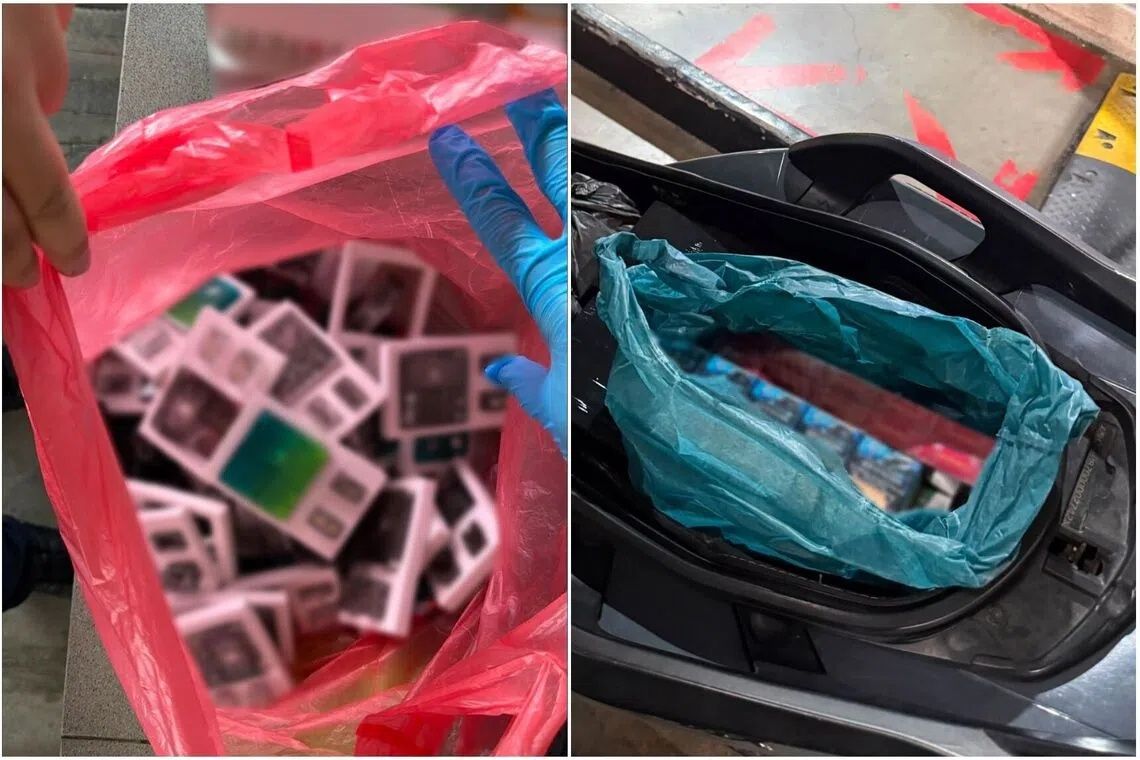
Singapore's Immigration and Checkpoints Authority has arrested two men caught attempting to smuggle substantial quantities of duty-unpaid cigarettes and vaping devices into the city-state through Woodlands Checkpoint, marking another enforcement success in the ongoing battle against contraband tobacco and illicit vaping products. The apprehensions occurred during independent incidents on August 3 and 4, with authorities announcing the arrests publicly on Thursday, August 13. A 46-year-old Malaysian national and a 51-year-old Singaporean resident were taken into custody following the separate interceptions at the busy land crossing that connects Malaysia and Singapore.
During the first operation on August 3, ICA officers flagged a Malaysia-registered motorcycle for enhanced screening procedures and discovered an extensive cache of smuggled goods concealed within the vehicle's storage compartment. Officers uncovered more than 30 packets of cigarettes on which duty had not been paid, alongside over 60 vaping devices and associated components. The quantity of contraband suggests a deliberate attempt to evade Singapore's strict taxation regime and regulatory framework governing these products, indicating more than opportunistic personal importation.
The following day's interception proved similarly significant. When authorities searched a Singapore-registered motorcycle, they recovered 25 cartons and 30 packets of duty-unpaid cigarettes, complemented by more than 60 vapes distributed across multiple storage locations. The smugglers had attempted to distribute their illicit cargo strategically throughout the vehicle, hiding portions beneath the seat and additional amounts in the storage box to minimize detection risk. The parallel nature of these incidents suggests organised activity rather than isolated smuggling attempts, potentially indicating a coordinated operation.
The two arrests underscore Singapore's intensifying enforcement posture against contraband tobacco entering from Malaysia, a persistent challenge for regional authorities. Woodlands Checkpoint, handling tens of thousands of daily cross-border movements, remains a critical interception point. The relatively short timespan between the two arrests raises questions about whether these represented connected attempts or reflected broader smuggling patterns that enforcement agencies continue combating.
For Malaysian readers, particularly those frequent Woodlands users, the enforcement action illustrates the significant legal consequences awaiting anyone attempting to circumvent Singapore's import restrictions. The city-state's duty regime substantially inflates the retail price of cigarettes, creating economic incentives for smuggling operations originating from Malaysia, where prices remain considerably lower. This price differential has historically driven cross-border contraband flows, a dynamic that authorities address through both supply-side enforcement and demand-side taxation strategies.
Singapore's legal framework imposes extraordinarily severe penalties for duty-unpaid cigarette trafficking. Individuals convicted of purchasing, selling, transporting, delivering, storing, retaining, possessing, or engaging in trade involving duty-unpaid cigarettes face fines reaching 40 times the evaded duty and tax amount, imprisonment extending to six years, or both penalties applied concurrently. Beyond personal liability, vehicles utilised in such offences become subject to forfeiture, meaning the motorcycles employed in these August incidents would likely be confiscated by authorities.
The vaping component of these smuggling attempts reflects Singapore's particularly stringent stance on nicotine inhalation devices. The entire vaping market remains prohibited within Singapore, distinguishing it from numerous other jurisdictions that permit regulated access. Possession or use of vaping devices triggers fines up to $10,000 for consumers, while commercial sellers face substantially harsher penalties including fines reaching $200,000 and up to six years imprisonment. Persons engaged in vaping smuggling operations confront even more draconian consequences, including fines to $300,000 and imprisonment extending to nine years.
Foreigners detained with vaping products face additional administrative consequences beyond criminal penalties. A second or subsequent vape-related violation can result in pass revocation and permanent re-entry bans, effectively barring affected individuals from future Singapore entry. This escalating penalty structure reflects policymaker determination to eliminate vaping entirely rather than tolerating regulated access as certain neighbouring jurisdictions do.
Both suspects and recovered contraband have been transferred to Singapore Customs and the Health Sciences Authority for continued investigation and prosecution. The coordination between multiple agencies highlights the integrated approach Singapore deploys against contraband networks. Customs authorities will likely pursue duty recovery actions alongside criminal investigations, while health authorities may examine product composition and manufacturing origin, potentially identifying supply chain vulnerabilities.
For Southeast Asian observers monitoring regional enforcement trends, these arrests demonstrate Singapore's unwavering commitment to maintaining its import restrictions despite ongoing economic incentives driving smuggling activity from lower-cost neighbouring markets. The consistent interceptions at Woodlands and other crossing points reflect expanded surveillance capabilities and intelligence gathering, though enforcement officials acknowledge that determined smugglers continuously adapt methodologies to circumvent detection.
The Malaysian government maintains ongoing cooperation with Singapore on border security matters, though smuggling networks exploit the high-volume daily traffic characterising the Johor-Singapore crossing. The motorcycle-based smuggling approach represents an economical method for transporting concentrated value in contraband goods, though authorities increasingly focus detection resources on such two-wheeled conveyances. For Malaysian residents contemplating cross-border shopping, the enforcement actions serve as explicit warning that attempting to circumvent Singapore's strict import regime carries consequences extending far beyond administrative violations.
These specific cases will likely proceed through Singapore's courts over coming months, with outcomes potentially influencing prosecutorial priorities at both Customs and health enforcement agencies. The public announcement by ICA amplifies deterrent messaging to prospective smugglers across the region, signalling that authorities maintain active enforcement despite smuggling's persistent economic appeal.

