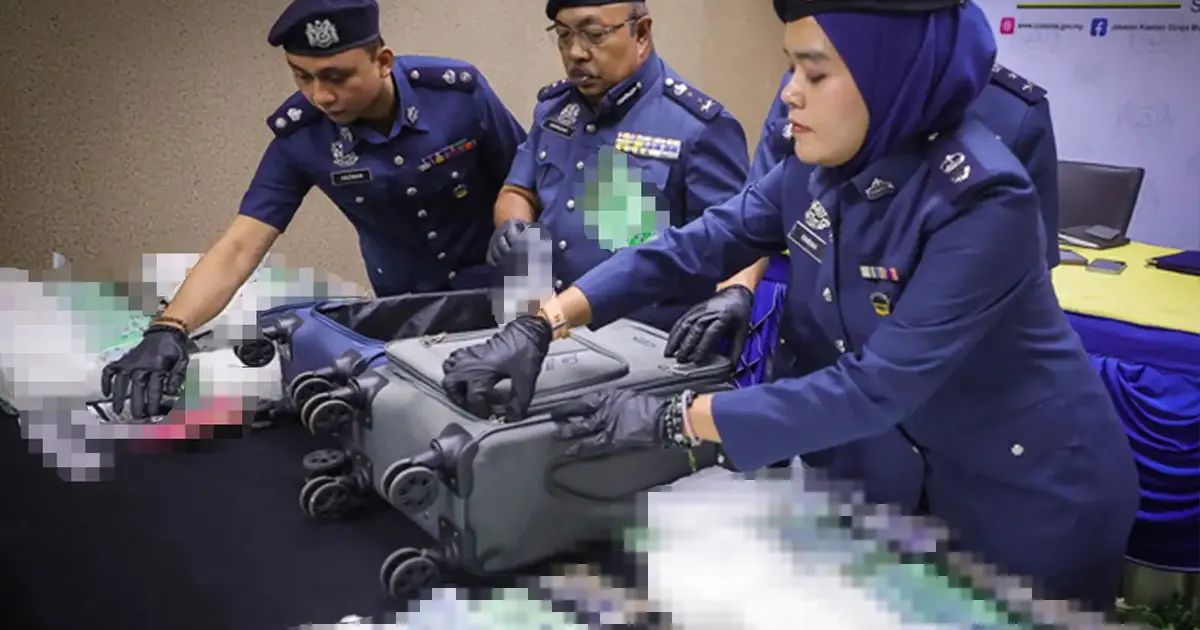
Law enforcement officials at Kuching International Airport successfully intercepted a major drug smuggling operation on July 9 when two men were taken into custody upon landing on a flight originating from Johor Bahru. The arrests represent another significant breakthrough in efforts by Malaysian authorities to combat the persistent flow of narcotics through regional transportation hubs, highlighting the ongoing vulnerability of air travel routes to organized drug trafficking networks.
The interception at Kuching airport underscores the critical role played by airport security and customs personnel in disrupting supply chains that feed Malaysia's drug problems. Intelligence and detection mechanisms have become increasingly sophisticated, allowing authorities to identify suspicious passengers and contraband with greater precision. The successful apprehension demonstrates coordination between various enforcement agencies tasked with protecting entry points into Sarawak, a state that has seen elevated drug-related activities in recent years.
The RM1.32 million drug haul represents a substantial confiscation that would have significantly impacted local markets had the smuggling operation succeeded. The value of the intercepted narcotics suggests an operation involving organized criminal syndicates rather than opportunistic individual traffickers, pointing to established networks attempting to distribute controlled substances through Malaysia's major urban centers. Such large-scale operations typically involve multiple layers of coordination, from source procurement through border crossing to eventual street-level distribution.
Johor Bahru serves as a major transit point for drug trafficking due to its proximity to Singapore and its role as a transportation and logistics hub in southern peninsular Malaysia. The choice of this city as a departure point for the Kuching-bound flight suggests criminals may be attempting to use secondary routes and smaller regional airports to circumvent detection at larger, more heavily monitored facilities. This tactical approach reflects how trafficking networks continuously adapt their methods in response to enhanced border security measures.
The arrest of two individuals raises questions about the broader organizational structure supporting such smuggling attempts. Authorities typically investigate whether those apprehended are low-level couriers or individuals with greater operational responsibility within trafficking hierarchies. The intelligence gathered from interrogations often leads to further arrests and dismantling of supply network segments, potentially preventing future trafficking attempts and identifying key figures in regional drug operations.
Sarawak has emerged as an increasingly significant concern for drug enforcement officials across Malaysia. The state's geographic position, extensive coastline, and relatively remote border areas create multiple entry points for narcotics destined for both local consumption and onward distribution to peninsular Malaysia and beyond. The Kuching airport incident fits into a broader pattern of heightened vigilance required to protect Sarawak's communities from escalating drug-related harms, including addiction, crime, and associated social consequences.
The confiscation also reflects the substantial profits driving transnational drug trafficking networks. The RM1.32 million value represents only the street-level worth of the intercepted substances; the original cost to traffickers would be substantially lower, yet the potential profits remain astronomical by any measure. These economic incentives explain the persistence of smuggling attempts despite increasing enforcement efforts and the severe penalties Malaysia imposes on drug trafficking offenses, including capital punishment for quantities exceeding prescribed thresholds.
The incident comes amid broader regional concerns about drug trafficking across Southeast Asia. International organized crime syndicates exploit disparities in law enforcement capacity, corruption vulnerabilities, and porous borders to move narcotics throughout the region. Malaysia, positioned centrally within Southeast Asia's drug trafficking routes, faces constant pressure from both upstream suppliers in the Golden Triangle and downstream demand in Singapore and beyond. Enhanced airport security measures therefore represent only one component of a comprehensive regional strategy needed to address trafficking challenges effectively.
For Malaysian readers, the Kuching airport arrest carries immediate relevance to ongoing public health and safety concerns. Drug-related crimes continue to strain law enforcement resources and contribute to broader social instability. Communities across Malaysia remain vulnerable to trafficking networks seeking to establish local distribution networks. The success of airport interdiction operations demonstrates that preventive enforcement can work, yet the persistence of smuggling attempts suggests traffickers retain confidence in their ability to eventually penetrate Malaysian borders successfully.
The arrest underscores the importance of sustained investment in customs and airport security infrastructure, training for detection personnel, and intelligence-sharing mechanisms between agencies and regional partners. As transnational criminal organizations become increasingly sophisticated in their operational methods, including the use of advanced communication technologies and corruption of officials, authorities must continually evolve their tactics to maintain effectiveness. The July 9 interception represents one success, but enforcement officials recognize that hundreds of smuggling attempts likely succeed without detection, requiring a multi-faceted approach combining interdiction, rehabilitation, and community engagement to address Malaysia's persistent narcotics challenges comprehensively.

