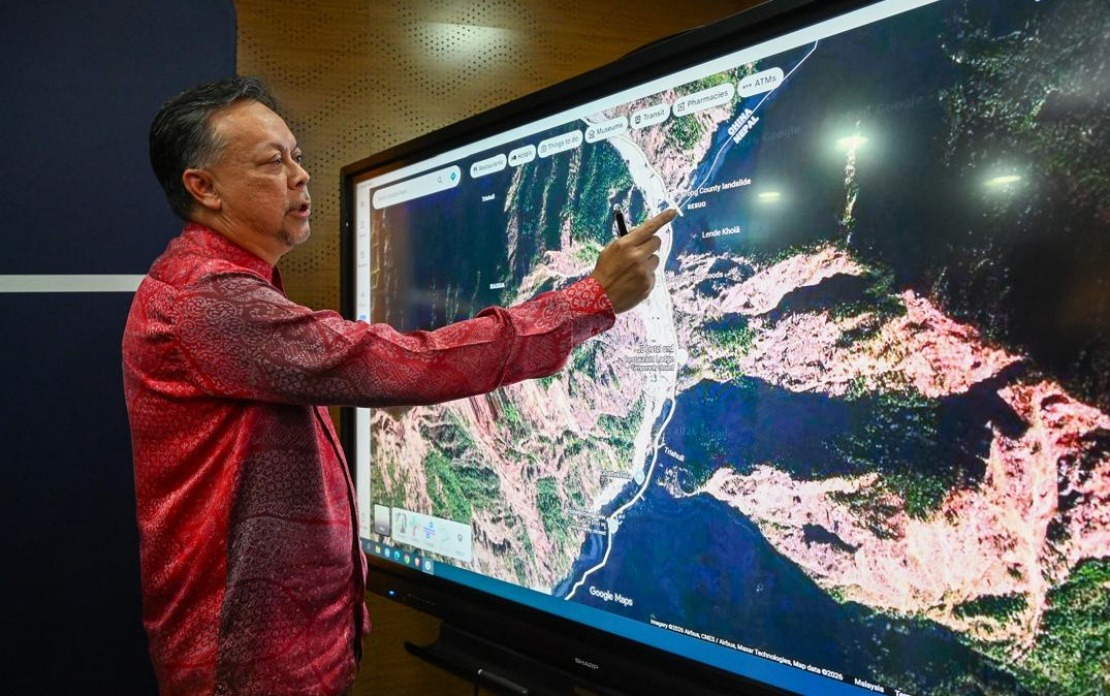
Malaysia's Foreign Ministry confirmed on Wednesday that two of the 57 Malaysians previously reported missing in Nepal have been successfully located, though 55 others remain unreachable following catastrophic flash floods and landslides that struck the country last week. Speaking in Putrajaya, Foreign Ministry Deputy Secretary-General Datuk Syed Mohamad Hasrin Tengku Hussin disclosed that while the two individuals had been found safe, their identities and circumstances were undergoing verification to eliminate potential duplication of data and confirm their precise status.
The crisis unfolded on August 26 when the Bote Koshi River overflowed in the Rasua district, triggering flash floods and landslides that destroyed critical infrastructure including roads, bridges, and electricity distribution networks. The resulting communication blackout and terrain damage have severely impeded search and rescue efforts, with access to affected areas remaining perilous. Nepalese authorities had reported rescuing 528 people overall—490 Nepalese nationals and 38 foreigners—but none of the missing Malaysians have been confirmed among those recovered so far.
The figure of 55 unaccounted Malaysians remains provisional, subject to further cross-verification against information supplied by Nepalese authorities and other agencies. The verification process, though labour-intensive, serves an essential function in confirming identities, pinpointing locations, and establishing actual welfare status without creating false records or duplicate entries. Foreign Minister Datuk Seri Mohamad Hasan has directed the ministry to intensify search operations and maintain continuous monitoring of the situation as it develops.
In response to the directive, Malaysia has significantly augmented its on-ground presence. An official from the Malaysian High Commission in Dhaka has been deployed to Kathmandu to strengthen the Malaysian Embassy's response capabilities. This officer is coordinating information gathering, tracking real-time developments, and maintaining liaison with Nepalese authorities—a crucial arrangement given the complexity of managing a multi-national emergency response in a country grappling simultaneously with its own humanitarian crisis.
The Malaysian Embassy in Kathmandu is collaborating extensively with multiple Nepalese entities including the government's emergency response apparatus, the Nepal Tourism Board, and tour operators to construct a comprehensive picture of Malaysian nationals in the disaster zone. This networked approach reflects recognition that accurate information necessarily flows through diverse channels during crisis situations. Tour operators, in particular, possess detailed knowledge of Malaysian tourist groups and their itineraries, making them invaluable partners in the verification process.
The challenge confronting rescue operations extends beyond immediate access difficulties. Weather conditions continue to fluctuate unpredictably, hampering helicopter and ground-based search missions, while ongoing risk assessments from Nepalese authorities highlight the danger of secondary flooding from overflows in border regions. The damaged infrastructure has rendered entire areas effectively cut off, forcing rescue teams to rely on increasingly precarious supply lines and limiting the scope of immediate assistance that can be delivered.
Malaysia's Foreign Ministry has established a round-the-clock operations room in Putrajaya to coordinate the response. Between 12 and 15 calls from Malaysian family members arrived during the first few hours after activation, reflecting the deep anxiety within the community. Every piece of information received undergoes systematic cross-referencing against Nepalese authority records and the ministry's internal database—a painstaking process designed to eliminate confusion but necessarily time-consuming given current circumstances.
The missing Malaysians have been identified through multiple sources encompassing Nepalese government agencies, Tourism Malaysia, independent tour operators, and direct reports from family members and friends. This multi-sourced approach, while comprehensive, has introduced the complication that individual names may appear multiple times across different lists, necessitating careful reconciliation. The ministry has stressed that precise documentation is essential and urged family members to provide complete details including full names, passport numbers, travel schedules, last known locations, and contact telephone numbers to facilitate verification.
For Malaysian families seeking information or possessing relevant details, the Foreign Ministry's 24-hour Putrajaya Operations Room can be contacted at +603 8887 4570 or via email at [email protected]. The establishment of a dedicated hotline represents an attempt to centralize information flow and prevent families from being shuttled between multiple agencies during an already distressing period. Given Nepal's current capacity constraints as it manages domestic casualties and infrastructure restoration, Malaysia's proactive coordination approach provides a necessary backstop for its nationals.
The situation underscores the vulnerability of Malaysian tourists and travellers operating in regions where natural disasters can quickly overwhelm local emergency infrastructure. While Nepal is a popular destination for Malaysian trekkers and sightseers, the rapid escalation from weather event to humanitarian emergency occurred within hours, catching tour groups and independent travellers off-guard. The scale of destruction—compromising both communication networks and physical access routes simultaneously—has created a compound problem that complicates even well-resourced rescue operations.
Looking ahead, Malaysian officials have privately acknowledged the severity of the operating environment, noting that Nepalese authorities are themselves overwhelmed managing their own displaced populations and infrastructure restoration. The phrase "hoping for the best" employed by Syed Mohamad Hasrin captured the recognition that outcomes in such disaster scenarios depend heavily on factors beyond any government's immediate control. Nevertheless, Malaysia's demonstrated commitment to rapid deployment of diplomatic resources and systematic information coordination represents best practice crisis response for a middle-income nation managing nationals caught in foreign territory disasters.

