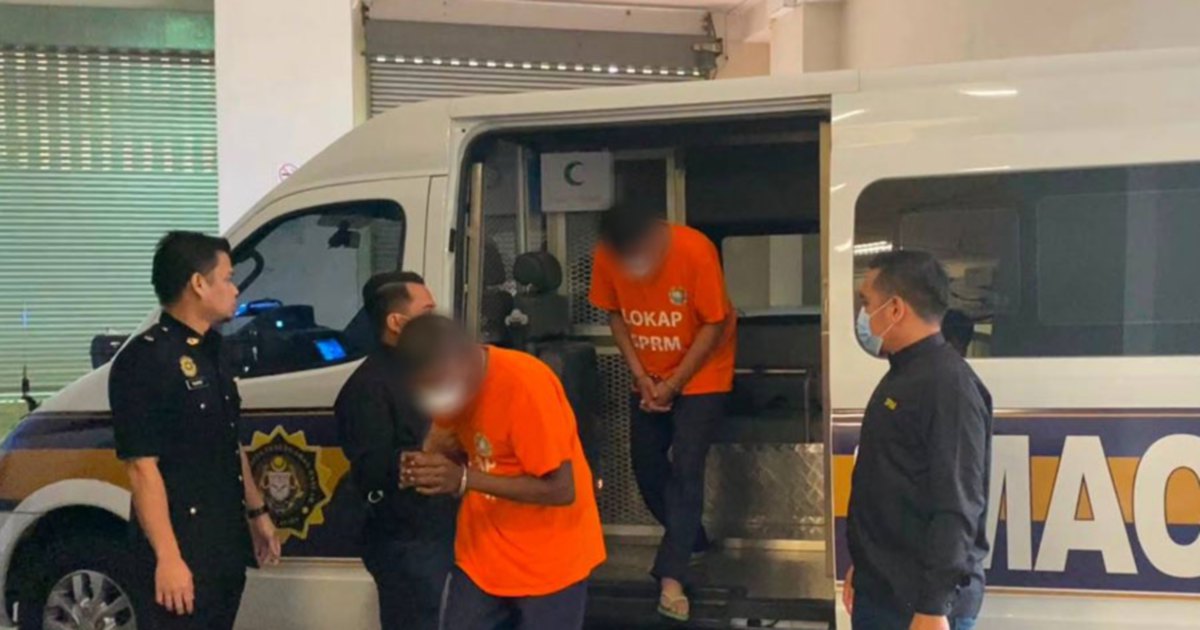
Two members of the highway patrol unit have been remanded in police custody in Kuantan following their arrest on allegations that they systematically solicited bribes from motorists in exchange for overlooking traffic offences committed on the East Coast Expressway 2 (LPT2). The arrests underscore persistent integrity challenges within Malaysia's road enforcement apparatus and have reignited public concern about corruption in routine traffic policing.
The two officers, who operated as part of the operational units stationed along the 400-kilometre LPT2 corridor, are suspected of leveraging their authority to extract payments from drivers caught violating traffic regulations. Rather than issuing citations or directing offenders through proper administrative channels, the officers allegedly negotiated informal settlements, pocketing funds that should have been reported to state revenues. This modus operandi represents a particularly damaging form of institutional corruption because it undermines both public safety mechanisms and institutional legitimacy simultaneously.
The LPT2, which runs from Kuala Lumpur through the east coast states of Pahang, Terengganu, and Kelantan, sees substantial daily traffic volume. As one of Malaysia's major transport arteries, maintaining consistent enforcement standards across this corridor is essential for road safety and equity in traffic management. When officers selectively ignore violations based on the ability of drivers to pay bribes, they create perverse incentives that compromise safety and generate public resentment among law-abiding motorists who comply with regulations.
This incident reflects broader systemic vulnerabilities in traffic enforcement operations. Highway patrols typically operate with considerable discretionary authority over large stretches of road, often working in isolated conditions with minimal immediate supervision. These structural characteristics, while necessary for operational effectiveness, inadvertently create environments where corrupt practices can flourish if officers lack strong ethical foundations or face inadequate oversight mechanisms. The distance between enforcement personnel and supervisory apparatus on expressways makes real-time monitoring difficult.
Malaysia's Royal Malaysian Police (PDRM) has periodically launched internal accountability initiatives and established anti-corruption task forces. However, ground-level corruption in traffic enforcement has remained persistent despite these efforts. The frequency with which traffic officers appear in corruption cases suggests that existing preventive measures—whether training, oversight protocols, or disciplinary frameworks—require substantial reinforcement to alter behaviour among officers inclined toward misconduct.
For ordinary Malaysian motorists, particularly those travelling the east coast routes regularly, these arrests may validate long-standing suspicions about informal payment arrangements at roadside checks. Drivers who have encountered demands for cash settlements rather than formal citations now have evidence that such practices constitute criminal conduct rather than established custom. This distinction matters significantly for public confidence in traffic enforcement legitimacy and the perceived fairness of Malaysian road regulations.
The remand decision indicates that investigating authorities have gathered sufficient preliminary evidence to secure judicial approval for detention pending further inquiries. Remand typically allows police to conduct more extensive interviews with the accused officers, identify co-conspirators if the scheme operated within a broader network, and gather documentary evidence such as records of questionable transactions or testimony from affected motorists. The duration and outcome of this investigation will provide insight into whether this represents an isolated pair of corrupt officers or symptoms of systemic problems requiring broader institutional responses.
For the PDRM's management, the arrests create immediate damage control imperatives while raising questions about preventive adequacy. Public statements emphasizing the institution's commitment to integrity and proportionate disciplinary action become essential for maintaining operational legitimacy, particularly given that highway patrol officers depend substantially on public cooperation and compliance for effective traffic management. Perception of widespread corruption within enforcement ranks actively encourages drivers to disregard regulations, creating cascading public safety consequences.
International experiences demonstrate that traffic enforcement corruption requires multi-layered institutional responses: enhanced supervision systems, regular rotation of posting locations to prevent officer-community collusion networks from consolidating, technological solutions such as body cameras and dashboard recording systems that create objective records of roadside interactions, and transparent disciplinary processes that publicly communicate consequences for misconduct. Several Southeast Asian countries have implemented such measures with measurable improvements in enforcement integrity.
The east coast states, particularly Pahang and Terengganu, generate substantial transportation revenues through toll collections and traffic-related administrative charges. Public perception of corruption within enforcement operations potentially undermines voluntary compliance with traffic regulations and damages confidence in institutions managing these crucial transport corridors. Restoring integrity therefore carries significant implications for revenue collection and public safety across this economically important region.
State authorities in Pahang, where these arrests occurred, will likely face pressure to demonstrate that internal oversight mechanisms functioned adequately and that further preventive measures are being implemented. The political and administrative dimensions of this case extend beyond simple criminal investigation into broader questions about institutional accountability and capacity for self-correction within police services.

