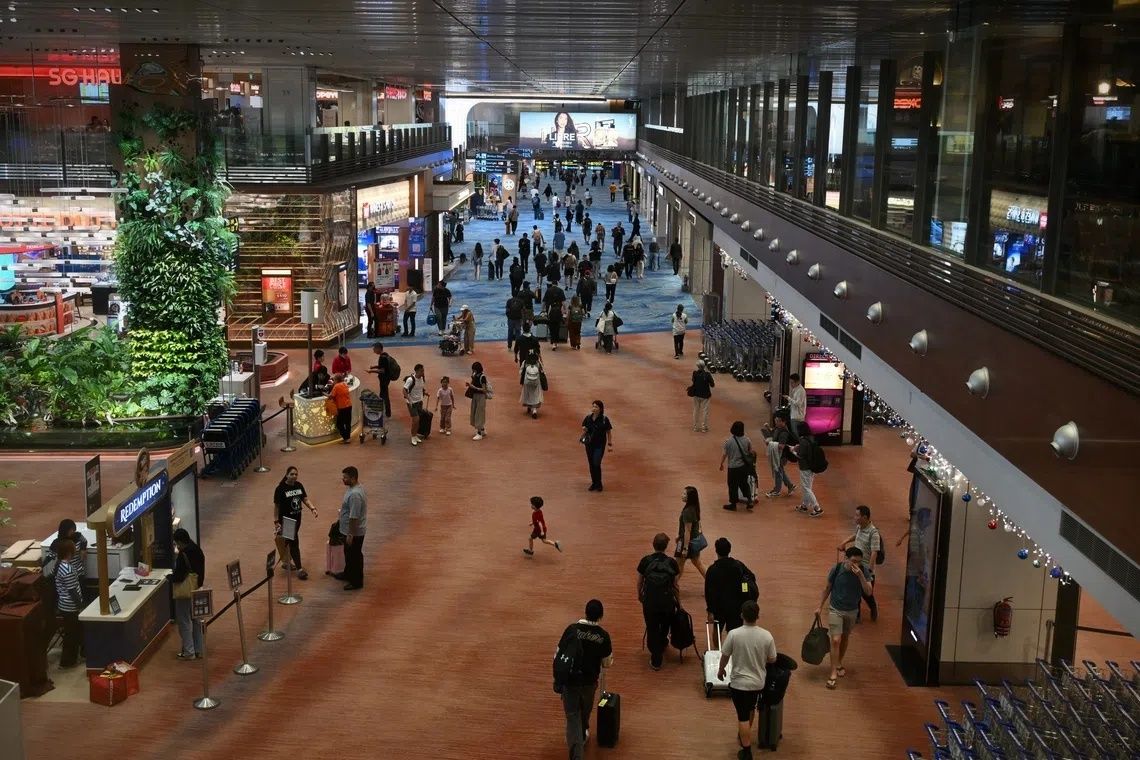
Singapore authorities have made two arrests in connection with perfume thefts occurring at Changi Airport's transit retail areas, underscoring ongoing concerns about shop theft targeting high-value cosmetic products at the region's busiest aviation hub. The 37-year-old Australian suspect and a 50-year-old American national face charges scheduled for Aug 17, with police announcing the arrests through a statement released on Aug 16.
The Australian man's case represents a particularly unusual instance of law enforcement persistence across time and borders. On Nov 19, 2025, staff at a retail outlet in Changi Airport Terminal 2's transit zone discovered two missing perfume boxes valued at approximately $430. Security camera footage subsequently revealed the suspect had removed the merchandise at 4.50pm and departed the terminal without completing a purchase. Before police could establish his identity and apprehend him, he had already left Singapore. The breakthrough came eight months later on Aug 4 when he transited through the airport once more, allowing authorities to arrest him and recover the stolen goods.
The American suspect's arrest unfolded more rapidly but revealed a more extensive pattern of theft. On Aug 5 at approximately 1.25am, staff at a retail store in Terminal 1's transit area reported a missing perfume box originally priced at more than $310. Airport security footage showed the man pocketing the item around 12.40am and proceeding through the terminal without payment. Notably, police officers stationed at the airport managed to detain him before he could board his departing flight, preventing his escape from jurisdiction.
Investigations into the American suspect's activities uncovered additional thefts he had committed within the same transit retail environment. Detailed review of security recordings revealed he had previously stolen a second perfume box valued at approximately $170 from another outlet, along with a perfume tester bottle priced at more than $230 from a third location. The cumulative value of all three items stolen by this individual exceeded $717, and authorities successfully recovered the entire haul of stolen merchandise during his detention.
The charges carry substantial potential consequences under Singapore law. Theft in dwelling—a classification encompassing theft committed within any building or residence, including airport terminals—carries maximum penalties of up to seven years imprisonment, monetary fines, or both sanctions combined. This legal framework reflects Singapore's stringent approach to retail theft, particularly at critical infrastructure such as airports that process millions of passengers annually.
For Malaysian readers, these incidents highlight transnational challenges in airport security and the vulnerability of retail operations in high-traffic transit environments. Changi Airport's position as Southeast Asia's second-busiest aviation hub means it processes considerable volumes of transiting passengers, many of whom may be unfamiliar with local legal consequences or may calculate theft risks differently than domestic customers. The cases demonstrate how organised international travel creates opportunities for opportunistic theft across jurisdictions, a problem that resonates across major regional airports in Kuala Lumpur and elsewhere.
The recovery of merchandise and rapid apprehension in the American suspect's case reflect evolving technological advantages in modern airport security. Assistant Commissioner of Police M. Malathi emphasised this reality during his statement on Aug 16, noting that advances in closed-circuit television surveillance systems and their widespread deployment by retailers have substantially improved detection capabilities for retail theft offences. He stressed that even when offenders initially evade immediate identification and departure, ongoing investigations will eventually lead to their identification and eventual arrest—a message with particular resonance given the Australian suspect's eight-month evasion.
Malathi's comments underscore an important deterrent message for potential offenders. The police statement warned that criminals committing retail theft will face accountability, with the implication that modern surveillance infrastructure and international cooperation create a extended window of vulnerability. This approach aligns with Singapore's broader strategy of maintaining low crime rates through visible enforcement and technological monitoring, contrasting with the perception that transient passengers might exploit loopholes in enforcement.
The airport police unit's commitment to continued collaboration with retail stakeholders signals a proactive stance toward preventing future incidents. This partnership model—combining law enforcement with retailer vigilance and surveillance technology—offers lessons for Malaysia's own airport operators and retail management. As Kuala Lumpur International Airport and other regional hubs handle increasing passenger volumes, similar investments in technology infrastructure and inter-agency coordination may prove essential for protecting retail operations from organised or opportunistic theft.
These prosecutions also illustrate the particular vulnerability of luxury cosmetic products, which command relatively high resale values, are frequently stocked in airport retail environments catering to affluent travellers, and can be pocketed discreetly compared to larger merchandise categories. The repeat nature of the American suspect's thefts—targeting three separate outlets within a short timeframe—suggests potential familiarity with airport layout and retail operations, raising questions about whether such thefts represent spontaneous opportunism or more calculated criminal activity.
For Malaysian and regional travellers passing through Changi Airport, these cases serve as practical reminders that security monitoring extends comprehensively throughout transit zones, and that the perceived anonymity of airport environments provides minimal actual protection against identification and prosecution. The extended timeline of the Australian suspect's eventual apprehension demonstrates that legal consequences do not expire simply because an offender has departed Singapore's borders.

