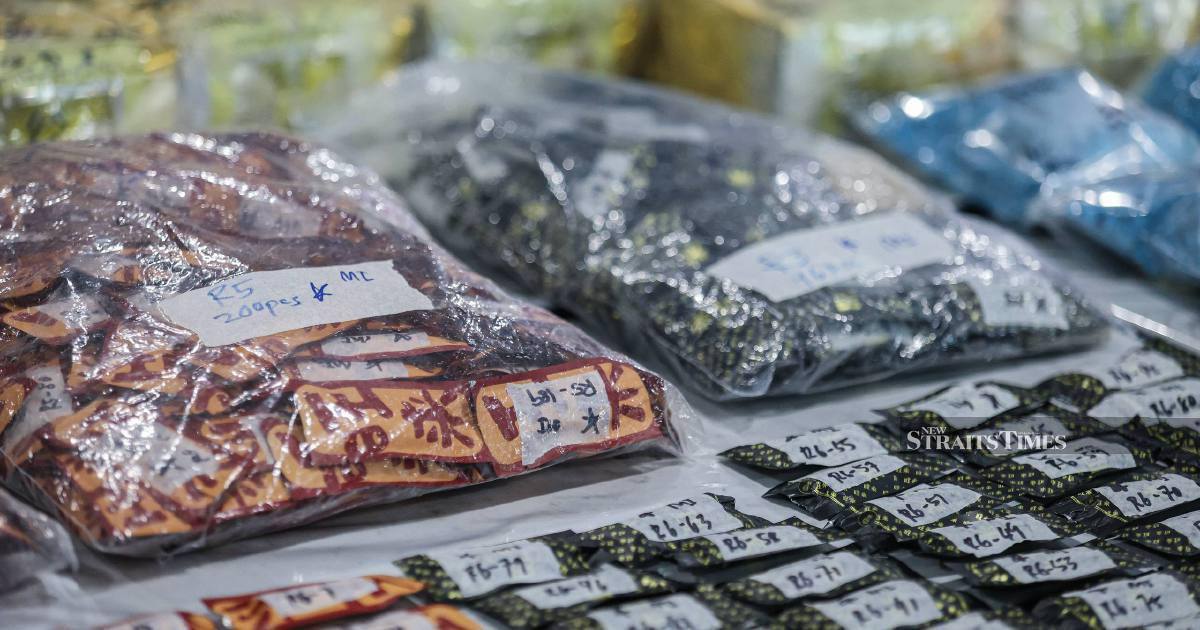
Authorities have arrested two brothers in connection with what law enforcement officials describe as a major maritime drug trafficking operation centred in Johor Baru. The Malaysian Maritime Enforcement Agency (MMEA) apprehended the suspects on Sunday as they allegedly prepared to transport narcotics across sea routes towards a neighbouring jurisdiction. The seizure, totalling more than RM6.85 million in estimated street value, represents a significant disruption to organised trafficking networks operating across the Strait of Malacca and surrounding waters.
The operation underscores the persistent challenge facing Malaysian authorities in combating drug smuggling through maritime channels. Unlike land border checkpoints, where enforcement can be concentrated at key crossing points, the region's complex coastline and shipping lanes provide multiple opportunities for traffickers to attempt passage with contraband. The MMEA's involvement signals that authorities view maritime routes as increasingly important vectors for large-scale drug movement between Southeast Asian nations.
The drug in question, referred to as "Piu Piu" by enforcement officials, represents an emerging concern in the regional drug landscape. This terminology reflects how trafficking networks continuously develop nomenclature for controlled substances, sometimes adopting street names that differ significantly from chemical designations. The emergence of new drug variants and the renaming of existing substances pose analytical challenges for public health agencies attempting to track consumption patterns and associated health risks across Malaysia.
The brothers' alleged scheme involved preparing vessels and logistics for a maritime crossing, suggesting coordination beyond the two arrested individuals. Sophisticated smuggling operations typically require multiple layers of participants—from drug procurement and packaging specialists to logistics coordinators, vessel operators, and receiving networks in destination countries. The focus on the MMEA's intervention points to authorities identifying suspicious maritime activity, though the broader operational structure likely extends well beyond these two detainees.
Maritime drug interdiction has intensified across Southeast Asia amid global supply chain pressures on traditional trafficking routes. As land borders face heightened scrutiny through technology deployment and personnel increases, organised crime syndicates have increasingly pivoted towards sea-based operations. The waters between Malaysia and Thailand, between Malaysian Peninsular territories and island states, and around the Sulu-Sulawesi maritime zone have become focal points for enforcement agencies attempting to intercept bulk shipments.
The RM6.85 million valuation reflects the significant economic stakes involved in transnational trafficking. These figures typically represent wholesale or street-level estimates rather than acquisition costs for smuggling organisations, which purchase at substantially lower prices. The margin between acquisition and endpoint valuation creates powerful economic incentives for individuals willing to undertake dangerous and illegal operations. For the brothers, the potential profits—had the operation succeeded—would have represented life-altering sums, though prison sentences for drug trafficking in Malaysia carry severe consequences including lengthy incarceration.
Neighbouring countries referenced in such cases typically include Thailand, Singapore, or Indonesian jurisdictions, though the specific destination remains unclear from available details. The choice of destination would influence the drug's eventual market value and consumption patterns. Different nations maintain varying regulatory frameworks regarding specific substances, creating price differentials that motivate trafficking. Some substances prohibited as dangerous drugs in Malaysia operate under different legal classifications elsewhere, creating arbitrage opportunities that drive smuggling economics.
The timing of the operation reflects ongoing enforcement surveillance capacity. MMEA officers maintain patrols across Malaysian maritime zones and cooperate with international partners on intelligence sharing regarding suspected trafficking vessels. The agency's ability to intercept the brothers suggests either intelligence gathered through prior investigations or the detection of suspicious vessel activity during routine patrols. Malaysian maritime law enforcement has expanded technological capacity in recent years, incorporating radar monitoring, vessel tracking systems, and intelligence fusion centres that improve interception rates.
The successful seizure contributes to official statistics demonstrating enforcement effectiveness, though analysts debate whether such operations meaningfully disrupt trafficking supply chains. A single RM6.85 million seizure, while substantial, represents one shipment among numerous operations trafficking continuously across regional waters. The financial impact on trafficking organisations, particularly larger networks with diversified operations, may be absorbed as an operational cost rather than a decisive blow to their activities.
These enforcement actions carry implications for Malaysia's international standing regarding drug control commitments. Regional cooperation frameworks, particularly under ASEAN mechanisms and bilateral agreements with neighbouring countries, establish expectations for active enforcement. Publicising successful interdictions demonstrates compliance with international narcotics control obligations and signals commitment to partner nations seeking cooperative action against trafficking.
For Malaysian residents and businesses dependent on maritime commerce, continued drug trafficking enforcement reflects the broader challenge of securing shipping lanes while maintaining commercial flow. Increased scrutiny of vessels, while necessary for interdiction, can impose delays and documentation burdens on legitimate trade. The delicate balance between security enforcement and facilitation of lawful commerce remains an ongoing tension for maritime authorities across Southeast Asia.
The investigation into the two arrested brothers will likely extend to mapping their supply networks, identifying co-conspirators, and tracing the origin of the seized drugs. Such investigations frequently uncover connections to larger trafficking organisations, providing authorities with intelligence for broader enforcement campaigns. The prosecution of the brothers, when it proceeds through Malaysian courts, will contribute to the deterrent effect that severe sentencing creates for potential traffickers evaluating the risks associated with maritime smuggling operations.

