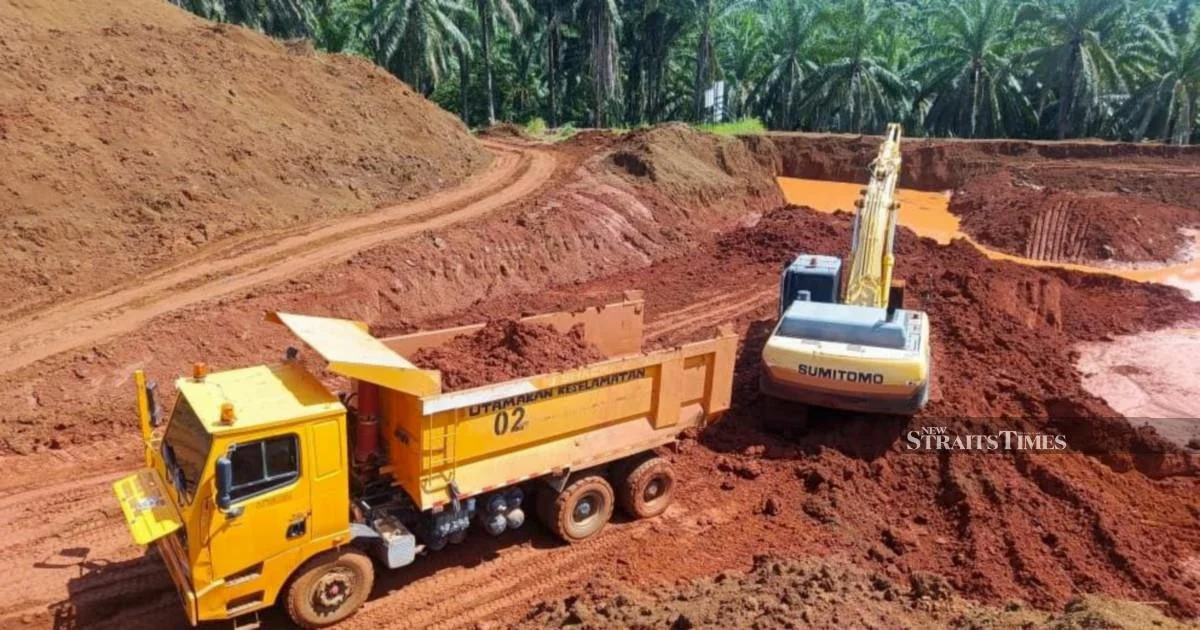
Authorities have intensified operations against illegal mining and resource trafficking in Terengganu, resulting in the arrest of two men suspected of orchestrating an unlicensed silica sand transfer operation in Marang. The enforcement action, which took place yesterday, represents a significant crackdown on unauthorised mineral extraction and trafficking networks that have plagued the state's resource sector. Officers also impounded heavy machinery and equipment valued at approximately RM1.8 million, underscoring the scale of industrial activity involved in what authorities characterise as an organised smuggling enterprise.
Silica sand has become an increasingly attractive target for illegal operators across Southeast Asia owing to its substantial commercial value in construction, glassmaking, and foundry applications. The resource commands premium prices in regional markets, particularly where legitimate supply channels face regulatory constraints or where demand outpaces licensed production capacity. Terengganu, endowed with significant mineral deposits, has experienced recurring problems with unlicensed extraction and black-market distribution networks that circumvent tax obligations and environmental compliance requirements.
The seized equipment reflects the sophistication of unauthorised mining operations in the region. Modern industrial machinery capable of processing, washing, and transporting bulk silica sand typically requires substantial capital investment, suggesting that the suspected smuggling operation possessed considerable financial backing and logistical infrastructure. The RM1.8 million valuation indicates that law enforcement has disrupted a professionally run enterprise rather than a small-scale opportunistic venture, offering insights into how transnational smuggling networks function within Malaysia's mineral sector.
This operation aligns with a broader pattern of illegal resource extraction that Malaysian authorities have sought to suppress through enhanced border monitoring and domestic enforcement. Silica sand trafficking often involves coordination between mining operators, transport networks, and end-buyers, creating vulnerability at multiple points in the supply chain. The Marang arrests suggest that enforcement agencies have achieved intelligence breakthroughs that permitted intervention before smuggled material could reach regional markets.
Terengganu's geographic positioning as a major coastal state with established port infrastructure has made it particularly susceptible to resource smuggling. Criminal networks exploit the state's transportation corridors and maritime access points to move contraband minerals efficiently. The arrest location in Marang, situated in central Terengganu, indicates that illegal operations extended beyond traditional mining zones into areas where regulatory oversight may be less concentrated.
For Malaysian readers, such enforcement actions carry significance beyond immediate law enforcement considerations. Illegal mining degrades environmental quality through unregulated extraction processes, soil contamination, and habitat disruption. Resource smuggling simultaneously deprives the federal and state governments of tax revenue that would otherwise fund public services and infrastructure development. The financial impact accumulates across the region, as black-market minerals undercut legitimate producers and distort pricing within domestic and regional markets.
The confiscation of RM1.8 million in machinery represents a substantial blow to the alleged smuggling network's operational capacity. Replacement of this equipment would require considerable capital reorganisation, potentially providing enforcement agencies with a window to dismantle connected criminal structures. However, the sophisticated nature of the operation suggests that alternative suppliers or backup resources may exist within the broader smuggling ecosystem.
Enforcement agencies have progressively strengthened coordination between federal and state authorities to address mineral trafficking. The involvement of the Graft of Fisheries (GOF) in this operation demonstrates inter-agency cooperation in resource protection, though mineral enforcement typically involves multiple agencies with overlapping jurisdiction. Sustained coordination across environmental, customs, police, and state government units remains essential for preventing reactivation of suppressed smuggling routes.
The investigation outcomes may extend beyond immediate criminal proceedings to address supply chain vulnerabilities and end-market demand. Authorities frequently target not only extraction and trafficking operators but also downstream purchasers who knowingly acquire contraband minerals at discounted prices. Disrupting demand-side incentives through enforcement against buyers can reduce profitability for smuggling enterprises and discourage future operations.
Regional dynamics amplify the significance of Terengganu enforcement actions. Silica sand smuggling networks often traverse multiple jurisdictions, connecting to ports in adjacent states or neighbouring countries. Intelligence gathered during the Marang investigation may reveal transnational trafficking routes and international buyer networks, enabling authorities to expand enforcement operations beyond immediate state borders.
Government agencies have emphasised commitment to protecting Malaysia's mineral resources from illegal exploitation. Such operations contribute to broader objectives of strengthening institutional capacity and demonstrating enforcement credibility to legitimate mineral producers and international trading partners. Enhanced enforcement visibility also serves as deterrent messaging to potential smugglers assessing risk-reward calculations.
The path forward requires sustained vigilance across Terengganu's mineral sector. While this operation achieved measurable success through arrest and seizure, preventing resurgence depends on maintaining enforcement pressure, closing regulatory gaps, and addressing economic conditions that incentivise illegal activity. The investigation conclusions may inform policy adjustments and resource allocation decisions affecting future mineral sector oversight.

