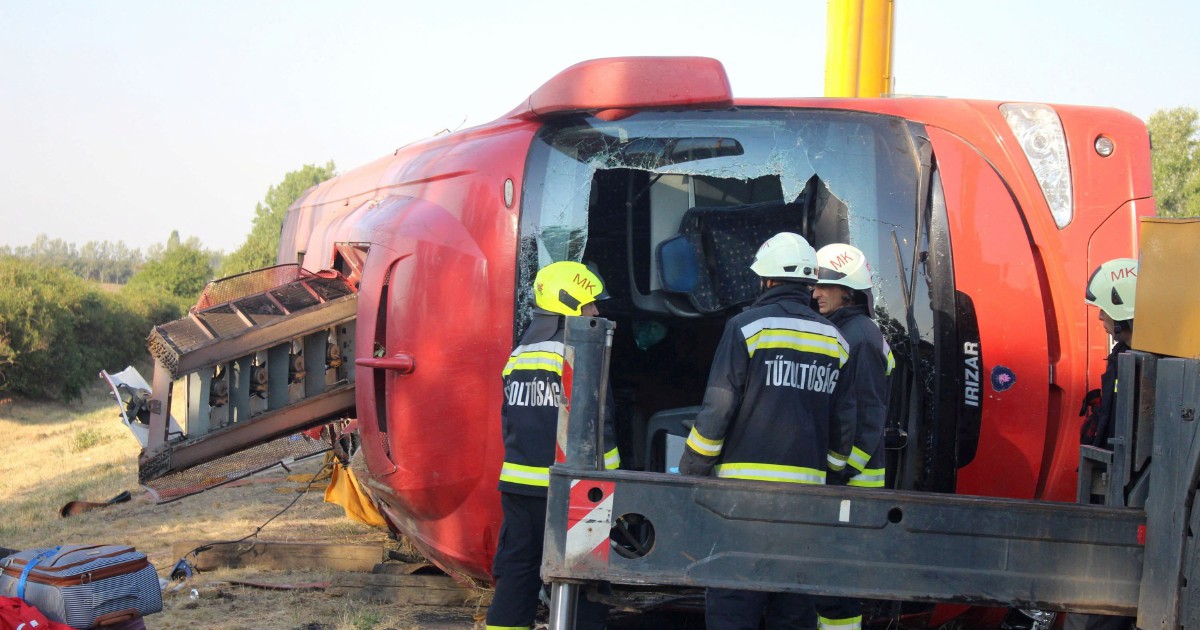
A Polish passenger coach flipped over on a Hungarian motorway in the early hours of Sunday, resulting in one of the region's deadliest road accidents in recent memory. The incident claimed 12 lives and left a further 10 people hospitalised with severe injuries, as confirmed by Hungarian Prime Minister Peter Magyar and emergency officials responding to the scene.
The coach, carrying predominantly Polish nationals, was travelling along the highway when circumstances that remain under investigation caused the vehicle to overturn. Emergency services mobilised rapidly to the crash site, but the scale of the impact proved devastating for those aboard. The precise location of the accident and the full passenger manifest are still being documented by Hungarian authorities as they conduct their preliminary investigation.
Road accidents involving long-distance coaches remain a persistent safety concern across Central and Eastern Europe. These vehicles, often travelling at high speeds over long distances, pose particular risks when collisions or rollovers occur due to the concentration of passengers in a confined space. The impact forces in such incidents can be catastrophic, making survivability rates significantly lower than in individual car crashes.
For Malaysian readers familiar with regional transport patterns, this tragedy underscores challenges that mirror those faced in Southeast Asia. Cross-border coach services connecting Malaysia, Thailand, and other neighbouring countries regularly transport thousands of passengers. Such accidents highlight the importance of rigorous vehicle maintenance standards, driver fatigue protocols, and speed management—issues that transport authorities throughout the ASEAN region continue to grapple with.
Hungary, as a transit hub between Eastern Europe and Western markets, sees substantial coach traffic throughout the year. Many services connect Poland and other Eastern European nations with destinations further west, utilising the Hungarian motorway network as a critical artery. The accident underscores the high-volume, sometimes unregulated nature of long-distance coach operations that transcend national borders, where oversight can become fragmented across jurisdictions.
The response from Hungarian emergency services demonstrated the coordination required for mass casualty incidents. Rescue teams, medical personnel, and law enforcement converged on the site to extract survivors from the wreckage and provide emergency medical treatment. The seriously injured were transported to nearby hospitals equipped to handle trauma cases, though the sheer number of casualties tested local healthcare capacity.
Prime Minister Peter Magyar's confirmation of the death toll and injury count reflects the scale of the tragedy and indicates the coordination between Hungarian officials and Polish authorities, who would have been notified given the nationality of most passengers. Cross-border incidents typically trigger diplomatic liaison protocols and joint investigation frameworks, particularly when significant loss of life is involved.
The investigation into the cause will likely examine multiple factors. Vehicle condition, including tyre integrity and brake systems, represents a primary line of inquiry. Driver behaviour—whether fatigue, speed, or momentary inattention—will be scrutinised. Road conditions and weather at the time of the incident may also have contributed. Hungarian investigators will coordinate with Polish officials given the coach's origin, potentially examining whether the vehicle met both Hungarian and Polish safety standards.
For Malaysian transport operators and regulators, incidents like this provide sobering reminders of risks inherent in long-distance coach operations. The region's continued reliance on coach services for inter-city and cross-border travel means that safety investments—in driver training, vehicle maintenance schedules, speed-limiting technology, and rest-break enforcement—yield direct benefits to public safety.
The human cost extends beyond the immediate casualties. Families across Poland and potentially other nations will mourn loved ones, whilst survivors face varying degrees of physical and psychological trauma. The incident may prompt broader discussions within Poland and Hungary regarding coach safety standards and whether existing regulations adequately protect passengers on increasingly busy European routes.
As investigations proceed, the tragedy will likely feature in safety discussions at European and regional transport forums. Regulators may revisit speed limits on routes known for coach traffic, examine driver licensing standards, or strengthen vehicle inspection requirements. These discussions often occur in the aftermath of such incidents, reflecting the reactive nature of transport safety policy even as the evidence for preventive measures accumulates.
For regional observers, the incident underscores that transport safety transcends borders. Coaches connecting Malaysia with Thailand, or operating within ASEAN corridors, face comparable risks. The Hungarian tragedy serves as a cautionary tale suggesting that continuous investment in safety infrastructure, driver welfare, and vehicle maintenance standards represents not merely a regulatory obligation but a fundamental responsibility to passengers whose trust in long-distance coach services remains essential to regional mobility and economic integration.

