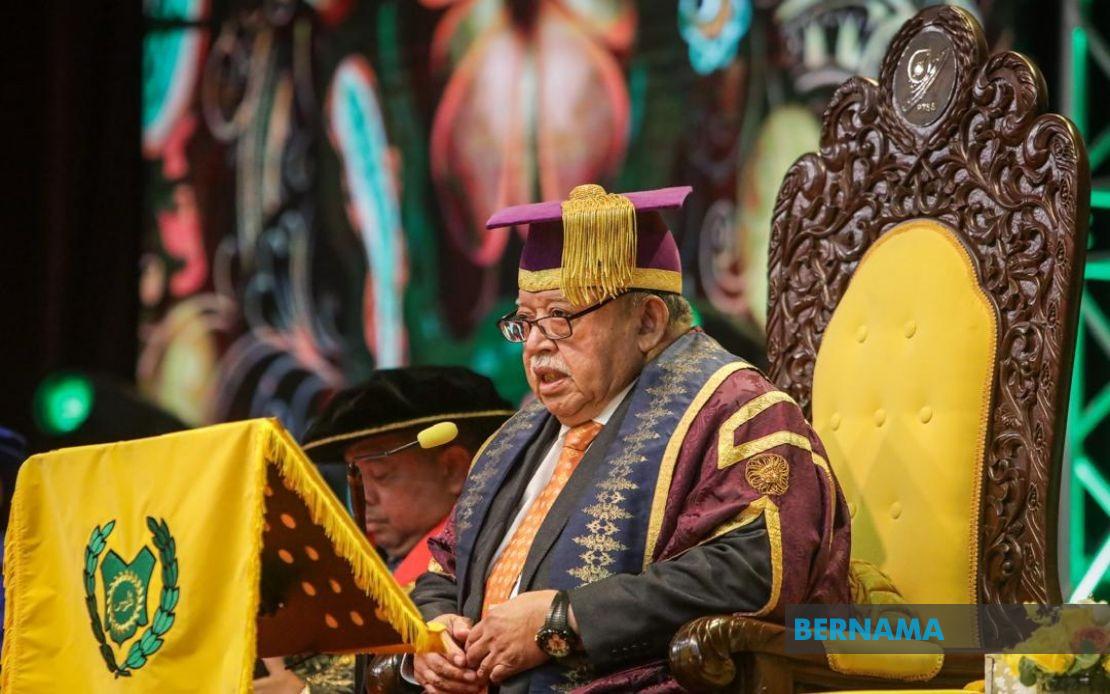
Technical and vocational education has emerged as a cornerstone of Malaysia's strategy to cultivate a workforce capable of thriving in an increasingly complex global economy, according to Tuanku Syed Sirajuddin Jamalullail, the Raja of Perlis. Speaking at the 2026 Northern Zone Polytechnic and Community College Convocation Ceremony held at Politeknik Tuanku Syed Sirajuddin in Arau on August 3, His Royal Highness underscored that TVET programmes produce not merely skilled workers but creative and innovative professionals poised to tackle the challenges of tomorrow.
The emphasis on innovation reflects a profound shift in how Malaysia must position itself economically. The Raja stressed that in today's rapidly transforming world, innovation has transcended being a luxury or optional pursuit; it has become absolutely fundamental to sustaining the nation's progress and maintaining competitiveness on the international stage. This observation carries particular weight for Malaysia, which seeks to transition from a middle-income economy toward high-value manufacturing and services. Without a workforce grounded in both practical skills and innovative thinking, such aspirations remain out of reach.
Driving this need for reform is the relentless pace of technological disruption. The contemporary employment landscape is being fundamentally reshaped by artificial intelligence, automation, robotics, and widespread digitalisation. These technologies are not merely incremental improvements to existing industries but transformative forces that render certain job categories obsolete while simultaneously creating entirely new sectors of opportunity. TVET institutions, therefore, must evolve beyond teaching static technical competencies to fostering adaptive thinking and creative problem-solving capabilities that enable graduates to navigate perpetual change.
Recognizing this imperative, the Raja called for a sustained commitment to cultivating an innovation culture throughout the polytechnic system. However, His Royal Highness articulated a sophisticated understanding of what innovation truly entails. It is not confined to abstract ideation or theoretical brainstorming; rather, genuine innovation demands the capacity to translate creative concepts into practical, implementable solutions that deliver tangible benefits to communities and advance national development objectives. This distinction is essential, as it anchors technical education firmly to societal purpose rather than permitting it to become divorced from real-world applications.
Beyond technical prowess and innovative capability, the Raja delivered a pointed reminder to the graduating cohort regarding the indispensable role of moral foundation in professional life. He articulated that knowledge and competence, no matter how advanced, must always operate within a framework of robust ethical principles, personal integrity, and genuine patriotic commitment. This perspective resonates particularly within Malaysia's context, where public trust in institutions and professionals has periodically been tested by lapses in governance and ethical conduct.
The Ruler's counsel to graduates emphasized that professional excellence cannot be assessed solely through the lens of technical expertise or credentials. Outstanding practitioners distinguish themselves equally through honesty, reliability, and integrity of character. The implication is clear: as Malaysia develops its talent base to meet future economic demands, the cultivation of moral leadership and ethical consciousness must proceed in tandem with skills development. Graduates who command both technical mastery and unwavering principles become agents of genuine national progress rather than mere economic units.
The convocation ceremony itself represented a significant milestone for the northern region's polytechnic system. Spanning from August 3 through August 9, the event brought together 6,104 graduates from polytechnic and community college programmes across Perlis, Kedah, and Penang. This considerable cohort represents an influx of newly qualified professionals entering the labour market equipped with formal training in diverse technical and vocational disciplines. Their successful progression through TVET programmes signals the system's capacity to scale education delivery across multiple northern states.
Among the standout achievers recognized during the ceremony's opening session was Teerti Ganapathi Rao, a 22-year-old graduate who completed a Diploma in Digital Technology through the Department of Information and Communication Technology at Politeknik Tuanku Syed Sirajuddin. Rao's selection to receive the Director-General of Polytechnic and Community College Education Award underscores the calibre of talent emerging from these institutions and highlights the particular relevance of digital technology training in meeting contemporary labour market demands.
For Malaysia, the implications of investing robustly in TVET extend beyond immediate employment outcomes. The northern corridor, encompassing Perlis, Kedah, and Penang, represents a strategically important region for economic development. By ensuring that tertiary technical education produces graduates capable of innovating, adapting, and maintaining high ethical standards, policymakers strengthen the regional economy's resilience and competitiveness. The presence of institutions like Politeknik Tuanku Syed Sirajuddin demonstrates the government's commitment to distributing quality technical education beyond the Klang Valley, potentially encouraging talent retention within the region and supporting localized industrial development.
The Raja's remarks also implicitly acknowledge that Malaysia's future prosperity depends less on accessing foreign expertise and more on systematically developing indigenous talent pools. By emphasizing innovation within TVET contexts, the nation signals confidence in its capacity to produce world-class technical professionals rather than remaining perpetually reliant on imported expertise. This nationalist dimension of skills development carries both economic and strategic significance for a country seeking greater technological sovereignty.
Looking forward, the challenge for Malaysia's TVET sector lies in ensuring that the rhetoric surrounding innovation and moral leadership translates into curriculum reform, instructor development, and industrial partnerships that genuinely prepare graduates for the complex demands ahead. The 6,104 graduates from this year's convocation will serve as a litmus test for whether the system is successfully bridging the gap between technical training and the adaptive, ethical innovation required to propel Malaysia toward its higher development aspirations. Their success or struggle in the labour market will provide crucial feedback regarding whether TVET institutions are adequately positioning the nation's workforce for the future.

