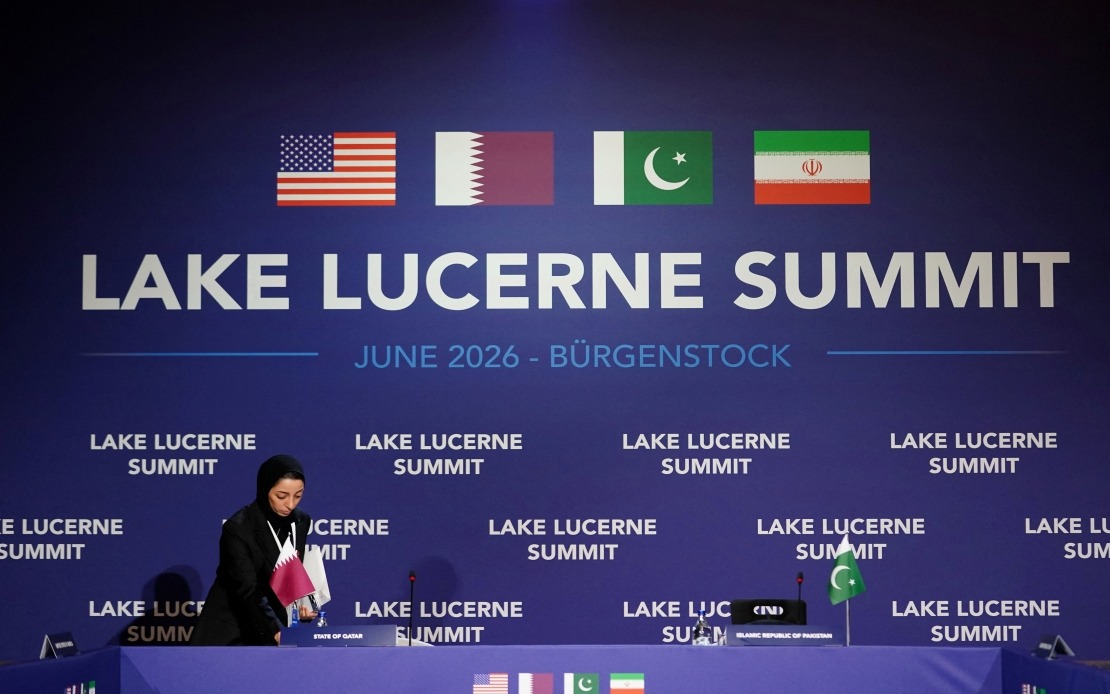
Four significant players in Middle Eastern geopolitics—Türkiye, Egypt, Pakistan and Saudi Arabia—have publicly backed a freshly signed memorandum between the United States and Iran, positioning the accord as a meaningful pathway toward diminishing hostilities across West Asia. The endorsement came through a coordinated statement following diplomatic talks held in Cairo, signalling unified support for the negotiating framework among nations with substantial strategic interests in regional stability.
The joint declaration specifically commended the Islamabad Memorandum of Understanding, framing it as a constructive development that moves beyond decades of brinkmanship and military posturing. The four foreign ministers characterised the agreement as addressing not merely bilateral tensions but systemic risks that threaten the broader architecture of international commerce, maritime security, and energy supply chains. This framing reflects recognition among regional powers that escalation between Washington and Tehran carries consequences that ripple far beyond their immediate political calculations, affecting global markets and transportation corridors upon which many nations depend.
Pakistan's diplomatic role received particular recognition within the statement, with the four powers acknowledging Islamabad's instrumental contribution in orchestrating the negotiating process and creating space for dialogue. Qatar's behind-the-scenes mediation efforts also earned commendation, highlighting how smaller Gulf states can leverage their positioning to facilitate agreements between adversarial powers. For Malaysia and other Southeast Asian economies reliant on stable Middle Eastern relations and uninterrupted energy supplies, this collaborative diplomatic effort carries direct implications for regional predictability and economic security.
The ministers stressed the necessity of rapid progression toward subsequent negotiation phases, emphasising that any lasting settlement must incorporate verifiable mechanisms and mutual acceptance of terms. The emphasis on expedited movement forward suggests underlying anxiety that momentum could dissipate, particularly given historical patterns of failed diplomatic initiatives in this region. The parties indicated that comprehensive agreements should explicitly address the security preoccupations of Gulf Cooperation Council states and nations within the Levant, ensuring that no party feels excluded from the settlement framework.
A noteworthy dimension of the statement involved the integration of the Palestinian question into the broader de-escalation narrative. The four powers reasserted their commitment to establishing an independent Palestinian state within 1967 boundaries, with East Jerusalem designated as its capital, thereby linking regional stability initiatives to the resolution of one of the Middle East's most intractable conflicts. This connection underscores how diplomatic breakthroughs must encompass multiple grievances and territorial disputes to achieve durable regional peace rather than merely managing US-Iranian competition.
For Southeast Asian observers, this collective affirmation holds several implications. The involvement of Pakistan and Saudi Arabia—nations with significant economic and security partnerships across Asia—suggests that de-escalation in West Asia could enhance their capacity to engage more substantively with regional counterparts. A more stable Middle Eastern environment permits these powers to redirect resources and diplomatic attention toward Indo-Pacific engagement, potentially reshaping the strategic balance in that theatre.
The statement's emphasis on international maritime routes and global supply chains reflects heightened awareness among regional leaders of how Middle Eastern instability transmits shocks throughout interconnected economic systems. Shipping through the Persian Gulf and Strait of Hormuz remains critical for Asian economies dependent on petroleum and manufactured goods. The four powers' recognition of these systemic vulnerabilities suggests they understand that even partial de-escalation generates benefits extending far beyond the traditional Middle Eastern power competition.
Turkey's participation in this alignment is particularly significant given its position as a bridge between European and Middle Eastern spheres. Ankara's endorsement carries implications for NATO engagement in regional affairs, as does the inclusion of a major Sunni monarchy and an important Islamic republic's neighbour. The diplomatic choreography suggests emerging consensus that managed competition serves regional interests better than perpetual confrontation.
The call for comprehensive and verifiable settlements acknowledges that trust remains fragile and that vague agreements lack enforceability capacity. Previous accords in this region have foundered when mechanisms for verification proved inadequate or when one party perceived violation without recourse. The explicit emphasis on these elements indicates that diplomats are learning from past failures and attempting to construct more robust frameworks.
Moreover, the statement's framing of de-escalation as a prerequisite for addressing other regional crises—particularly the Israeli-Palestinian conflict—recognises that superpower tensions exacerbate secondary conflicts through proxy dynamics and arms infusions. By seeking to contain US-Iran competition, the four powers hope to create political space for addressing other intractable disputes that destabilise the region.

