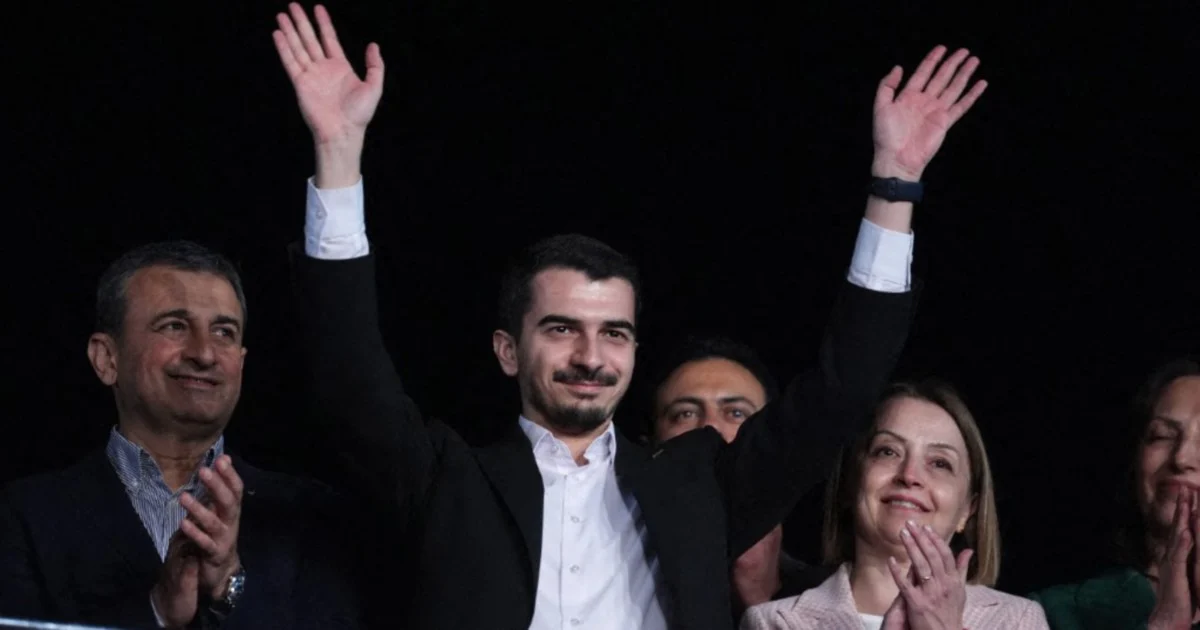
Turkish prosecutors have moved against 36 individuals in a significant corruption investigation centred on an Ankara district governed by the country's main opposition party. The detentions follow what authorities describe as a probe into systematic bribery and the manipulation of public tender processes, with the district mayor among those apprehended. The Ankara chief prosecutor's office confirmed the sweeping operation, which underscores ongoing tensions around governance and accountability in Turkey's capital region.
The detained mayor presides over one of Ankara's key districts and represents the opposition's foothold in the sprawling metropolitan area. His arrest marks a notable escalation in what appears to be a complex investigation spanning multiple officials and private sector figures allegedly involved in corrupt practices. The specific allegations centre on bribery payments connected to the award of public contracts and infrastructure projects, as well as improper manipulation of tender procedures designed to favour connected bidders. Such practices, if substantiated, would represent a serious breach of public procurement rules and fiduciary duties.
The breadth of the operation—reaching 36 suspects simultaneously—suggests prosecutors uncovered an extensive network of alleged malfeasance rather than isolated instances of misconduct. The involvement of officials from an opposition-controlled locality carries political weight in Turkey, where divisions between the ruling Justice and Development Party (AKP) and the opposition Republican People's Party (CHP) remain deep. The opposition CHP governs several major municipalities, and any corruption findings could influence public perception and electoral dynamics, particularly as Turkey approaches future local or national contests.
Tender-rigging and bribery in municipal procurement are persistent challenges across Turkey and the wider region. Public works projects, land development, and service contracts often become targets for corrupt officials seeking kickbacks or opportunities to steer contracts to preferred firms. In Ankara, a city undergoing continuous expansion and urban renewal, such schemes could affect numerous construction and infrastructure initiatives. The prosecutor's move reflects a formal acknowledgment that illicit practices may have penetrated administrative processes, necessitating serious investigative action.
The investigation's scope extends beyond the mayor himself, with dozens of others implicated. This broader net suggests that prosecutors are pursuing not merely a single individual's misdeeds but a system of collusion involving multiple officials and private business interests. The coordination of simultaneous detentions across different subjects typically indicates careful prior investigation and evidence-gathering, though formal charges have not yet been publicly detailed. Turkish detention procedures generally allow prosecutors several days to determine whether suspects should face formal charges or be released.
For Malaysian observers, the case illustrates challenges faced by democracies in managing corruption within local government structures. Similar concerns about tender manipulation and bribery have periodically surfaced in Malaysia's municipal and state administration, making the Turkish investigation particularly relevant. The involvement of opposition-controlled administrations does not automatically suggest their governance is uniquely compromised; major corruption cases have also touched ruling-party municipalities across Turkey. However, the optics of such investigations can become politicized, and transparency in prosecution becomes essential for public confidence.
The implications for Ankara's governance are substantial. If a district mayor faces serious corruption allegations, municipal services and ongoing projects may experience disruption or require administrative reassignment. The city's residents depend on municipal authorities for essential services, and institutional turbulence resulting from high-level detentions can undermine public confidence and operational efficiency. Other officials within the same administration may face scrutiny, creating uncertainty about the continuity of local governance.
This development also reflects Turkey's ongoing struggle with corruption despite numerous anti-corruption initiatives and institutional reforms over recent decades. While the country has established specialized prosecutor offices and corruption investigation units, critics argue that enforcement remains inconsistent and sometimes subject to political influence. The detention of opposition figures can be portrayed as politically motivated by opponents, while the ruling party argues that no sector of government is exempt from accountability. Building genuine, impartial anti-corruption efforts remains a critical challenge for Turkish democracy and public trust in institutions.
The investigation will likely generate considerable attention within Turkish politics and media. The opposition will scrutinize whether prosecutions are pursued with equal vigour against officials from the ruling AKP, while government supporters may cite the detention as evidence of comprehensive anti-corruption work. Regional and international observers monitoring Turkey's democratic institutions and rule of law will also track how cases proceed, as the fairness and transparency of investigations affect perceptions of judicial independence and political competition.
For Southeast Asian readers and stakeholders, the Turkish case underscores the importance of robust procurement oversight, ethical standards in municipal administration, and independent investigation mechanisms. Countries like Malaysia, Indonesia, and the Philippines have confronted similar challenges and have instituted various anti-corruption bodies and whistleblower protections. Learning from international experiences—including Turkish efforts, whether successful or contested—can inform ongoing regional efforts to strengthen governance and reduce corrupt practices in public administration and tender processes.

