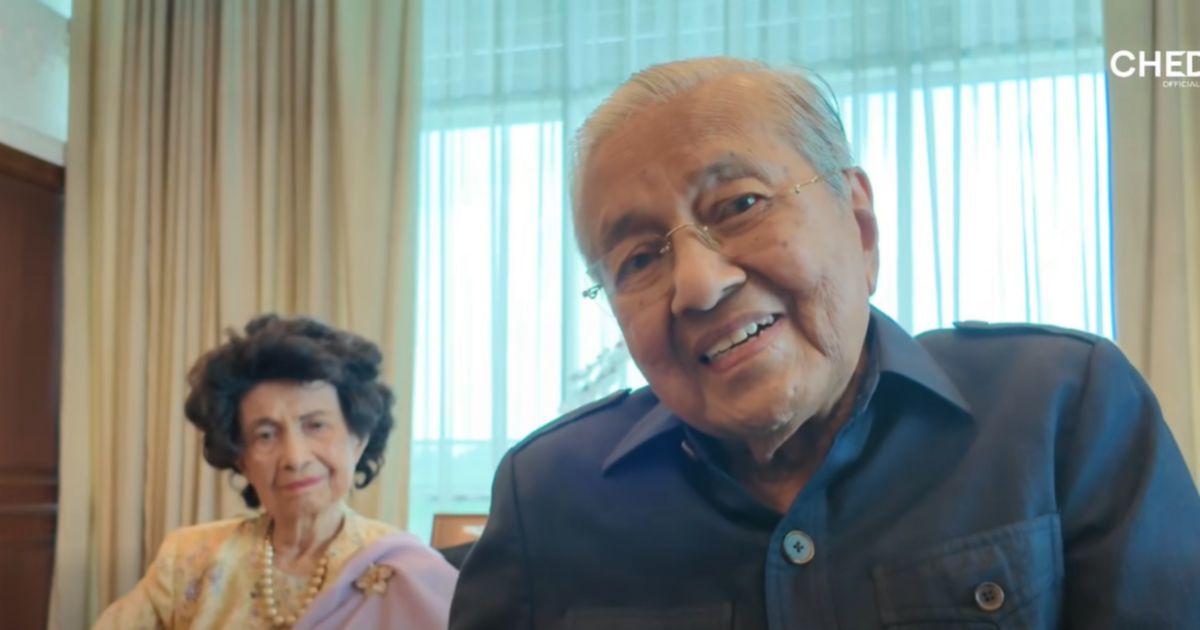
Tun Dr Mahathir Mohamad, Malaysia's longest-serving prime minister and the nation's elder statesman at 101 years old, took time this week to publicly acknowledge the overwhelming surge of birthday greetings and well-wishes from across the country. The sentiment represents a touching moment for a figure whose political legacy spans more than half a century and continues to shape national discourse despite his stepping back from front-line politics.
The centenarian's birthday celebrations underscore the deep respect many Malaysians hold for his contributions to the nation's development and independence journey. From ordinary citizens to public figures, the volume of greeting cards and messages that reached the former premier highlighted the enduring affection and recognition of his role in modernising Malaysia during his two terms as prime minister, which collectively spanned 22 years. His influence on economic policy, infrastructure development, and the nation's international standing remains a defining chapter in contemporary Malaysian history.
At 101 years of age, Tun Mahathir's continued presence in public life—whether through occasional statements on current affairs or reflections on national issues—demonstrates a remarkable level of physical vitality and mental acuity that few figures of his generation maintain. His longevity and willingness to engage with contemporary matters have made him a unique source of historical perspective on Malaysia's post-independence evolution, offering insights that bridge different eras of national development.
The birthday milestone itself carries symbolic significance in Asian cultures, where reaching such an advanced age is traditionally celebrated as an achievement worthy of community recognition. For Malaysians of various backgrounds and generations, the occasion provided an opportunity to reflect collectively on the nation's journey and the role played by key figures in steering the country through critical junctures. The breadth of well-wishers—spanning political affiliates, former adversaries, and ordinary citizens—suggests that Tun Mahathir's legacy transcends partisan political boundaries in the eyes of many Malaysians.
Beyond the ceremonial aspects of birthday celebrations lies a deeper dimension of national memory and historical continuity. As Malaysia continues to navigate complex regional and global challenges, the presence of figures like Tun Mahathir who witnessed and shaped critical moments in Southeast Asian history provides valuable institutional memory. His perspective on regional geopolitics, economic development models, and the balance between sovereignty and globalisation remains relevant as the nation charts its course in an increasingly complicated international environment.
The public acknowledgement of these greetings also reflects evolving communication practices in Malaysia, where traditional greeting cards coexist with digital messages and social media tributes. The convergence of these different channels of expression demonstrates how modern Malaysian society honours its elder statesmen while maintaining connection to established customs of respect and recognition. The diversity of platforms through which birthday wishes reached the former premier encapsulates the multi-generational character of his influence.
Tun Mahathir's response to these wishes, characterised by graciousness and appreciation, reinforces his continued engagement with the Malaysian public and his awareness of the broad constituency that values his historical role. His willingness to acknowledge such displays of affection demonstrates that even at an advanced age, the connections he has forged throughout his political career remain meaningful and reciprocal. This exchange between an elder statesman and the nation he served represents a rare moment of collective reflection on shared history.
From a broader perspective, the celebration of such a milestone in Malaysia offers opportunities for younger generations to reconnect with the individuals and decisions that shaped their country's contemporary form. Educational and cultural institutions often use such occasions to document oral histories and preserve memories of critical periods in national development. The 101st birthday of a figure as consequential as Tun Mahathir thus carries importance beyond personal celebration, touching on questions of historical preservation and intergenerational knowledge transfer.
The overwhelming response from across Malaysian society also underscores the continued relevance of statesmen and historical figures in an era characterised by rapid change and generational shifts. Despite transformations in media, politics, and society, the recognition of those who contributed to nation-building remains a consistent value across diverse demographic groups. This consistency suggests that certain principles of respect for elder leadership and historical consciousness persist as unifying elements in the Malaysian national identity.
As Malaysia moves forward with its development agenda and confronts emerging challenges in the region, the acknowledgement of figures like Tun Mahathir serves as a reminder of the continuity between past achievements and future aspirations. The 101st birthday celebration, while primarily a moment of personal recognition, also functions as a broader conversation about the nation's trajectory and the values that have sustained it through decades of transformation. His expression of gratitude thus becomes more than a polite gesture—it represents an affirmation of the bonds between historical memory and contemporary Malaysian society.

