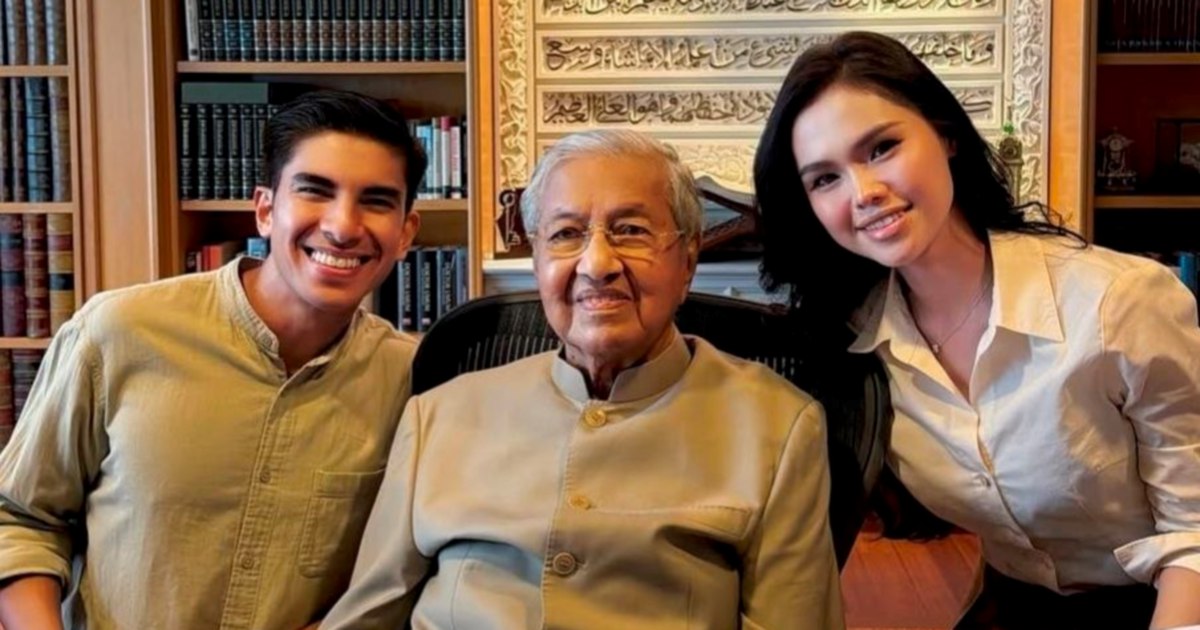
The entertainment world and political circles collided recently when actress and vocalist Bella Astillah shared details of an intimate encounter with former prime minister Tun Dr Mahathir Mohamad, during which the elder statesman dispensed personal wisdom on matrimony to her and her intended spouse, Muar MP Syed Saddiq Syed Abdul Rahman. The candid revelation offers a rare glimpse into how public figures across Malaysia's entertainment and governance sectors occasionally intersect at social gatherings, where experience and counsel flow freely between generations and professions.
Bella Astillah's willingness to publicise this exchange underscores the cultural reverence many Malaysians maintain toward senior figures, particularly those who have occupied the nation's highest offices. Tun Dr Mahathir's lengthy career spanning multiple decades has positioned him as a repository of institutional memory and life experience—qualities that evidently transcend his formal political retirement. The fact that the renowned entertainer chose to highlight this moment suggests the encounter held personal significance, perhaps providing reassurance during a pivotal life transition.
The dynamics at play here reflect broader patterns in Malaysian society, where formal and informal networks often blur. Syed Saddiq Syed Abdul Rahman, who represents the Muar constituency in Johor, represents a younger generation of political actors. At the intersection of his parliamentary duties and his upcoming marriage to a figure from the creative industries, the couple embodies the cross-pollination increasingly common among Malaysia's professional elites. That Tun Dr Mahathir took time to engage with them speaks to the continued social prominence of former leaders in the nation's informal governance architecture.
For Bella Astillah, navigating a high-profile relationship carries its own pressures. As an artist whose work is frequently scrutinised by the public eye, balancing personal relationships with professional demands requires deliberate strategy and emotional fortitude. Entertainment personalities in Malaysia operate under heightened social expectations, particularly regarding personal conduct and family values. The reception of wisdom from an eminent elder likely provided both grounding and validation during preparations for marriage—a transition that assumes additional complexity when one party maintains constant media exposure.
Syed Saddiq's political career, which has encompassed parliamentary representation and youth advocacy, similarly places him under public observation. Young politicians in Malaysia often face particular scrutiny regarding their personal choices and lifestyle decisions, as constituents and party colleagues alike assess character through both public performance and private conduct. The involvement of a respected former premier in blessing this union, even informally, carries subtle but meaningful implications for how the couple's relationship may be perceived across political and social communities.
The counsel dispensed by Tun Dr Mahathir, though not publicly detailed in full, presumably drew upon his extensive personal experience. His own longevity in both marriage and public service positions him as someone with genuine insights into sustaining relationships amid the pressures of public life. Malaysian leaders of his generation often navigated far more restrictive media environments and faced different social expectations than contemporary figures do, yet the fundamental challenges—maintaining intimacy, managing external pressures, prioritising personal values—remain broadly constant across time.
The public nature of this revelation also reflects generational shifts in how Malaysian celebrities and politicians address personal matters. Earlier eras maintained stricter demarcations between public and private spheres, with personal relationships regarded as distinctly off-limits for public commentary. Today's entertainment and political figures increasingly share aspects of their personal journeys, whether through social media, interviews, or casual disclosures. This transparency serves multiple functions: it humanises public figures, creates connection with audiences, and occasionally allows for genuine cultural conversations about relationships, family values, and life transitions.
The couple's choice to court advice from an established national figure rather than, say, religious leaders or family elders exclusively, signals something about contemporary Malaysia's secular intellectual space. Though religious counsel remains important in a Muslim-majority nation, the seeking of wisdom from political and intellectual authorities suggests that guidance on matrimony increasingly transcends exclusively religious or familial channels. This reflects pluralistic approaches to personal decision-making among educated, cosmopolitan Malaysians.
For observers interested in Malaysian celebrity culture, the moment underscores how entertainment personalities remain embedded within the nation's broader power structures and social hierarchies. Bella Astillah's career, spanning acting and music, has established her within Malaysia's creative industries, yet her fiancé's political status and the family's willingness to engage with former leadership circles indicate social capital extending well beyond entertainment alone. Such networking exemplifies how Malaysian elites—whether in arts, politics, or business—often inhabit overlapping circles.
The upcoming marriage itself represents a symbolic merging of creative and political sectors, reminiscent of other instances when Malaysian entertainers have partnered with or married political figures. Such unions occasionally generate discussion about how different professional worlds intersect, particularly when significant media profiles are involved. The blessing—implicit or explicit—from figures like Tun Dr Mahathir may subtly influence public perception, lending a sense of social legitimacy to the union.
Looking forward, Bella Astillah and Syed Saddiq Syed Abdul Rahman embark upon matrimony with a degree of formal acknowledgment from Malaysia's political establishment. Whether Tun Dr Mahathir's counsel proves specifically applicable or serves primarily as symbolic endorsement, the encounter highlights how personal milestones among public figures often engage wider networks. For Malaysian audiences, such moments provide windows into how their nation's various elites navigate relationships, seek guidance, and maintain social cohesion across professional boundaries—even as each sector maintains its own distinct demands and expectations.

