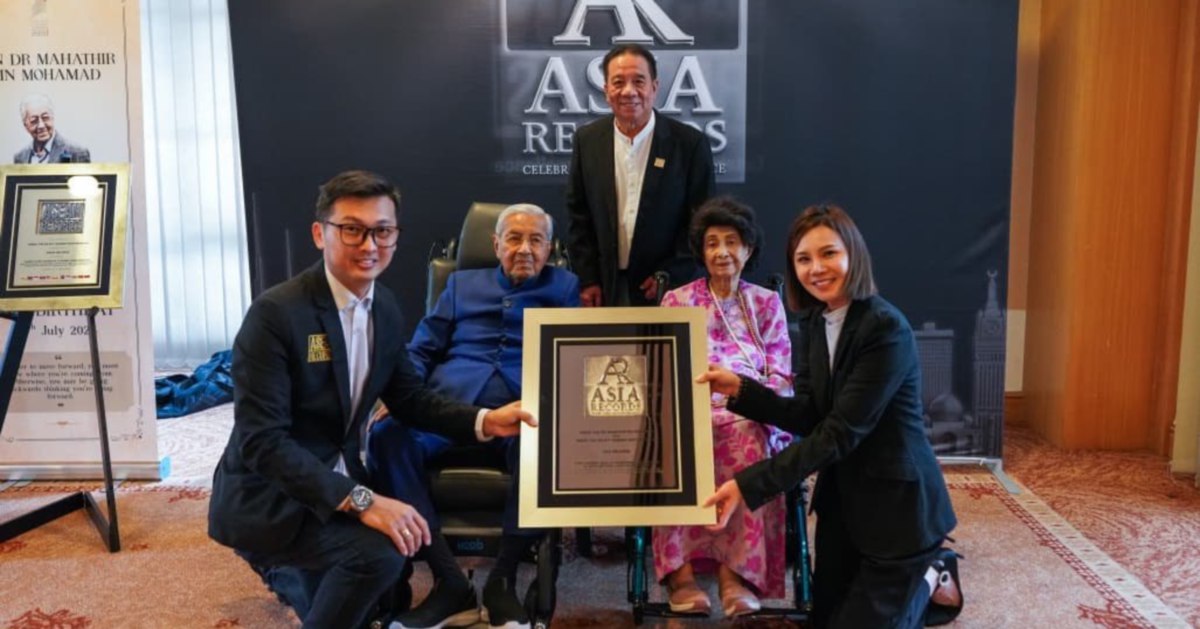
In a remarkable recognition of longevity and enduring partnership, former Prime Minister Tun Dr Mahathir Mohamad and his wife Tun Dr Siti Hasmah Mohd Ali have been officially honoured for becoming Malaysia's most distinguished centenarian couple. The duo, whose marriage has spanned seven decades, recently received three separate official records documenting their unprecedented status—a testament not only to advancing medical care in the country but also to the couple's remarkable vitality and shared commitment throughout their extraordinary life together.
The recognition comes at a particularly significant moment in Malaysian history, as both individuals remain active contributors to public discourse despite their advanced ages. Tun Dr Mahathir, who served as Prime Minister for 22 years across two separate terms and has remained one of the nation's most vocal political commentators, continues to engage with national issues. Similarly, Tun Dr Siti Hasmah, a accomplished physician and philanthropist, has maintained her own profile through healthcare advocacy and humanitarian work, making their joint centenarian status even more noteworthy given their continued public engagement.
The achievement reflects broader demographic shifts occurring across Malaysia and the wider Southeast Asian region. As healthcare infrastructure improves and living standards continue to rise, the number of individuals reaching their centennial birthdays has increased substantially. However, having both spouses survive to such advanced ages while remaining mentally engaged and publicly active represents an exceptionally rare occurrence. The dual centenarian milestone underscores how Malaysia's medical advances and social development over the past several decades have contributed to improved life expectancy across all socioeconomic segments of the population.
Beyond mere longevity statistics, the couple's enduring relationship carries profound social significance in Malaysian context. Their marriage, which has weathered multiple decades of political turbulence, personal challenges, and national transformation, provides a compelling narrative about partnership and commitment. Tun Dr Mahathir's role as a transformative political figure and Tun Dr Siti Hasmah's contributions to healthcare and welfare work have meant that their partnership itself became emblematic of collaborative achievement, with each supporting the other's professional ambitions while building their family.
The official records recognition represents an important cultural moment for Malaysian society, which deeply values familial longevity and marital stability as markers of personal virtue and social worth. In an era where marriage rates have declined and divorce rates have risen, the couple's seven-decade union serves as a potent symbol of enduring commitment. For many Malaysians, their continued partnership and mutual support into their centennial years embodies traditional values while simultaneously demonstrating compatibility with modern engagement and public life.
Tun Dr Siti Hasmah's particular significance within this achievement deserves emphasis. As a pioneering female physician in Malaysia who balanced a demanding medical career with raising a family, her journey to centenarian status represents progress in women's healthcare access, professional opportunity, and societal recognition. Her longevity, alongside her husband's, suggests that women's expanded roles in professional and public life have not diminished but rather complemented traditional family structures in Malaysian society.
The recognition also carries implications for understanding healthy ageing in the Malaysian context. Both individuals have maintained cognitive sharpness and physical mobility well into their centennial decade, suggesting that factors beyond mere healthcare—including purposeful engagement, continued intellectual stimulation, strong family networks, and sustained social relevance—contribute to quality of life in advanced age. Their example potentially influences how Malaysians conceptualise retirement and the post-career years, encouraging continued social participation rather than withdrawal.
Regionally, the milestone positions Malaysia alongside other Southeast Asian nations in achieving longer life expectancies and healthier ageing outcomes. While countries like Singapore have long-documented higher centenarian populations relative to size, Malaysia's achievement with such culturally significant figures demonstrates that demographic success is being achieved across the region's diverse economic contexts. This regional progress reflects collective improvements in public health infrastructure, disease prevention programmes, and healthcare accessibility that have benefited all Southeast Asian nations.
From a medical perspective, the recognition of the couple's longevity raises questions about genetic factors, lifestyle choices, and healthcare access that remain subjects of ongoing research. Both individuals appear to have benefited from education, stable economic circumstances, and access to quality healthcare throughout their lives—factors that remain correlated with longevity globally. Their achievement thus also subtly highlights persistent healthcare inequalities within Malaysia, where life expectancy outcomes vary significantly between urban and rural populations and across socioeconomic strata.
Looking forward, the official records recognition may encourage greater interest in geriatric care, age-related research, and policies supporting healthy ageing across Malaysia. As the nation's population ages—a demographic reality that will intensify substantially in coming decades—the positive representation of vigorous centenarians can help reframe conversations about ageing from deficit-focused narratives to strength-based perspectives. Tun Dr Mahathir and Tun Dr Siti Hasmah's continued visibility and engagement demonstrate that advanced age need not mean diminished contribution to society.
The couple's achievement also reflects family support systems that have enabled their continued independence and quality of life. Both appear to benefit from robust family networks and resources that support healthy ageing—including access to modern healthcare, intellectual engagement, and maintained purposefulness. For many Malaysian families managing ageing relatives with fewer resources, their example may simultaneously inspire hope while highlighting resource disparities that affect longevity outcomes across different population segments.

