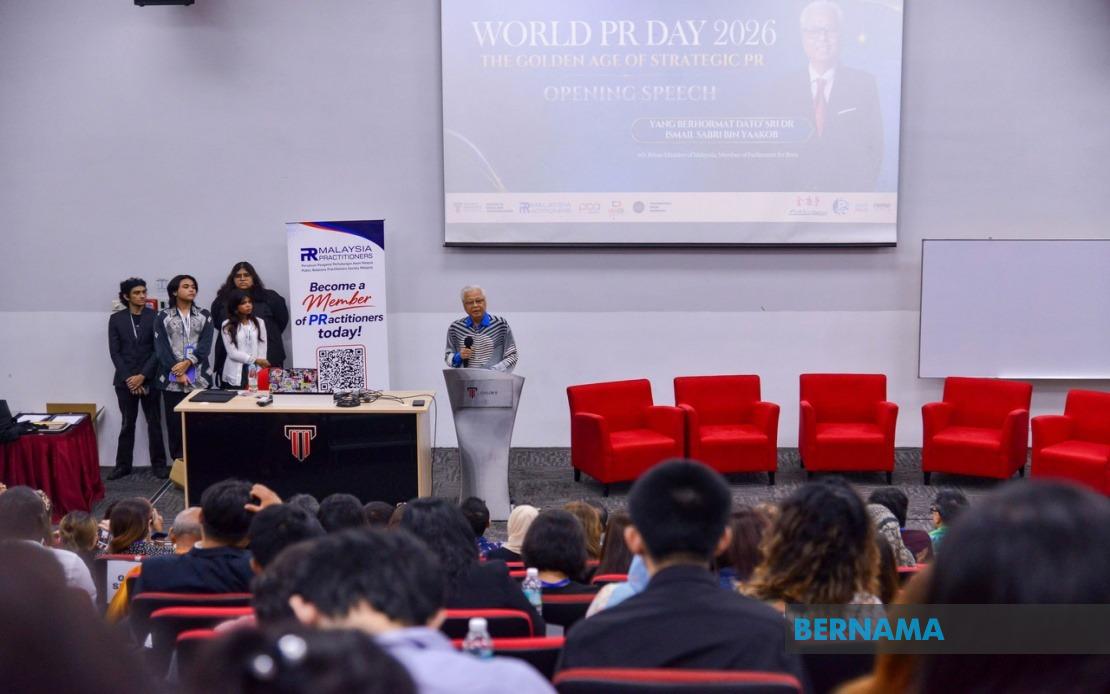
The challenge facing modern institutions extends far beyond market competition. Speaking at Taylor's University in Subang Jaya on the launch of World PR Day 2026, former Prime Minister Datuk Seri Dr Ismail Sabri Yaakob underscored a fundamental shift in how organisations succeed: the ability to forge genuine trust through truthful, well-crafted communication. This distinction matters profoundly for Malaysia's public and private sectors as they navigate an increasingly connected world where reputation can evaporate within hours if messaging lacks authenticity.
Ismail Sabri's observation reframes success metrics for the modern era. Whereas the 20th century pit nations and companies against one another primarily through economic output and industrial efficiency, the 21st century demands something different—dominance in what he termed "trust competition." An organisation's value now hinges not solely on what it achieves but on how transparently and credibly it explains those achievements. This conceptual shift carries particular weight for Malaysian institutions grappling with public scepticism, as demonstrated repeatedly during governance crises and corporate scandals where poor communication amplified reputational damage.
The former Prime Minister drew directly on his tenure leading Malaysia through the COVID-19 pandemic, a period that exposed both the power and fragility of institutional communication. During lockdowns and frequent changes to standard operating procedures, Ismail Sabri engaged with media regularly to clarify evolving health guidelines. Rather than simply announcing policy shifts, he recognised the necessity of explaining the reasoning behind them—a practice that could have either solidified or undermined public compliance depending on clarity and honesty. His reflection on this experience suggests that communication, when grounded in integrity, transcends mere information transfer; it becomes a strategic tool that determines whether policies succeed or falter on public adoption.
This evolution of the public relations function itself deserves scrutiny. PR professionals have historically occupied a promotional role, tasked chiefly with broadcasting organisational achievements to receptive audiences. However, contemporary practice demands something more sophisticated: practitioners now serve as strategic architects shaping how narratives unfold across multiple platforms simultaneously. They must anticipate audience reactions, manage competing information flows, and protect institutional reputations amid constant scrutiny. For Malaysia's expanding PR sector, this redefinition implies that competence alone—spinning stories or controlling messaging—proves insufficient. Practitioners must cultivate a professional ethic centred on truthfulness.
The proliferation of artificial intelligence tools introduces both opportunity and peril into this landscape. Ismail Sabri urged PR practitioners to embrace AI's capacity to analyse public sentiment with unprecedented speed and granularity, allowing organisations to monitor reputation in real time and respond swiftly to emerging concerns. Advanced analytics can identify shifts in perception before they crystallise into crises, potentially preventing reputational catastrophe. Yet this same technological prowess creates temptation: AI can generate persuasive content at scale, manipulate visual and audio evidence through deepfakes, and spread misinformation faster than corrections can circulate. Malaysia's experience with viral falsehoods during elections and health emergencies illustrates how technology amplifies both truth and deception.
The challenge of distinguishing fact from fabrication has become structurally embedded in digital communications. Citizens now inhabit information environments where competing narratives proliferate instantaneously, each claiming authority. Fake news, manipulated media, and AI-generated content designed to deceive compound the difficulty of maintaining shared reality. For Malaysian organisations—particularly government agencies, financial institutions, and healthcare providers—this erosion of trust in information sources directly impacts their ability to function effectively. When citizens doubt whether official statements reflect reality, compliance with regulations declines and social cohesion frays.
Government initiatives addressing these challenges deserve examination. Ismail Sabri voiced support for the proposed AI Governance Bill, framed as a mechanism to enforce ethical standards and combat digital misconduct. Such legislative approaches attempt to impose boundaries on how technology may be deployed, particularly where deepfakes, synthetic media, and coordinated misinformation campaigns threaten public understanding. For Malaysia, developing clear governance frameworks around AI use makes strategic sense, especially given the nation's vulnerability to cross-border disinformation campaigns that exploit regional tensions or domestic divisions. However, regulation alone cannot restore trust; it must pair with organisational commitment to transparent, honest communication.
The deeper insight embedded in Ismail Sabri's remarks concerns the inseparability of technology and ethics. Mastering AI's capabilities matters little if organisations deploy those capabilities to deceive or manipulate. Conversely, commitment to integrity rings hollow without the technical sophistication to communicate effectively across modern channels. Malaysian institutions must therefore cultivate a dual competence: technological fluency combined with unwavering adherence to truthfulness. This integration proves particularly vital for government agencies, which bear heightened responsibility to communicate clearly about policy, health, security, and economic matters affecting millions of citizens.
For Malaysian readers and organisations, the implications crystallise into practical demands. Building trust in the digital era requires moving beyond surface-level public relations tactics toward foundational commitment to honest communication at all levels. Leadership must embed integrity into organisational culture, ensuring that PR strategies reflect rather than contradict institutional reality. When government agencies communicate differently to different audiences, or when corporate statements omit material facts, those contradictions eventually surface—often with explosive reputational consequences. The digital environment's transparency makes sustained deception nearly impossible, rendering honesty not merely an ethical ideal but a practical necessity for institutional survival.

