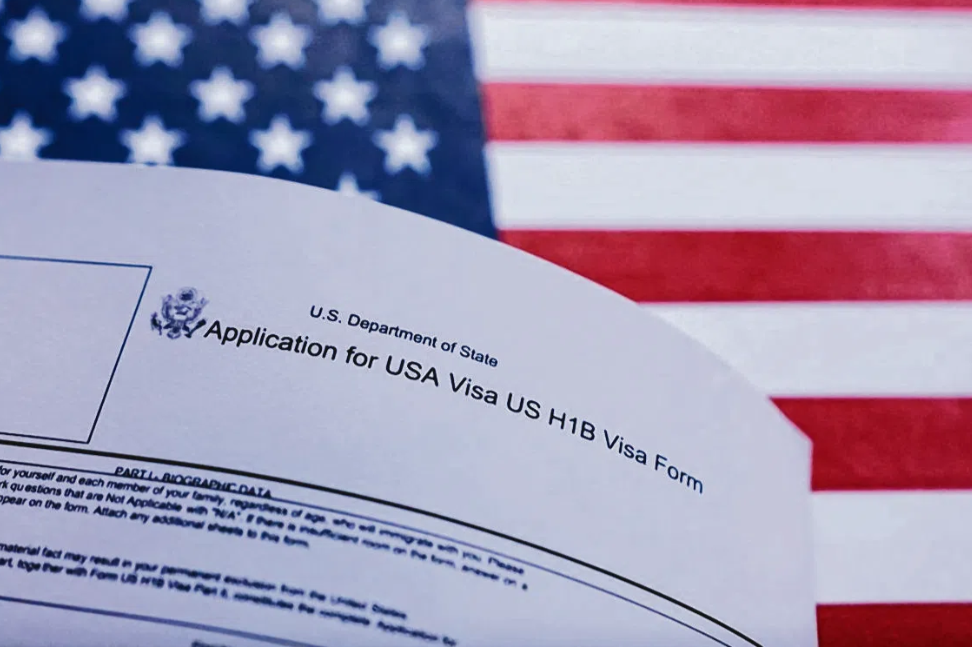
The calculus of ambition has shifted dramatically for Deepak, a 44-year-old technology professional who spent 15 years building a life in the United States before deciding in May to uproot his family and return to India. His departure was not motivated by failure or lack of opportunity, but rather by the escalating uncertainty surrounding his employment status under the Trump administration's tightening immigration policies. After losing his job in October and securing new employment shortly thereafter, Deepak still concluded that the risks of remaining in America outweighed the benefits. The immediate anxiety of facing potential deportation if he could not secure another position within 60 days of being laid off crystallised his decision to exchange the American dream for the relative stability of home.
The policy environment that prompted Deepak's departure has become increasingly hostile to foreign talent. When the Trump administration announced plans to impose a US$100,000 application fee for new H-1B visas—a figure that would have represented a 25-fold increase over prevailing rates—it created widespread confusion throughout the technology sector about how such charges would be applied. Though a federal judge struck down this particular policy as unlawful in June, the administration has simply pivoted to alternative measures. A separate US$4,000 surcharge has now been proposed to take effect in September for H-1B visa extensions and renewals, maintaining sustained pressure on both employers and workers.
The H-1B programme has historically served as the primary mechanism through which American technology companies recruit highly educated foreign professionals, with the visa renewable every three years and frequently serving as a pathway toward permanent residency, colloquially known as obtaining a green card. Indian and Chinese nationals comprise approximately 70 and 12 per cent of the total H-1B pool respectively, with the overwhelming majority employed in technology-related fields. These escalating costs and regulatory obstacles are making sponsorship less attractive for employers at precisely the moment when the technology sector is experiencing significant contraction through layoffs and hiring freezes.
The evidence of this reversal is becoming quantifiable. According to Xpheno, a Bengaluru-based talent consulting firm, approximately 15,100 Indian professionals returned to India in 2025, compared with 9,800 the previous year—a 54 per cent increase. The firm has already documented 7,300 returns in 2026 alone, suggesting an accelerating trend. While comparable data for Chinese professionals is not immediately available, returns to China are also rising, as evidenced by the Ministry of Education reporting 536,000 Chinese students returned home after graduation in 2025, an 8.3 per cent increase year-on-year. These figures collectively demonstrate that the pull of the American Dream, which historically attracted waves of talented young scientists and engineers to US shores, is weakening substantially.
This reversal in migration patterns is reflected in approval data for H-1B visa petitions. When calculating projections based on US Citizenship and Immigration Services data, the top 100 employers sponsoring H-1B workers—companies including Amazon, TCS, Infosys, Apple and Microsoft—are on track to see approval rates drop more than 10 per cent in fiscal year 2026 compared with 2025. The combination of visa cost increases and regulatory uncertainty has made sponsoring foreign talent a more financially and administratively burdensome proposition precisely when American technology companies are cutting costs through restructuring and artificial intelligence-driven workforce reductions.
The contemporary job market environment has amplified these policy headwinds. Major technology companies including Meta, Visa and Amazon have announced significant layoffs affecting thousands of employees, many of them American citizens. The resulting compression of available positions has created a surplus of jobseekers competing for relatively few openings. Foreign professionals, who previously competed on the basis of their specialised skills and willingness to accept salary conditions that domestic workers might refuse, now find themselves increasingly disadvantaged. One unnamed professional working for a major German software company based in the United States observed that the market has become saturated with technology talent, with only the most exceptionally skilled foreign workers managing to secure positions, and even then with difficulty.
The experience of Carrie, a Chinese data analyst, exemplifies the precarious position faced by mid-career H-1B workers. After being placed on notice by her employer in the American Midwest, Carrie entered what became a futile job search despite being in her third year of H-1B status—traditionally a period when visa holders gain more security and career momentum. Her job search frenzy reached a peak of 30 applications daily before collapsing into resignation as she submitted just five applications per day. Without securing sponsorship from a new employer, she faced mandatory departure from the United States by the end of August. Her assessment was brutally direct: she had systematically applied to virtually every company she could identify as willing to sponsor H-1B workers, only to be rejected by nearly all of them.
Beyond structural policy and labour market factors, social and cultural headwinds are also driving departures. Reports from the AAPI Equity Alliance document intensifying online racism and social hostility directed particularly at Indian and Chinese professionals, who collectively represent America's largest immigrant groups characterised by advanced education and high earning levels. This combination of policy restriction, labour market saturation, visa cost burdens and social hostility creates a multifaceted pressure compelling foreign talent to reconsider their American futures.
India has begun emerging as a destination capable of absorbing returning talent, albeit with significant caveats. The country's approximately 2,000 Global Capability Centres—essentially research and development operations established by multinational corporations on Indian soil—have collectively hired roughly 100,000 employees annually since 2023. According to Kamal Karanth, a co-founder of Xpheno, the top 125 such centres absorbed approximately 7,000 mid-level and senior technology professionals with more than a decade of experience within the past 12 months, including 2,800 returnees from the United States. However, these returnees typically face reduced compensation packages compared with American remuneration, with salary advantages accruing primarily to those possessing specialised expertise in data science or artificial intelligence.
Consultants working with returning professionals report unprecedented migration volumes. Nupur Dave, a Bengaluru-based consultant who has assisted thousands of Indian technology professionals in planning their return, emphasises that returnee numbers are climbing more steeply than at any previous point. While many foreign workers initially attempted to weather the visa complications and policy uncertainties, the accumulation of technology sector layoffs over recent years has proven the decisive factor compelling departures. The psychological shift is notable: workers who had been prepared to tolerate additional regulatory burdens found themselves unable to sustain their presence once redundancy loomed.
The experience of returning professionals reveals nuanced reactions to repatriation. Ram, a 38-year-old product manager who spent nine years in Connecticut before returning to Bengaluru with his wife and young daughter in early 2025, has adopted an approach dramatically different from his American career. Having sold all household possessions and his daughter's baby clothes upon deciding to relocate, Ram is deliberately taking a sabbatical from professional responsibilities. His retrospective assessment of H-1B existence captures a central contradiction: the visa programme provided material comfort and professional advancement but simultaneously imposed relentless pressure that precluded genuine choice about life direction. With his family's savings providing temporary security, Ram is now contemplating possibilities ranging from launching his own venture to pursuing agricultural interests—forms of agency entirely unavailable during his American tenure.
These patterns carry implications extending beyond individual career trajectories into the competitive dynamics of the technology sector itself. For Southeast Asian nations including Malaysia, these trends suggest potential opportunities to attract displaced talent seeking alternatives to both America and traditional destinations. The willingness of skilled professionals to depart the United States represents a structural shift in global talent distribution that regional economies could potentially leverage. Simultaneously, the exodus underscores how immigration policy operates as a competitive tool in attracting and retaining high-value human capital. As America retreats from its traditional stance as the primary destination for global technology talent, the relative attractiveness of other markets—both within Asia and potentially in Southeast Asia—may increase substantially for professionals no longer confident in American immigration stability.

