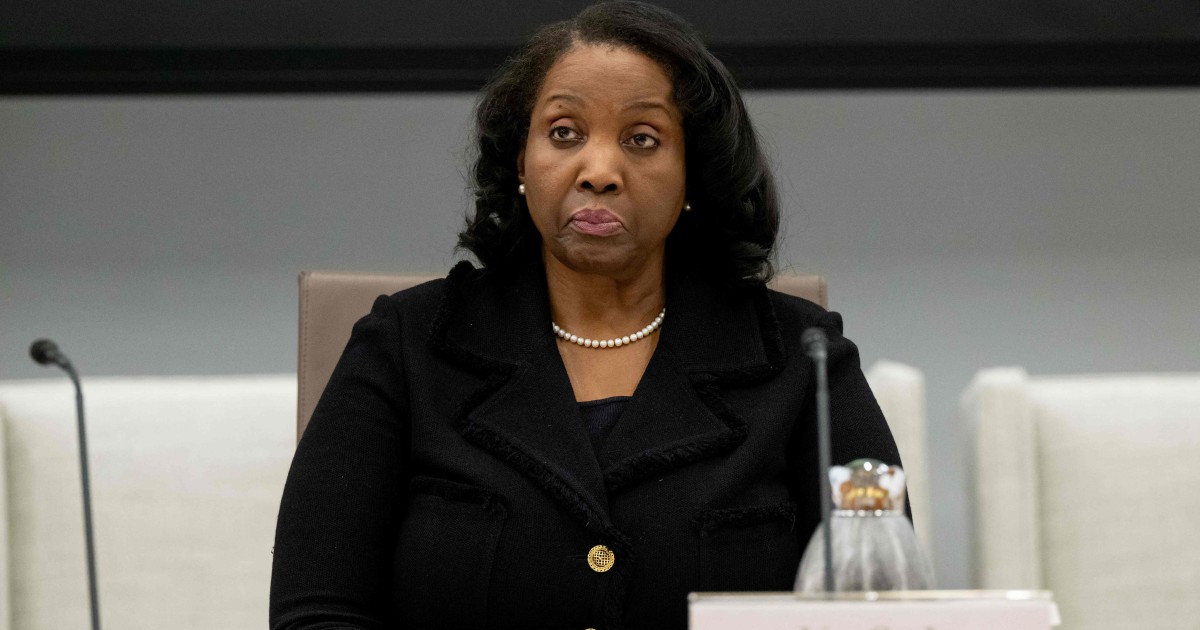
President Donald Trump has intensified his campaign to remove Federal Reserve Governor Lisa Cook from office, launching a fresh attempt at dismissal following a significant legal reversal just months earlier. The renewed push, detailed in correspondence reviewed by AFP on Friday, signals Trump's determination to reshape the central bank's leadership despite judicial obstacles encountered during his previous effort in June, when the Supreme Court declined to back his removal strategy.
The mortgage fraud allegations underpinning Trump's effort represent one of the most contentious personnel battles within the Federal Reserve in recent years. Cook, a respected economist who previously served at the Council of Economic Advisers, has faced persistent scrutiny from Trump supporters who question her qualifications and policy positions. The allegations themselves have become a focal point for broader ideological tensions between the Trump administration and the Fed, with critics using them as a lever to challenge her continued presence on the institution's board.
The timing of this renewed offensive carries particular significance for financial markets and monetary policy observers across Southeast Asia. The Federal Reserve's decisions on interest rates, inflation management, and currency stability reverberate through emerging markets including Malaysia, Singapore, and Thailand, affecting everything from investment flows to currency valuations. Any uncertainty surrounding the Fed's leadership structure and decision-making autonomy could introduce volatility into regional markets already sensitive to US monetary policy shifts and geopolitical tensions.
Trump's previous attempt to remove Cook encountered substantial legal obstacles that tested constitutional boundaries around executive power over independent agencies. The Supreme Court's June decision, while not explicitly endorsing Cook's tenure, essentially upheld the structural independence of the Federal Reserve from direct presidential removal authority outside formal impeachment procedures. This constitutional guardrail was designed to insulate monetary policy from short-term political pressures, yet Trump's renewed effort suggests he believes new legal pathways exist or that changed circumstances might yield different outcomes.
The mortgage fraud allegations have never been formally substantiated through traditional legal channels, remaining primarily within the realm of political allegation and media scrutiny. Cook's defenders argue the claims lack credible evidentiary foundation and have been weaponised for political purposes. Nevertheless, the persistence of these allegations demonstrates how contentious financial regulation and central banking have become in American politics, with the Fed increasingly caught between demands for institutional independence and political pressure to align with executive branch priorities.
Federal Reserve independence represents a foundational principle of American economic governance, particularly important given the institution's role in managing inflation, employment, and financial system stability. Malaysia's own central bank, Bank Negara Malaysia, similarly maintains independence from direct political interference to preserve monetary credibility. The principle extends across Southeast Asia, where central banks jealously guard autonomy as essential to effective policymaking. Any precedent that undermines American Fed independence could eventually inspire calls for weakened autonomy in regional financial institutions.
The political context surrounding Cook's tenure reflects deeper divides over monetary policy philosophy, regulatory approaches, and the composition of institutions managing the global financial system. Conservative critics view her as emblematic of progressive approaches to banking regulation and financial inclusion, while supporters emphasise her economic credentials and commitment to employment objectives alongside price stability. These ideological battles increasingly define debates about technical institutions that traditionally operated beyond partisan scrutiny.
Cook's potential removal would reshape Federal Reserve dynamics and influence the institution's approach to inflation fighting, financial stability oversight, and systemic risk management. As an advocate for addressing racial and gender inequalities in banking and credit markets, her departure would shift the board's composition toward different priorities. For Malaysia and the broader region, this could influence how American financial regulators engage with cross-border banking, trade finance, and capital flow management.
The White House's renewed initiative suggests the administration has identified alternative legal or procedural mechanisms for challenging Cook's position, or anticipates changed circumstances that might improve prospects for removal. The letter itself provides the first official indication of revised strategy, though the specific legal rationale remains unclear without examination of the complete correspondence. Legal experts remain divided on whether any mechanism exists outside impeachment for removing a Fed governor before the expiration of a statutory 14-year term.
This unfolding dispute occurs within a broader context of tension between the Trump administration and various independent agencies. The Federal Reserve has historically maintained careful distance from executive branch pressure, particularly regarding interest rate decisions and regulatory priorities. However, political attacks on Fed leadership have grown more intense and personal, challenging the institution's insulation from electoral cycles and partisan conflict.
For Malaysian policymakers and financial market participants, the Cook case underscores broader questions about institutional independence in democracies. As Malaysia itself navigates debates over central bank autonomy, financial regulatory oversight, and political influence on economic institutions, international precedents matter. The American experience demonstrates both the value of insulating monetary authorities from political pressure and the reality that such independence remains contested and contingent on broader political consensus.
The path forward remains uncertain, with Cook's position likely dependent on further legal proceedings and political developments. Whatever the eventual outcome, the renewed effort signals that debates over Federal Reserve governance, policy philosophy, and personnel composition will continue shaping American economic governance and influencing global financial markets throughout the coming months.

