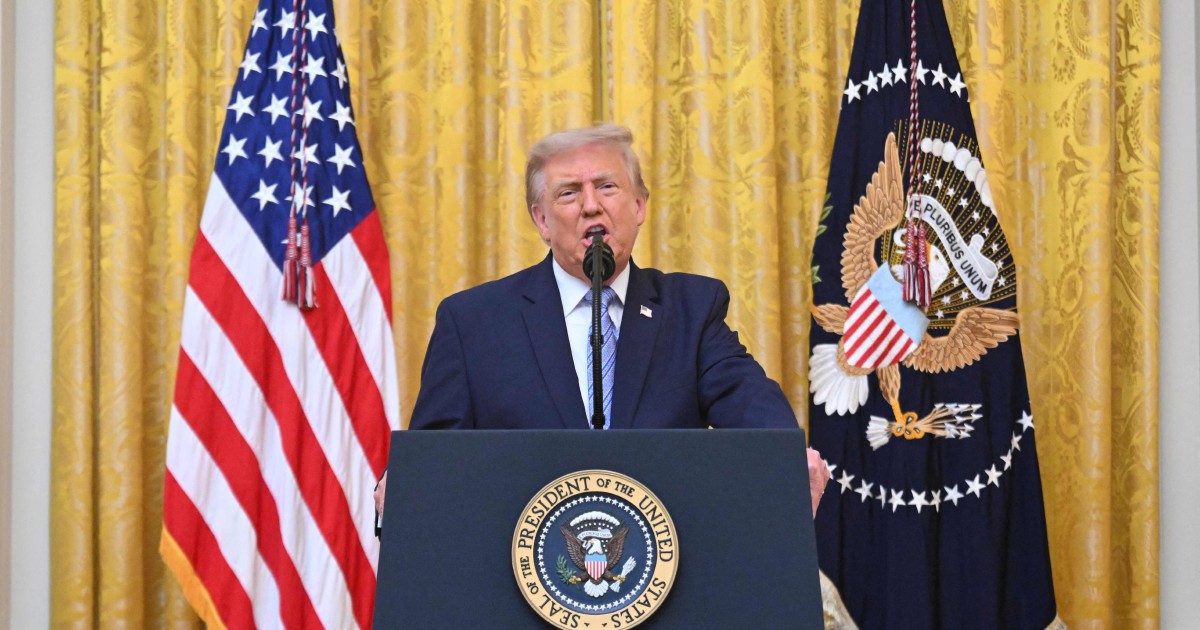
US President Donald Trump has revived a series of election fraud allegations that fact-checkers and election officials have thoroughly debunked, reasserting claims in a Thursday address that foreign powers including China and Venezuela undermined the legitimacy of the 2020 presidential contest. The statements mark another instance of the former and current president circulating narratives about electoral manipulation that have been investigated exhaustively without substantiation by state election authorities, federal agencies, and independent analysts across the United States.
Trump's allegations centred on claims that China orchestrated the theft of millions of voter files, creating what he suggested was a vulnerability exploitable for election interference. No credible evidence has emerged to support the assertion that Chinese operatives accessed voter registration databases on any significant scale during the 2020 election cycle. Election security experts and cybersecurity officials have repeatedly examined these assertions and found them to lack factual foundation, yet the narrative continues to circulate in political discourse despite the absence of corroborating data.
Equally unfounded are Trump's insinuations regarding Venezuela's capacity to manipulate American voting machinery. The notion that Venezuelan agents could remotely alter outcomes on American voting systems has been examined by cybersecurity researchers, election officials, and independent auditors. These investigations have consistently demonstrated that modern voting infrastructure in the United States contains sufficient safeguards against remote manipulation, including paper ballot backups, post-election audits, and segregated systems that prevent external digital interference. Venezuela, facing severe economic and political challenges, possesses neither the technological capability nor the logistical infrastructure to conduct such operations.
For Malaysian and Southeast Asian observers, these claims carry particular relevance regarding how misinformation about electoral systems can persist despite authoritative debunking. The pattern Trump displays—repeatedly asserting false claims about elections despite comprehensive refutation—illuminates global vulnerabilities to disinformation campaigns. In regions where electoral integrity remains contested or where public confidence in democratic institutions faces external pressures, understanding how foreign leaders respond to electoral outcomes provides instructive lessons about defending institutional credibility against unfounded allegations.
The 2020 election underwent multiple recounts, audits, and court challenges across numerous states. Republican election officials in Georgia, Arizona, Pennsylvania, and Michigan—states Trump contested—confirmed results through independent review processes. Over sixty lawsuits challenging election outcomes faced dismissal from courts at all levels, including judges appointed by Trump himself. The Department of Homeland Security's cybersecurity agency formally declared the 2020 election "the most secure in American history," a statement that has never been effectively contradicted by credible evidence.
Since leaving office, Trump has maintained a consistent pattern of amplifying election fraud narratives despite their repeated debunking. These claims gained prominence in the weeks following his 2020 loss and have remained central to his political messaging. Rather than diminish over time, the allegations have evolved to incorporate additional foreign actors and increasingly elaborate scenarios involving technological interference, data breaches, and international conspiracies—each assertion arriving without corresponding documentary evidence or credible investigative support.
The persistence of these narratives reflects broader dynamics about political communication in polarized democracies. When political figures of significant stature repeatedly assert false claims regardless of correction, portions of the electorate become inclined to doubt official explanations and embrace alternative narratives. This phenomenon undermines institutional trust, particularly among voters predisposed toward skepticism of establishment institutions. The challenge of containing misinformation becomes more acute when political leadership actively promotes discredited theories rather than accepting validated results.
For developing democracies and emerging electoral systems in Southeast Asia, such patterns from the world's leading democracy raise questions about institutional resilience and electoral legitimacy. If established voting systems in mature democracies encounter challenges maintaining public confidence despite transparent processes, newer or less developed electoral infrastructures face compounded challenges in establishing similar credibility. The experience demonstrates that technical safeguards alone prove insufficient without corresponding political acceptance of results and commitment to institutional norms.
The international dimension Trump invokes—specifically the involvement of China and Venezuela—taps into existing geopolitical anxieties about great power competition and American vulnerability. By framing electoral outcomes as potentially determined by foreign adversaries rather than domestic voters, such claims shift responsibility for political defeat away from campaigns and candidates toward external conspirators. This rhetorical strategy, while politically useful for contested candidates, corrodes foundational democratic principles about national sovereignty over electoral processes.
Communications researchers have documented how repeated assertions of false claims gradually shift public perception of plausibility, even when corrections accompany the assertions. This mechanism suggests that ongoing repetition of the 2020 fraud allegations—now spanning multiple years—may continue influencing portions of the American electorate regardless of factual refutation. The phenomenon carries implications beyond American borders, as observers in other democracies may interpret such patterns as acceptable political conduct, potentially encouraging similar tactics elsewhere.

