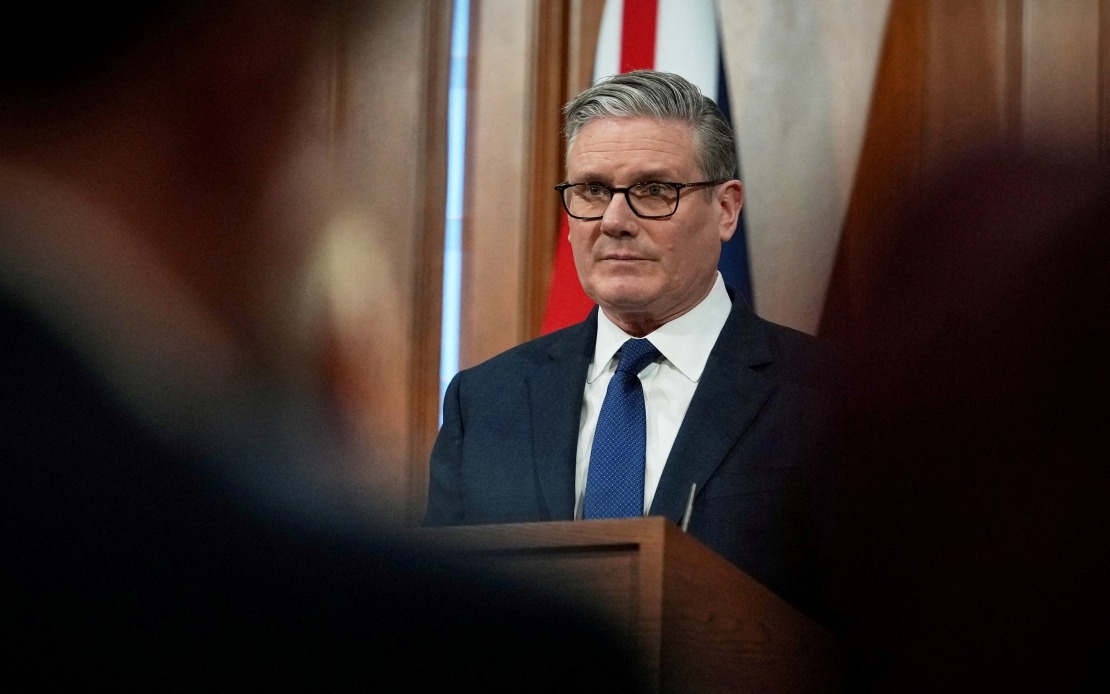
US President Donald Trump has made a bold prediction about the future of British politics, declaring that Prime Minister Keir Starmer will resign from office. Speaking on his Truth Social platform while in Istanbul on Sunday, Trump attributed the anticipated departure to what he characterised as fundamental policy failures affecting two critical areas of governance.
The American president's intervention into British political affairs comes as speculation intensifies within Westminster about Starmer's tenure. Trump specifically cited immigration and energy policy as the grounds for his forecast, making particular reference to the UK's approach to North Sea oil development. His assertion that Starmer "failed badly" on these portfolios reflects criticisms that have gained traction among both opposition politicians and government critics in recent months.
Breitbart reports emerging from the BBC suggest the situation inside the UK government has reached a critical juncture. According to sources within the administration, senior figures now anticipate that Starmer could present a formal timetable for his departure as early as Monday, just hours after Trump's public statement. This acceleration of events indicates mounting internal pressure and a shift in the political calculus among those close to power.
For Malaysian observers of British politics, Starmer's potential exit would represent a significant development in UK governance at a moment when Britain is attempting to redefine its global role following Brexit. The Prime Minister has faced mounting criticism on multiple fronts since taking office, though his government has also pursued various policy initiatives aimed at economic stabilisation and modernisation. Trump's intervention underscores how international political figures increasingly wade into the domestic politics of traditional allies.
The emphasis on energy policy carries particular resonance in Southeast Asia, where nations have closely watched Britain's transition away from fossil fuels. Starmer's administration has pursued policies aimed at supporting renewable energy expansion whilst managing the complexities of North Sea operations. Trump's criticism of this approach reflects his long-standing scepticism of climate-focused energy transition policies, a position that contrasts sharply with commitments made by the UK government.
Immigration has emerged as perhaps the most volatile political issue in contemporary British politics, mirroring trends across Europe and North America where border management and asylum policy dominate public discourse. Starmer's government inherited complex challenges inherited from the previous administration, including processing backlogs and legal battles over deportation policies. The government has sought to present itself as tough on illegal entry while managing humanitarian and legal obligations, a balancing act that has satisfied few stakeholders.
The timing of Trump's statement warrants consideration in the broader context of British-American relations. The incoming or returning American administration has shown willingness to comment on the domestic affairs of other democracies, a departure from traditional diplomatic restraint that characterised earlier eras. This reflects changing norms in international relations where political leaders increasingly use public platforms to influence events beyond their borders.
Should Starmer indeed announce a resignation timetable, the ramifications would extend beyond Westminster. A change in British leadership typically prompts reassessment of foreign policy priorities, including relations with key partners in the Asia-Pacific region. Malaysia and other ASEAN nations maintain substantial trading relationships with the UK and have strategic interests in Britain's positioning within regional security architecture and international trade frameworks.
The convergence of Trump's public prediction with internal reports of government discussions suggests that political momentum for a transition may be building independent of external commentary. Whether international pressure accelerates or merely coincides with domestic factors remains unclear, though the coincidence highlights how interconnected modern politics has become across continents and time zones. The coming days will reveal whether the speculation transforms into concrete announcements or whether the moment passes without formal action, leaving Starmer to consolidate his position or face continued questions about his tenure.

