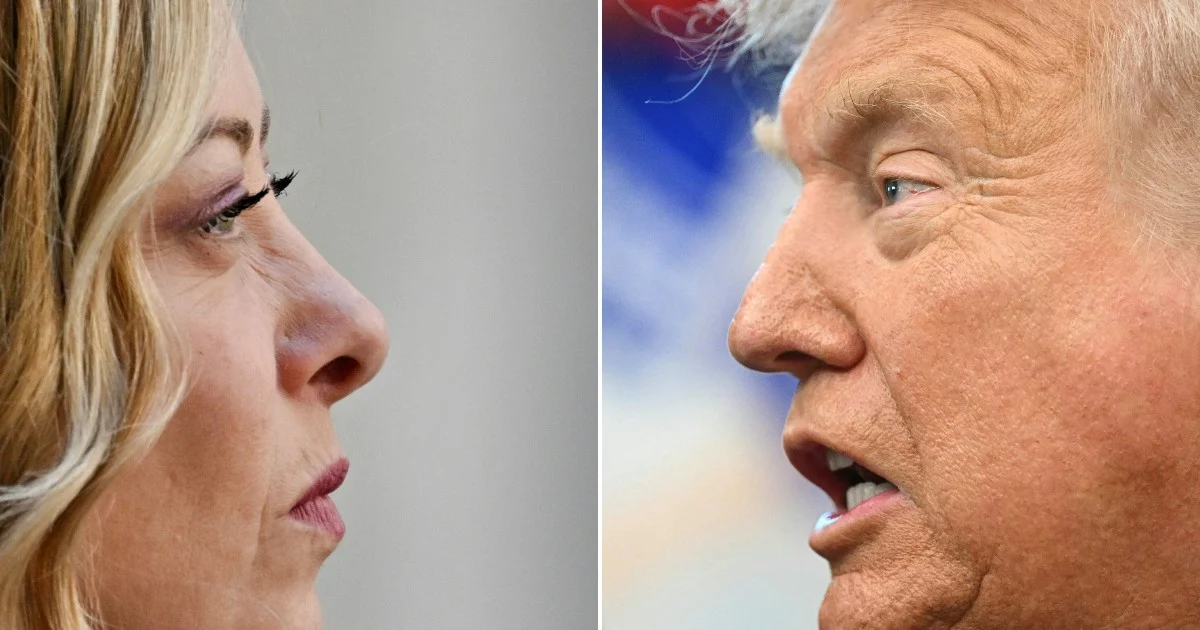
Diplomatic relations between Washington and Rome have taken an unexpected turn this weekend as US President Donald Trump levelled fresh accusations against Italian Prime Minister Giorgia Meloni, intensifying a public dispute that appears to encompass personal grievances alongside substantive policy disagreements. Trump's latest comments represent a notable escalation in what has become an unusually open confrontation between two Western leaders within the Group of Seven, traditionally a forum for coordination among the world's wealthiest democracies.
The clash centres on Trump's assertion that Meloni has repeatedly requested photographs in his presence, a claim that the American leader has weaponised in his broader critique of the Italian government. This personalised dimension of the row underscores the unpredictable nature of diplomatic engagement during Trump's second presidential term, where traditional decorum between allied leaders appears subordinate to the president's public grievances and social media strategy.
What distinguishes this particular spat is Trump's deliberate linkage of the photograph dispute to more substantial matters of geopolitical consequence. The US president has connected Meloni's conduct to Italy's positioning on Iran policy and NATO commitments, suggesting that perceived slights in personal interactions carry weight in how Washington evaluates its relationship with Rome. This conflation of personal friction with strategic policy disputes creates uncertainty about the actual foundations of any disagreement and potentially complicates efforts to address genuine differences through conventional diplomatic channels.
For Southeast Asian observers, this confrontation illuminates the unpredictability that characterises the Trump administration's approach to alliance management. The willingness to conduct significant diplomatic disputes in public, rather than through quiet back-channel communications, represents a departure from post-war norms governing relations between major democratic powers. This approach carries implications for how the US may manage relationships with regional partners in Southeast Asia, where discretion and face-saving have traditionally been paramount considerations.
The positioning over Iran is particularly significant, as it reflects broader divisions within the Western alliance regarding how to manage Tehran's regional activities and nuclear programme ambitions. Italy has occasionally adopted more flexible positions on Iranian engagement compared to Washington's confrontational approach, a divergence that Trump appears to be using as evidence of insufficient commitment to American strategic objectives. For countries like Malaysia that maintain pragmatic commercial relationships with Iran, the intensity with which Washington polices its allies' Iran contacts carries direct relevance to regional stability and economic opportunity.
NATO commitment forms the second substantive element underlying Trump's accusations. The American president has long emphasised that European allies should shoulder greater defence burdens, and Italy's defence spending remains below certain thresholds that Washington has advocated. Trump's invocation of NATO in his dispute with Meloni suggests that insufficient military expenditure or perceived free-riding on American security guarantees may factor into his broader critique, even as he publicly focuses on the photograph controversy. This dynamic highlights how Trump administration often interweaves multiple grievances into single public disputes, making it difficult for interlocutors to identify which issues genuinely demand resolution.
Meloni's position as a conservative leader who has generally cultivated close ties with the American administration makes this rupture particularly noteworthy. Her government has been among Europe's more aligned with Trump administration priorities on various matters, yet this apparent alignment has not insulated her from public criticism. The episode suggests that personal compatibility with Trump matters less than consistent deference to his preferences, and that even sympathetic European leaders cannot assume immunity from public rebuke if they occasionally diverge from Washington's stated positions.
The timing of this escalation warrants consideration, arriving at a moment when the G7 faces multiple pressing challenges requiring coordinated Western response. Internal divisions broadcast in public forums complicate the group's ability to present unified positions on economic policy, security matters, and responses to competing powers. Malaysia and Southeast Asia benefit from a cohesive Western alliance capable of maintaining stable frameworks for regional engagement, making the durability of these internal disputes relevant to the broader operating environment.
For Italian policymakers, navigating this relationship now requires careful calibration between maintaining symbolic gestures of cooperation with Washington while pursuing Italy's legitimate national interests, particularly regarding relations with countries like Iran. The public nature of Trump's criticism may necessitate visible efforts by Meloni to demonstrate responsiveness to American concerns, potentially constraining her government's diplomatic flexibility in ways that extend beyond the immediate bilateral relationship to affect European Union cohesion on foreign policy matters.
The photograph controversy itself, while seemingly trivial, serves as a visible manifestation of underlying tensions that resist easy resolution through conventional diplomatic tools. Public accusations about behaviour during G7 meetings suggest that even structured forums for elite dialogue fail to provide adequate space for clearing misunderstandings between leaders whose personal styles and political orientations differ significantly. This reality carries implications for how complex policy disagreements might be resolved when even basic interpersonal respect appears contested.
Moving forward, the trajectory of this dispute will depend substantially on whether Trump perceives Meloni to have yielded sufficiently on Iran, NATO, or other substantive matters to justify publicly moving past the photograph accusations. The episode demonstrates that alliance relationships during this period rest on uncertain foundations, where personal grievance, policy disagreement, and strategic calculation intermingle in ways that complicate prediction of diplomatic outcomes. For regional powers like Malaysia evaluating how to position themselves relative to major power alignments, this uncertainty underscores the value of maintaining multiple diplomatic relationships rather than over-reliance on any single partnership.

