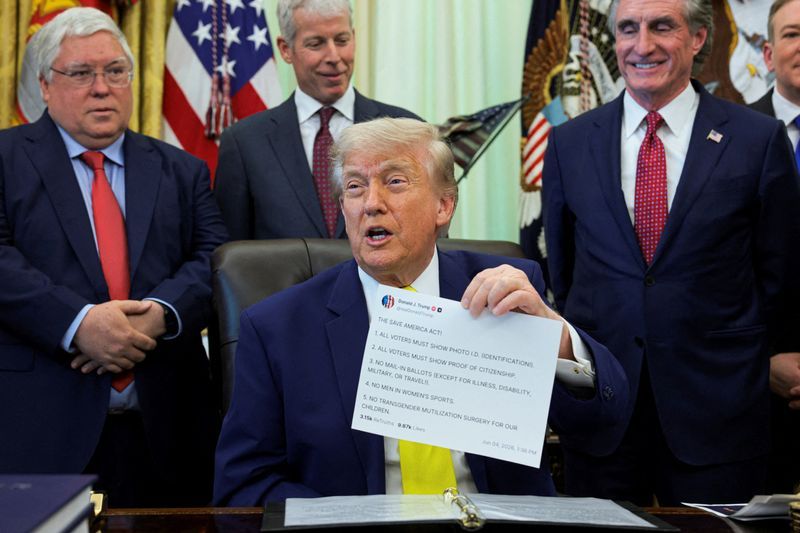
Donald Trump is facing a legal battle over a commercial service that offers wealthy subscribers early access to his posts on Truth Social, his preferred social media platform. The Intercept and the Freedom of the Press Foundation filed suit in Manhattan federal court on Wednesday, challenging what they characterise as a scheme that prioritises paying customers over the general public when the U.S. president discloses market-moving information. The dispute highlights growing tension between digital commerce, press freedom, and government transparency in the age of social media.
The service in question, Truth API, was launched by Trump Media & Technology Group on August 1 and charges subscribers between $1,000 and $100,000 monthly for early access to posts from ten high-profile accounts. These include Trump's own feed alongside those of Vice President JD Vance, Health and Human Services Secretary Robert F. Kennedy Jr., FBI Director Kash Patel, and official White House announcements. The tiered pricing structure essentially creates a two-tier information system where those with deeper pockets receive time advantages when the president communicates with the nation.
The timing of Truth API's rollout drew immediate scrutiny from Capitol Hill. Just four days before its launch, Democratic Senators Elizabeth Warren of Massachusetts and Adam Schiff of California had formally petitioned the U.S. Securities and Exchange Commission to investigate whether such a service could compromise the integrity of financial markets. The senators contended that offering preferential access to presidential announcements—particularly those touching on policy matters like tariffs, trade, and international conflicts—effectively privatised government communication and potentially enriched Wall Street traders and insiders at public expense.
According to the complaint, Trump has frequently used Truth Social to announce consequential policy decisions and market-sensitive information. During his current White House term, he has posted between 9,000 and 11,000 items to the platform, many of which were never accompanied by formal government statements through official channels. This pattern suggests that Truth Social has become a primary—sometimes exclusive—vehicle for presidential communication, raising questions about whether ordinary citizens and journalists should have equal access to information that affects their financial security and civic life.
The plaintiffs' core argument rests on constitutional grounds. They assert that the First Amendment guarantees all Americans equal access to presidential statements and government announcements, and that charging for preferential timing violates this principle. Moreover, they contend there is no legitimate government purpose served by allowing the president to profit financially from the sale of early access to his own communications. The complaint characterises Truth API as "profoundly corrupt" precisely because Trump stands to benefit personally when subscribers purchase access.
The financial stakes are substantial. Trump holds a 41.3% stake in Trump Media through his Donald J. Trump Revocable Trust, a holding worth approximately $950 million according to Reuters data. His eldest son, Donald Trump Jr., serves as a Trump Media director and oversees the trust arrangement, intensifying questions about family financial interests intersecting with presidential duties. This ownership structure means that expansion of Truth API's subscriber base directly enriches the president and his family, creating what critics view as an indefensible conflict of interest.
Trump Media's defence has emphasised that numerous platforms and news outlets already distribute Trump's content through paid subscription services, and questioned why Truth API should face unique legal jeopardy. A company spokesperson argued that the service merely enables subscribers to receive information "fractionally faster" than the broader public, a marginal competitive advantage rather than a fundamental denial of access. The company accused the plaintiffs of attempting to weaponise the courts for partisan purposes and of seeking to harm Trump Media shareholders.
The SEC remains a potential wild card in this dispute. The three current commissioners are Republicans, which may influence how aggressively the agency pursues Senator Warren's request for investigation into market integrity concerns. The agency's decision whether to open a formal inquiry could shape the regulatory environment surrounding Truth API and similar ventures that blend government communication with commercial profit motives. The White House has not publicly commented on the lawsuit or the underlying controversy.
For Malaysian and Southeast Asian observers, this case illuminates broader tensions between democratic governance and digital commerce playing out across democracies worldwide. As political leaders globally embrace social media and content platforms become primary vehicles for government communication, questions about equal access, market manipulation, and conflicts of interest grow increasingly urgent. The outcome of this American legal battle may offer instructive precedent for other nations grappling with how to regulate government communication in the social media age while protecting both press freedom and financial market integrity.
The lawsuit seeks to block the White House from posting official government announcements exclusively on Truth Social while the paid access service remains operational. This injunctive relief would effectively require the administration to publish major policy announcements through traditional government channels simultaneously with any Truth Social posting, eliminating the temporal advantage Truth API subscribers currently enjoy. The case raises fundamental questions about whether government can legitimately monetise its own communications and whether the digital age requires new constitutional frameworks governing presidential transparency.
The dispute also reflects deepening partisan divisions over Trump's use of social media for governance and commerce. Democrats view Truth API as emblematic of Trump's willingness to blur lines between personal financial gain and public office. Republicans counter that selective prosecution of this particular platform represents partisan weaponisation of the courts. These conflicting narratives will likely shape how courts approach the case and how future administrations balance the commercial opportunities social media platforms present against transparency and fairness principles.

