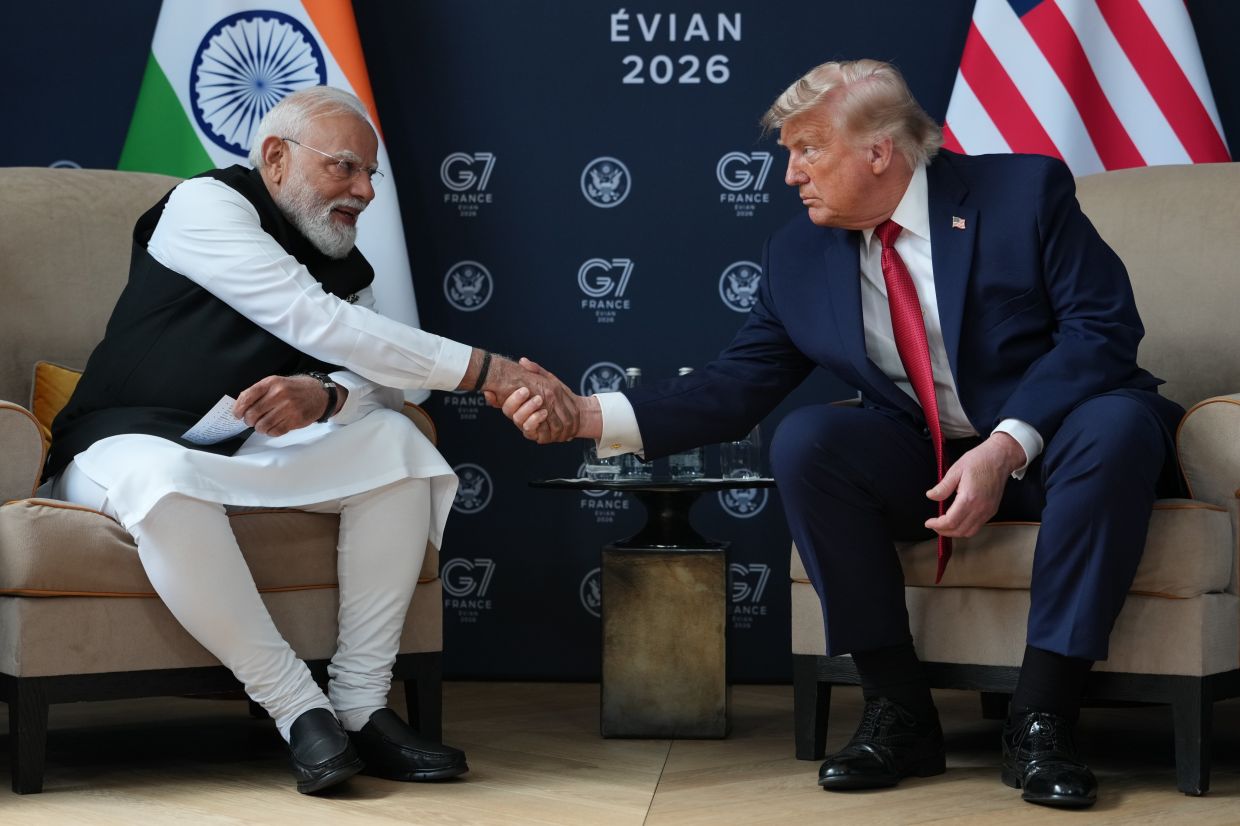
Donald Trump offered no apologies or expressions of sympathy when confronted about the deaths of three Indian sailors killed in a recent military operation, instead characterising the incident as an occupational hazard during his first bilateral meeting with Prime Minister Narendra Modi in over a year. Speaking to gathered journalists after their discussions, Trump downplayed the significance of the fatalities by noting that seafaring remains "a rough profession" throughout history, while asserting that both nations would continue collaborating on maritime security matters in the region.
The deaths occurred when United States Central Command forces launched missiles at the Palau-flagged MT Settebello, striking a commercial vessel in what American officials described as an enforcement action against alleged breaches of Washington's blockade on Iranian ports in the Strait of Hormuz. Two additional merchant ships carrying Indian crew members also came under fire during the same military operation, though the focus of international concern has centred on the deadly strike against the Settebello. The incident marked an unprecedented escalation in American enforcement of its sanctions regime in one of the world's most strategically vital shipping lanes, raising questions about civilian protection and the proportionality of military responses to maritime commerce violations.
India's External Affairs Minister S. Jaishankar lodged a formal and emphatic protest through diplomatic channels following the attack, yet the State Department's official account of their conversation revealed the fundamental disagreement between the two governments on the matter. The American readout deliberately highlighted Washington's position that violations of its blockade and unlawful transportation of Iranian petroleum products would face consequences, effectively justifying the military strikes rather than acknowledging Indian grievances. This rhetorical positioning signalled that the Biden administration maintained no intention of altering its enforcement posture despite protests from a significant trading partner and strategic ally.
The incident provoked considerable public anger throughout India, manifesting in spontaneous displays of protest that reflected broader anxieties about the bilateral relationship. Videos circulated on social media showing auto-rickshaw drivers in New Delhi removing promotional banners celebrating the United States featuring Trump's likeness, which had been distributed by the American embassy as part of a diplomatic outreach initiative. The destruction of these materials, though relatively minor in scale, symbolised deeper frustrations among India's population regarding what many perceived as an imbalanced power dynamic in bilateral relations and the apparent willingness of the Modi government to absorb such incidents without meaningful consequences.
Occasion also provided political ammunition for India's opposition, with Congress Party leader Rahul Gandhi launching pointed criticism of Modi's administration for what he characterised as excessive deference to American interests. Gandhi's social media post framed the government's restrained response as evidence of compromised sovereignty, deploying inflammatory language comparing Modi to an "obedient servant" and suggesting that a truly independent nation would refuse such treatment. The opposition leader's remarks reflected a strand of Indian political opinion concerned that deepening strategic alignment with Washington might entail accepting American military actions that carry human costs for Indian interests, particularly those connected to maritime commerce and crew welfare.
Despite the underlying tensions, Trump struck an emphatic tone regarding the depth of the personal and institutional relationship between the two nations. The American president asserted during the press conference that bilateral relations had never been stronger and that there existed no formal military alliance between Washington and New Delhi, yet pledged that the United States would rush to India's assistance if it faced attack. This framing appeared designed to reassure Indian audiences of American commitment while simultaneously suggesting that such security guarantees did not constrain American freedom of action in regional military operations that might incidentally harm Indian nationals.
The meeting represented the first face-to-face engagement between Trump and Modi since February 2025, when the two leaders convened in Washington to initiate negotiations toward a comprehensive bilateral trade agreement. That earlier encounter had positioned India among the first nations to undertake formal commerce negotiations with the new American administration, reflecting the strategic importance both governments attached to deepening economic ties. The subsequent months had witnessed intensive discussions over the contours of an interim trade arrangement, with both delegations seeking to establish frameworks that would benefit their respective constituencies while managing inevitable disputes over agricultural protections, intellectual property, and technology transfer.
Trump used the occasion to praise Modi as both a "tough trader" and admirable statesman, characteristics the American president appeared to value in international counterparts. The president also indicated his intention to visit India in the future, signalling continued high-level engagement despite the diplomatic turbulence surrounding the maritime incident. Secretary of State Marco Rubio had already travelled to India in the interim period, publicly designating the country as among America's "most important strategic partners" and reinforcing messaging around the depth of institutional connections spanning defence, intelligence, and economic cooperation.
The precise status of trade negotiations remains fluid, with discussions continuing over the parameters of an interim agreement that might eventually evolve into a more expansive commercial framework. Both delegations have indicated strong interest in concluding at least a limited arrangement that would demonstrate progress to their respective domestic audiences, though fundamental disagreements persist regarding tariff structures, agricultural market access, and manufacturing incentives. India's insistence on maintaining flexibility in its foreign policy, including continued engagement with countries subject to American sanctions, creates potential friction with Washington's broader strategic objectives in the Indo-Pacific region.
The juxtaposition of intensifying strategic and economic coordination with the absence of meaningful accountability for actions resulting in Indian deaths illustrates the complex nature of contemporary great-power relationships in Asia. India faces a calculus in which maintaining access to advanced American technology and security cooperation appears to outweigh the diplomatic leverage that might be deployed to secure full accountability for maritime incidents. This dynamic reflects broader patterns in which nations of the Global South often find themselves compelled to absorb costs in pursuit of strategic alignment with powerful states, raising enduring questions about the nature of partnership in international relations.

