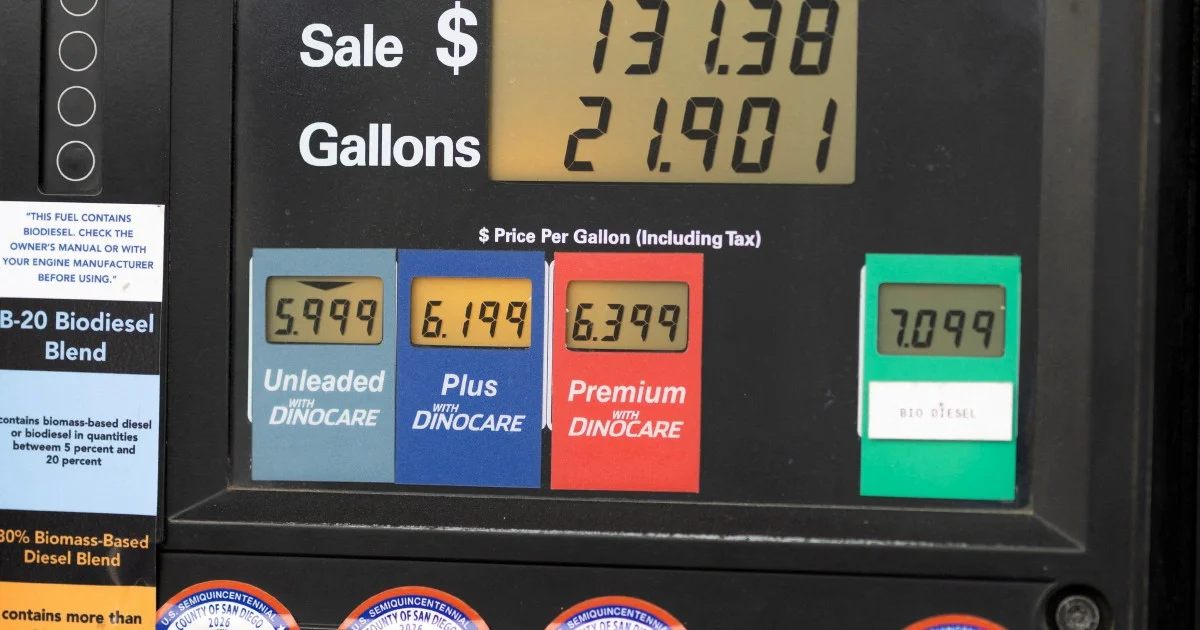
Donald Trump ordered a formal investigation into the operations of major oil corporations on Wednesday, citing frustration with the stubborn elevation of gasoline prices across the United States. The directive represents an escalation in the president's public pressure campaign against the energy sector, as he faces growing political heat for the wider economic implications of Middle Eastern instability.
The timing of Trump's announcement reveals the political sensitivities surrounding fuel costs heading into the critical 2024 election cycle. Petrol prices remain a visceral economic indicator that directly affects household budgets and voter sentiment. As Americans fill their tanks at the pump, they form immediate judgments about presidential competence in managing the economy, making energy policy a perennial flashpoint in domestic politics. Trump's demand for an investigation signals his awareness that high fuel costs represent a political liability, particularly if crude oil markets remain volatile due to escalating regional tensions.
The Middle East situation has become increasingly complex, with military developments raising concerns about potential disruptions to global oil supplies. Geopolitical tensions in the world's most critical energy-producing region have historically triggered sharp price movements, and current circumstances are no exception. Trump's positioning of the investigation as a response to these external pressures attempts to frame energy companies as gatekeepers whose pricing decisions have not adequately reflected underlying market conditions or production capacity.
Critics within energy markets suggest that oil companies operate within global market forces largely beyond the control of any single national administration. Crude oil is traded on world markets where supply constraints, demand fluctuations, refinery capacity, and transportation logistics collectively determine prices. Major international producers, including the Organization of the Petroleum Exporting Countries (OPEC), exercise significant influence over global supply levels, creating dynamics that domestic investigations cannot easily untangle. The structural reality of global energy markets complicates any straightforward assertion that profit-seeking behaviour alone explains price persistence.
From a Malaysian perspective, these developments carry particular resonance. As a regional economy with significant exposure to energy markets and global trade flows, Malaysia monitors US energy policy closely. Petrol price movements in the American market ripple through Asian economies, affecting transportation costs, manufacturing competitiveness, and consumer spending patterns. Higher fuel costs in the world's largest economy can trigger inflationary pressures that eventually transmit through regional supply chains and pricing mechanisms affecting Malaysian businesses and consumers.
The investigation's scope and ultimate findings remain uncertain, but the gesture itself communicates Trump's determination to address voter concerns about purchasing power. Previous investigations into energy sector pricing have yielded mixed results, with regulators often discovering that market dynamics rather than coordinated collusion explain price movements. However, the symbolic dimension of such inquiries matters in democratic politics—they demonstrate presidential responsiveness to constituent grievances, regardless of whether subsequent findings produce substantial policy changes.
Oil companies themselves maintain that their pricing reflects legitimate operational costs, geopolitical risk premiums, and competitive market forces. Refinery utilization rates, crude acquisition costs, and distribution expenses all contribute to final pump prices. Additionally, environmental regulations and the transition toward renewable energy sources have complicated investment decisions, potentially constraining supply growth in ways that support higher prices.
The relationship between Trump's investigation and longer-term US energy strategy remains ambiguous. While the inquiry focuses on pricing conduct, the broader question involves whether America's energy independence and production capacity adequately insulate consumers from external shocks. Energy policy debates in Washington increasingly center on domestic production expansion, infrastructure investment, and strategic reserves management—all factors that might eventually influence price stability more substantially than investigations into corporate conduct.
For regional observers in Southeast Asia, the investigation underscores how energy security continues anchoring both domestic politics and international relations. Malaysia's own experience with energy markets, petroleum revenues, and the transition to cleaner fuels provides useful context for evaluating American policy responses. The challenge facing any administration involves balancing short-term voter concerns about pump prices against longer-term structural factors shaping energy markets. Trump's investigative directive reflects this persistent tension in democratic governance, where political pressures intersect with complex economic realities.

