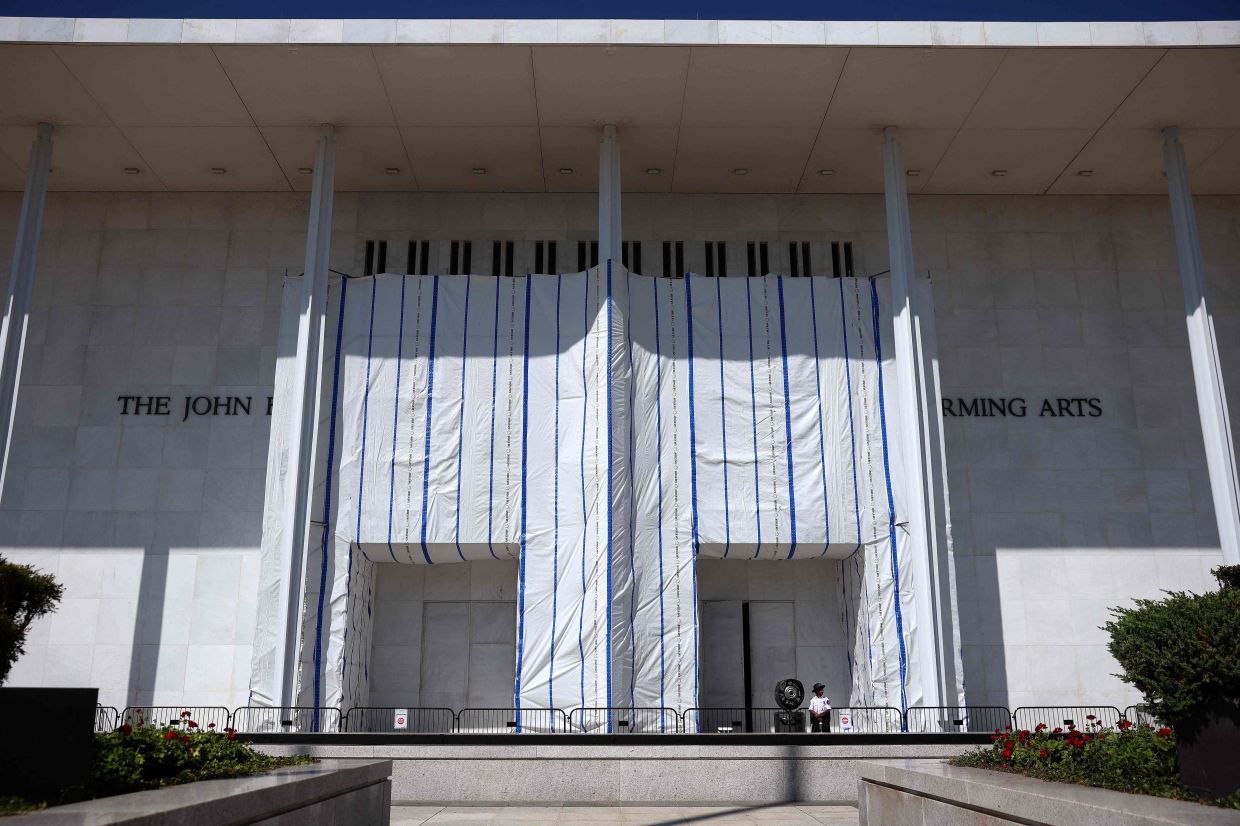
President Donald Trump's administration escalated its dispute over control of the Kennedy Center by invoking an extraordinary threat: the iconic performing arts building could be demolished if courts interfere with his renovation agenda and efforts to attach his name to the institution. The startling warning appeared in a Justice Department filing submitted on Tuesday as the administration opposed legal challenges from Democratic lawmakers seeking to block both a two-year restoration project and the prominent placement of Trump's name on the structure.
The Justice Department's argument hinges on a stark premise that has caught observers off guard. While the filing carefully avoids claiming an existing demolition plan exists, it contends that without Trump-led restoration and fundraising efforts, the Kennedy Center would deteriorate into such dangerous condition that demolition would become legally necessary. Justice Department attorney Brantley Mayers articulated this position in sweeping language, writing that without the administration's intervention, the building would "deteriorate further into an unsafe, decrepit structure that will be required to be taken down." The dramatic framing appears designed to pressure the courts by suggesting that blocking Trump's plans would ultimately result in losing the building entirely.
Accompanying this demolition scenario, the administration floated an alternative vision for the site. Should the Kennedy Center be razed, Justice Department lawyers suggested the location could be repurposed as a large outdoor amphitheater overlooking the Potomac River. Mayers acknowledged this replacement would "fail to adequately honor" slain president John F. Kennedy, whose memory the center was established to preserve, but justified the concept as cheaper to construct and maintain than rehabilitating the existing structure. This proposal underscores the administration's willingness to contemplate fundamentally altering one of Washington's most recognizable cultural landmarks if its preferences are thwarted.
The fierce conflict over the Kennedy Center represents a broader battle for symbolic control of American institutions. The Justice Department filing characterised the venue as "structurally unsound, fundamentally unsafe, and embarrassing to the nation's capital," assertions that starkly contrast with the institution's own previous descriptions of necessary work. The department portrayed Trump as uniquely positioned and motivated to rescue the building from decline, a narrative that frames the president as indispensable to preserving American cultural heritage. This positioning attempts to create leverage in the litigation by suggesting that opposition to Trump's plans directly translates to opposition to preserving the institution.
The administration has made substantial financial commitments appear central to its negotiating position. Justice Department lawyers emphasised that Trump's administration secured US$258 million from Congress for restoration work and had attracted a new donor base willing to contribute funds. The department argued that recognising Trump's role through prominent naming was essential for maintaining this fundraising momentum, suggesting that donors expected their contributions to be associated with the president. This framing transforms the naming question from a matter of institutional identity into one purportedly linked to financial viability, though it raises questions about whether major donors would genuinely withdraw support if Trump's name appeared in less prominent locations.
The specific naming proposals that triggered this conflict reflect the administration's determination to ensure Trump receives maximum visibility on the building. The Kennedy Center's board, which Trump has filled with his appointees, recently voted to place the words "Restored and Renovated by President Donald J. Trump" directly beneath the institution's name and to rename the surrounding plaza "President Donald J. Trump Plaza." These changes would give Trump's name top billing on one of America's most prestigious cultural institutions and fundamentally alter how the public identifies the building. The scale of this renaming scheme has provoked intense resistance from those who view the Kennedy Center as a memorial specifically to President Kennedy.
Congresswoman Joyce Beatty, an ex officio board member who initiated the legal challenge, has emerged as the primary Democratic voice opposing these naming efforts. Beatty argues that only Congress possesses the authority to name the Kennedy Center, given that Congress established the institution as a "living memorial" to Kennedy. Her lawsuit challenges the fundamental legitimacy of the board's actions, questioning whether the administration can unilaterally alter the building's identity without legislative approval. A federal judge previously sided with Beatty's position, ruling that the board lacked authority to rename the center and ordering earlier Trump signage removed. The administration is appealing this decision, setting up continued litigation.
A striking disconnect exists between how Kennedy Center officials previously characterised the renovation work and how the Justice Department now depicts the building's condition. Prior to the administration's inflammatory language, Kennedy Center leadership described the planned restoration in measured terms, explaining it would involve extensive electrical system upgrades, stage equipment improvements, and leak prevention measures. Officials stated clearly that the work would neither materially alter the exterior appearance nor reduce the building to its structural frame—hardly the portrait of a crumbling, unsafe institution beyond repair. This discrepancy raises questions about whether the dire language in the Justice Department filing accurately reflects the building's actual condition or represents strategic rhetoric designed to influence judicial decisions.
The timing and intensity of the demolition threat suggests the administration is employing maximum pressure tactics as a Thursday court hearing approaches. The hearing will address both the proposed closure dispute and the latest effort to place Trump's name on the building. By raising the demolition prospect before judges, the administration appears to be creating a false choice between accepting Trump's naming demands or watching the building be destroyed. This strategy reflects how control of cultural institutions and historical narratives has become a flashpoint in American political conflict, with the Kennedy Center serving as a battleground for competing visions of presidential legacy and institutional authority. For observers in Southeast Asia watching American politics, the episode illustrates how even the most established institutions can become contested terrain when political power shifts, a dynamic with potential implications for how other nations approach institutional governance and naming rights.

