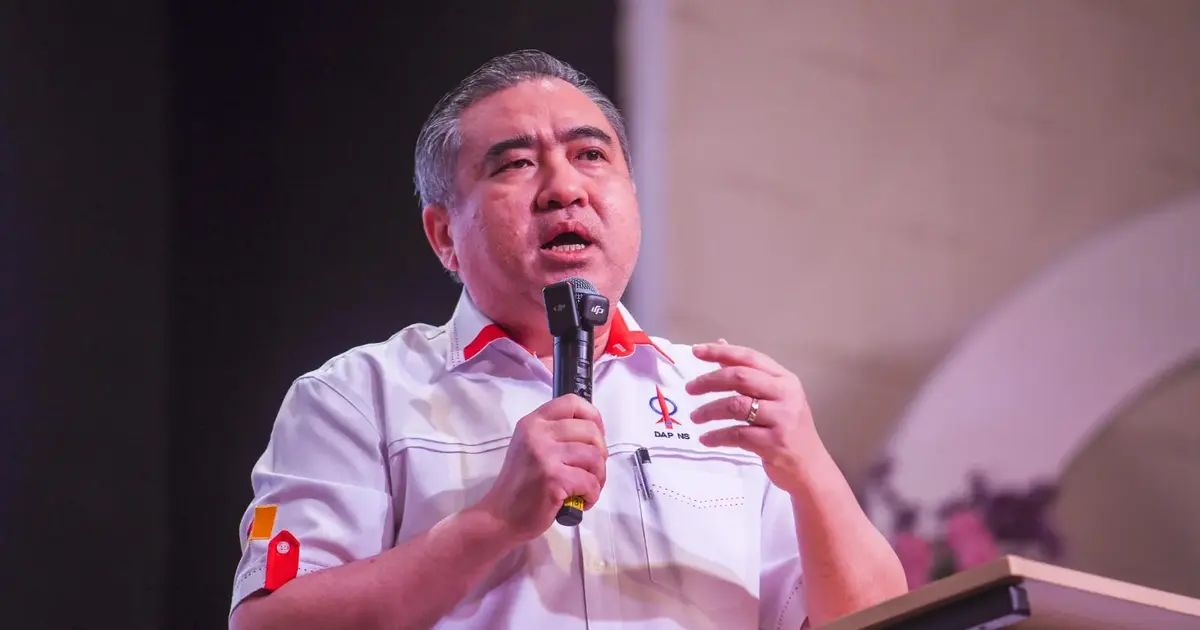
Transport Minister Anthony Loke has signalled his intention to request a meeting with Selangor Sultan Sharafuddin Syed Zainalabidin to address grievances concerning the Light Rail Transit 3 project. The development follows the ruler's public comments highlighting alleged shortcomings in how the previous administration handled the strategically important rail infrastructure initiative.
The Selangor monarch had previously directed criticism toward former finance minister Lim Guan Eng and Tony Pua, who served as his political secretary during the Pakatan Harapan government. Sultan Sharafuddin pointed to what he characterised as their failure to comprehend the critical significance of the LRT3 connection for the state's long-term development and urban connectivity objectives. The sultan's remarks underscored tensions that have persisted around the project's implementation and the decisions made during the 2018-2022 administration.
The LRT3, designed to connect Klang and Putrajaya through Selangor, represents one of the most ambitious public transport initiatives in the region. Its completion has been subject to repeated delays and budgetary revisions since its inception. The project carries particular symbolic weight for Selangor, as it aims to integrate key economic zones and residential areas while reducing road congestion in one of Malaysia's most densely populated states. The connection between state leadership and federal transport policy has therefore become increasingly fraught.
Loke's decision to seek royal audience demonstrates the government's recognition that the LRT3 issue extends beyond bureaucratic channels into the realm of state politics and royal prerogatives. By approaching Sultan Sharafuddin directly, Loke appears to be signalling a commitment to addressing past grievances while simultaneously repositioning the government's stance on the project. This move reflects the delicate balance required when navigating relations between federal and state governments in Malaysia's constitutional framework, where rulers maintain significant authority over development matters within their territories.
The criticism levelled at Lim Guan Eng and Pua relates to broader concerns about the previous administration's approach to large-scale infrastructure spending. During their tenure, the government faced mounting fiscal pressures and undertook a comprehensive review of megaprojects to assess value for money and necessity. The LRT3 fell under this scrutiny, and decisions regarding its prioritisation and phasing were reassessed against competing budgetary demands. However, such deliberations, however fiscally sound, appear not to have adequately accounted for the strategic and development imperatives that the state government and palace considered paramount.
For Malaysian readers and policymakers, the LRT3 dispute illustrates how infrastructure decisions with technical and financial dimensions often become entangled with political and constitutional considerations. The project's fate is not determined purely by cost-benefit analysis or engineering timelines but also by the confidence and cooperation between federal transport authorities and state-level stakeholders. When these relationships fracture, even projects with genuine public benefit can face delays and complications that extend implementation timelines and inflate costs.
The implications for Southeast Asia's transport development community are also significant. Malaysia's experience with the LRT3 offers lessons about the necessity of early and sustained engagement with royal institutions and state governments when planning major cross-jurisdictional infrastructure. Unlike countries with centralised authority structures, Malaysia's federal system requires careful consensus-building across multiple levels of governance. Failure to invest in these relationships can result in the politicisation of otherwise straightforward engineering and procurement matters.
Loke's approach also signals a potential shift in how the current administration intends to manage inherited projects and past policy decisions. Rather than defending or justifying previous choices, the transport minister is choosing to engage constructively with the Selangor palace. This stance may facilitate progress on the LRT3, but it also risks being perceived as implicitly conceding merit to criticisms of the former government's handling of the matter. The delicate positioning required here reflects the complexity of Malaysia's political landscape, where coalition governments must navigate competing allegiances and maintain credibility across different constituencies.
The broader context involves Malaysia's ambitious transport expansion plans, which include multiple LRT extensions, MRT phases, and monorail projects across the Klang Valley and beyond. These initiatives cannot succeed without sustained funding, political will, and interagency coordination. The LRT3 has become emblematic of the challenges facing such mega-infrastructure in Malaysia, where financing, land acquisition, and technical execution are further complicated by the need to satisfy multiple political masters and constitutional safeguards.
Moving forward, the success of Loke's diplomatic initiative will likely depend on whether concrete commitments regarding timeline acceleration and budget allocation emerge from his audience with Sultan Sharafuddin. The ruler's support could prove decisive in unlocking state-level cooperation and reducing bureaucratic friction that has historically hampered the project's progress. Conversely, failure to secure such backing could entrench further delays and signal a cautionary tale about the importance of early stakeholder management in Malaysia's plural political system.

